
Lufthansa : une saga turbulente (1/2) | Documentaire | ARTE
10 chapters
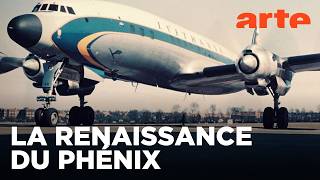
- The Birth of Commercial AviationPrésentation actuelleLufthansa is Europe's leading airline with more than 500,000 flights annually. The company celebrates its centenary, which masks a hidden history.Innovation révolutionnaire• The Junkers F13 was the first all-metal aircraft, a revolutionary design when most planes were wooden and canvas • It introduced the first enclosed, heated passenger cabin, making air travel more comfortable • The aircraft could cruise at 160 km/h, dramatically reducing travel times from days or weeks to hoursDébuts difficiles• Early aviation faced severe psychological obstacles as passengers had to overcome their fear of flying • Strict weight limits required every passenger and their luggage to be weighed before boarding • Only 1,700 passengers flew in 1924, mostly businessmen, politicians, and film starsSuccès commercialBy 1925, over 170 F13 aircraft were flying across all continents. The Junkers company achieved over 40% global market share through this iconic aircraft.
- Hugo Junkers and Post-War RestrictionsContexte politiqueAfter World War I, the Treaty of Versailles prohibited Germany from aviation development. Germany had to destroy all military aircraft and obtain special authorization to build new ones.Situation financière• Germany suffered severe financial difficulties after WWI • The government required substantial subsidies to develop the aviation sector • Motivations for government control extended to secret military rearmament programsFusion forcéeThe Weimar government forced Hugo Junkers to cede his European airline companies in January 1926. The Junkers fleet, renamed Luft Hansa, became the foundation of a new state company.Resistance et regretsIn his personal notebooks, Junkers wrote that he was victim of extortion during negotiations and accused the government of flagrant injustice. He opposed the nationalization of his patents, which he saw as destroying entrepreneurial spirit.
- Formation of Lufthansa and Corporate StructureCréation officielleLuft Hansa (initially written as two words) was officially created in January 1926, combining the Junkers fleet with the nationalized Aero Lloyd. The company logo combined Junkers' yellow and blue colors with the crane symbol from Aero Lloyd.Leadership et ambitions• Erhard Milch served as technical director and board member of Luft Hansa • He announced ambitious plans to conquer the world through transalpine routes and intercontinental air bridges to South America and Asia • Hidden military missions existed to create a clandestine air force disguised as a civilian airlineContexte militaireInfluential circles around former fighter pilot Hermann Göring wanted to reclaim Germany's place in the skies. Erhard Milch soon aligned with Adolf Hitler, beginning a productive alliance for Nazi rearmament.Double fonctionFrom its creation, Lufthansa functioned as a state construction designed to enable German air force rearmament while publicly presenting itself as a civilian airline.
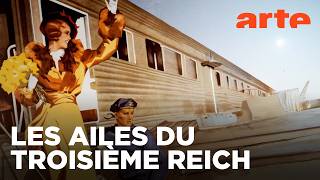
- Rise of the Nazi Regime and Lufthansa's Military RoleÉlections et propagandeIn 1932, Adolf Hitler used Lufthansa aircraft for an unprecedented electoral campaign, giving up to nine speeches per day across Germany. Thanks to Lufthansa and cinema newsreels, he appeared omnipresent, helping him become Chancellor in March 1933.Développement technologique• Hugo Junkers designed the G38, the largest airliner of the era with 34 seats, six passengers enjoyed spectacular forward views from the wings • Lufthansa acquired only two G38 aircraft for the Berlin-London route due to their high cost • Hermann Göring baptized the aircraft with the name Hindenburg in honor of the German presidentJunkers 52 et conversionThe Junkers 52, commercialized in 1932 with its distinctive corrugated metal fuselage, became crucial. The airline received orders for over 700 aircraft on the condition that each could be converted into a bomber and that Lufthansa trained more pilots than necessary.Fate de Junkers• From 1933, Hugo Junkers was accused of treason and effectively neutralized • He was expelled from his own factories, and the Nazi regime confiscated all his remaining factories and patents • Placed under Gestapo surveillance, he died in 1935 on his 76th birthday; a state funeral was staged with Nazi officials
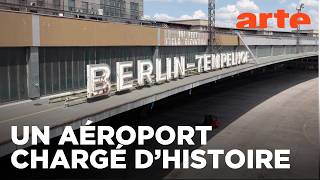
- Lufthansa Under Nazi Control and ExpansionInfrastructure monumentale• In 1936, Lufthansa received a second airport south of Berlin at Tempelhof, a gigantic complex • Hitler ordered the architect to create the world's largest terminal, with Lufthansa's head office installed in the massive building by 1938 • The airport was designed partly as an aerial stadium for Hitler to parade the new German air force before the people annuallyDevise et symbole"Flying is triumph" became Lufthansa's new motto. The massive Tempelhof airport was meant to send Berlin residents a clear political message about Nazi power and mastery of the skies.Resistance interne• Klaus Bonhoeffer, a young lawyer, joined Lufthansa in 1935 and quickly became involved in the German resistance • He lived a double life, displaying a Hitler portrait in his office while secretly opposing the regime • His position allowed him to travel abroad, giving him opportunities for resistance work, though constant vigilance was requiredCroissance du réseauBy 1936, Lufthansa had extended its network across Europe. The airline operated daily flights to fascist Italy across the Alps, creating subsidiary airlines like Iberia in Spain and Eurasia in China.
- Global Ambitions and Transatlantic DreamsCompétition mondiale• French pilots pioneered the aeropostale route along Africa's west coast toward South America • Jean Mermoz was the first to cross the South Atlantic but barely survived a crash landing • The competition for international prestige drove airlines to conquer continents from South America to AsiaInnovation technique• Lufthansa deployed the Dornier Wal seaplane nicknamed Dornier Whale to rival French mail service • The German flying boat carried 100,000 letters between Berlin and Rio in 3 days, twice as fast as the French competitor • Refueling occurred on a rigid canvas deployed from a cargo ship in mid-ocean using dangerous catapult launchesTragedies du progrès• The dangerous refueling maneuvers caused several aircraft losses and deaths • Pilot Manfred von Richthofen witnessed his best friend crash beside the refueling ship • French pilot Jean Mermoz died on December 7, 1936, disappearing over the Atlantic after reporting a motor failureRecord transatlantiqueIn 1938, the Focke-Wulf Condor became the first aircraft to fly from Berlin to New York nonstop in 25 hours, setting a world record. However, the United States refused landing rights for Nazi Germany, preventing regular transatlantic service despite the technical achievement.
- World War II and Lufthansa's Dual RoleDébut de la guerreOn September 1, 1939, the German school ship fired on the Westerplatte naval base near Danzig, Poland, marking the start of World War II. Berlin's Tempelhof airport closed for several weeks due to fear of enemy air raids.Services civils maintenus• Lufthansa resumed operations by summer 1940, serving destinations like Budapest, Bucharest, Stockholm, Moscow, Athens, Rome, and Lisbon • Each passenger received 15 kg of baggage allowance and mail was transported on all flights • However, civilian aviation now served the needs of the war economy rather than regular passengersActivités militaires• Hitler used Lufthansa aircraft for front-line visits while using newsreels to bolster his image • Lufthansa pilots were assigned to Hitler's squadron and mail delivery to the Eastern Front • The airline's massive hangars at Tempelhof were converted to repair war aircraft and produce armamentsÉconomie de guerreLufthansa set up special repair workshops along the Eastern Front, employing over 200 German technicians in places like Dnipropetrovsk, Ukraine. Repair revenue quickly exceeded regular transport income.
- Forced Labor and the Plot Against HitlerMain-d'œuvre forcée• From 1943, the Wehrmacht conscripted entire families, including teenagers as young as 14 years old • By June 1944, Lufthansa exploited over 6,000 foreign forced laborers • By war's end, 80% of Germany's armaments sector relied on forced foreign laborConditions de travail• Forced workers soldered hydraulic pipes in Tempelhof's halls 6 and 7 with only work goggles for protection • Workers wore badges marked with a crane and initials of their country of origin • Eastern and southeastern Europeans were most heavily represented among forced laborersComplot du 20 juillet• On July 20, 1944, Colonel Stauffenberg carried a bomb to Wolf's Lair, Hitler's headquarters • Klaus Bonhoeffer's son was asked by Stauffenberg's assistant if Lufthansa aircraft were ready to take off for the coup d'état • Klaus answered yes, hoping the coup would succeed, but Stauffenberg's bomb killed and wounded many but failed to kill Hitler, who was protected by a heavy tableConséquences personnelles• Klaus Bonhoeffer was arrested by the Gestapo, condemned to death, and shot by the SS days before war's end • His brother Dietrich and two brothers-in-law were also executed for resistance • Bonhoeffer saw his son only once more before his arrest
- The K22 Route and War's EndLiaison Berlin-Lisbonne• The long-distance K22 route connecting Berlin to Lisbon operated mainly with captured American DC3 aircraft • The route passed through Stuttgart, Lyon, Barcelona, and Madrid before reaching Lisbon, Europe's espionage capital • The K22 was crucial as a civil aviation axis during wartimeIntelligence et surveillanceIntelligence agents used the Lisbon route to purchase international press from newsstands and return it to Berlin so Nazi leaders could learn what foreign countries thought and wrote about them.Dégradation matérielle• Despite fuel shortages, the K22 continued operating through October 1944 • The aircraft named Prussia was in deplorable condition with no cabin amenities, food service, or even sickness bags • The only passenger safety equipment was parachutes due to Allied fighter threatsFin du régime• Regular Lufthansa flights to Prague, Munich, and Barcelona continued even as Berlin was surrounded by Soviet troops • In May 1945, the Third Reich lost the war • German factories continued operations until the Allies cut their power
- Post-War Legacy and ProhibitionFin des opérationsThe victors terminated Lufthansa's activities in its workshops and offices, with the Russians taking control. The airline could not end the war on its own terms because it was too closely tied to the Nazi regime.Classification officielleAt the Potsdam Conference in July 1945, the Allies declared Lufthansa a paramilitary organization of the National Socialist state and prohibited any further activity.Héritage physique• The Tempelhof international airport was largely spared from Allied bombing • Interestingly, Lufthansa never again played a leading role at Tempelhof • Berlin remains uncertain what to do with this monstrous legacy left by HitlerAvenir incertainBerliners reclaimed the Tempelhof grounds and transformed it into recreational space where the sky is more open than anywhere else in the city. After the war, Lufthansa would have a second chance, but not at Tempelhof.