
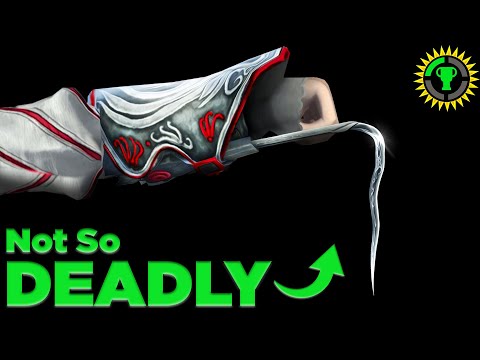
Game Theory: How DEADLY is the Assassin's Creed Hidden Blade?
the hidden blade is broken or at least it should be because Assassin's Creed's most iconic weapon the very symbol of what it means to be an assassin may be nothing more than a glorified paper weight
7 chapters
- Force Against Unarmored TargetsPhysics FormulaUsing F=ma (force equals mass times acceleration), the hidden blade generates approximately 34 Newtons of force upon ejection.Biological RequirementsForensic science research indicates that 49.5 Newtons of force is needed on average to pierce human skin, fat, and muscle tissue - the bare minimum for a silent assassination.Blade InadequacyWith only 34 Newtons, the spring-powered blade would not generate enough force to penetrate most body areas effectively, making it less reliable than simply punching the target.Alternative Tactics• Assassins can activate the blade early and punch with it extended rather than relying on spring power • Trained martial artists generate 1,000 to 2,500 Newtons with their punches, easily exceeding the 49.5 Newton requirement • This approach is more effective but less subtle and risks compromising the assassin's cover
- Force Against Armored TargetsArmor Analysis• Milanase armor from the late 1400s Italian Renaissance typically ranged from 1 to 2.5 mm in thickness • Made from medium carbon steel with 0.3 to 0.6 percent carbon content • Brutes in the game likely wore the thicker, stronger variants of this armorKinetic Energy RequirementsPiercing 2.5 mm of medium carbon steel armor requires approximately 330 Joules of kinetic energy, a calculation based on historical arrow penetration research.Required Blade VelocityTo achieve the necessary kinetic energy with a 231-gram blade, it would need to travel at 53 meters per second, or 119 miles per hour - an insane speed comparable to Ottoman-era gunfire.Physical Consequences• Firing the blade at such speed would likely dislocate the assassin's wrist, elbow, or shoulder • The recoil would knock the assassin off balance and send them tumbling with the target • This would completely ruin the stealth objective and expose the assassin to detection
- Iron vs Steel: Material WeaknessMaterial Problem• Iron is softer and more fragile than steel • When an iron blade strikes steel armor, energy goes into damaging the blade itself rather than piercing the armor • By the Renaissance era, using ordinary iron for serious military weapons would have seemed silly to any warriorHistorical Fragility• Altair and his father had their blades broken when deflecting swords • The turncoat assassin in Assassin's Creed 4 Black Flag had his blade bent completely out of shape • Even modern master assassins had their blade snap after a single punchLogical JustificationDespite steel being more durable and effective, the Assassins continued using iron for centuries, suggesting a deliberate strategic choice rather than a technological limitation.Key Advantages• Iron was significantly cheaper than steel and easier to replace • Iron was much easier to repair and reforge than steel • Work hardening process made repaired iron blades stronger than before • Assassin blacksmiths became experts in iron forging over generations
- Strategic Reasons for Iron ChoiceStealth Philosophy• Assassins prioritized hiding in shadows and avoiding attention rather than direct combat • Assassinations were only carried out when absolutely necessary • They actively tried to avoid open conflict to reduce collateral damage and casualtiesTactical Application• Assassins would sneak past enemies and knock them out rather than assassinating every henchman • The fragile blade was reserved for the main target • If the blade broke during an assassination, it had already accomplished its purposeSupply DiscretionSteel was a common military material tracked by organizations like the military and Templars, making steel acquisition risky and conspicuous. Iron, being less militarily significant, could be gathered without drawing attention to the Assassins' movements.Organizational ExpertiseGenerations of training and specialization in iron working meant Assassins never transitioned to steel like other blacksmiths did during the 15th century - changing would have required abandoning centuries of accumulated knowledge.
- Conclusion and Game IntegrationFinal AssessmentThe hidden blade, forged from iron to maintain operational security, works well with proper technique but fails against heavily armored opponents or in direct combat situations.Risk Summary• Against unarmored targets: blade generates insufficient force unless the assassin punches with it • Against armored targets: blade either breaks or must fire so fast it breaks the assassin's arm • Requires careful, deliberate tactics and target selection to be effectiveGameplay ChoicesAssassin's Creed Shadows offers two playstyles reflecting this reality: the shinobi assassin who prioritizes stealth using the hidden blade carefully, and the samurai who relies on direct strength and combat prowess.Series ContextAssassin's Creed Shadows takes place nearly a century after the Renaissance period analyzed in this video, in feudal Japan where assassins may have finally upgraded their blades - Japan was historically known for impressive craftsmanship and blade-making.