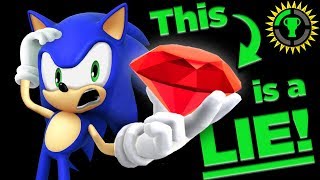

Game Theory: Sonic is Lying...AGAIN! (Sonic Mania)
Calling Sonic Team liars since 2012
9 capitulos
- The Super Saiyan MythCommon MisconceptionMany people claim Sonic copied the Super Saiyan transformation from Dragon Ball Z due to similarities with seven Chaos Emeralds, super powers, and golden hair.Timeline EvidenceSuper Saiyan debuted in Dragon Ball Z manga in August 1991, but Sonic was originally released in June 1991, several months earlier.The TwistThe Super Sonic form didn't debut until Sonic 2 in 1992, so Sonic still couldn't have copied DBZ's transformation despite the earlier release date.Key TakeawayThe comparison ignores release timelines and the specific debut of Super Sonic form in later games.
- Personal Connection to GemstonesChildhood MemoriesMatPat's fondest memories include playing Sonic 2 in the basement with friends Max and his brother, taking turns as Sonic and Tails until rage quitting.Gemstone PassionOutside of gaming, MatPat was fascinated by shiny rocks, precious gemstones, and crystals, maintaining a collection that he still has today.Research MotivationAs a rock nerd, MatPat was bothered by the Chaos Emeralds being called emeralds when he didn't think they actually were.Professional OpportunityHis current job involves researching details in video games that bothered him as a child, allowing him to finally investigate the Chaos Emeralds.
- Chaos Emeralds PropertiesPrimary Functions• Chaos Emeralds are power sources capable of powering absurd weapons like Robotnik's Eclipse cannon • They can be used by forces of good in Gaia temples for constructive purposesRecharging AbilityWhen drained of energy, Chaos Emeralds can be placed on Gaia temple altars to recharge through Earth's power, functioning like rechargeable batteries.Physical CharacteristicsFrom Sonic 3 onwards (until Sonic Mania), seven brilliant cut gemstones were finalized with colors: red, green, blue, cyan, purple, yellow, and gray.Consistency ChallengeIn early games, the number, color, and shape of emeralds were inconsistent between titles before being standardized.
- What Makes an Emerald?Gemstone DefinitionA gemstone is technically a crystal composed of a single mineral, just as snowflakes are specifically crystalline forms of water.Emerald CompositionEmeralds are specifically crystalline forms of the mineral beryl, but beryl also forms other gemstones like aquamarine, making mineral composition alone insufficient.Defining FactorColor is the key differentiator: emeralds must be green, getting their color from small amounts of chromium during formation.The Lie ExposedSonic has been lying about Chaos Emeralds for decades—only one of the seven can actually be a true emerald, making the name fundamentally incorrect.
- Identifying the Correct GemstoneGemstone SpeciesGemstones belong to the same species if made of the same mineral and structure, like rubies and sapphires both being crystallized corundum.Beryl Varieties• Green: Emerald • Yellow: Heliodor • Teal: Aquamarine • Blue: Blue beryl or Maxixe • Red: Red beryl (extremely rare, worth 150,000 times more than diamond)The Purple ProblemPurple beryl doesn't naturally exist in the deep rich shade shown in Sonic games; morganite is technically purple beryl but appears pink.Beryl DisqualifiedBeryl crystals don't behave like Chaos Emeralds in real life—they're never used to power weapons or have special properties matching the games.
- Piezoelectricity DiscoveryNew Property FoundCertain gemstones have piezoelectric properties: when squeezed or heated, they produce electrical voltage, making them potential power sources.Comic Book SupportThe Sonic comics reveal the 'Chaos Compressor' machine that uses pressure on stones to generate electricity, matching real piezoelectric behavior.Seven Crystal FamiliesOnly seven naturally-occurring crystal families have piezoelectric properties, with quartz standing out as the most common gemstone on Earth.Canon SettingAccording to Sonic lore, Planet Mobius is Earth tens of thousands of years in the future, making Earth-based gemstones plausible candidates.
- Quartz as the AnswerDual Properties• Creates voltage through piezoelectric properties when pressed • Works in reverse: applying charge to quartz crystal produces mechanical motion useful for precise machine communicationHistorical ApplicationsQuartz crystal oscillators were invented in 1927 for quartz clocks, which are over ten times more accurate than traditional mechanical clocks.Energy StorageQuartz crystals can store electrical charges and possess high capacitance, commonly used in circuit boards—matching Chaos Emeralds' ability to absorb and store power.Master Emerald ExplanationA larger quartz crystal would have naturally higher capacitance, allowing it to absorb charges from smaller stones or transfer its own charge to amplify powers.
- Quartz Color SpectrumNatural Color RangeQuartz naturally occurs in clear, yellow, red, blue, teal, pink, and purple varieties, matching all Chaos Emerald colors.Green Quartz RarityPrasiolite or green quartz is the rarest naturally occurring colored quartz because it gets its green color from radiation exposure.Radioactive ConnectionGiant green quartz crystals on Angel Island suggest possible radioactivity that could explain how talking hedgehogs, foxes, and echidnas came into existence.Sonic Origin StoryAccording to Sonic origins comics, aliens bombed Earth with genetic explosives that merged human DNA with animal DNA to create Mobians, with radioactive decay potentially creating the Chaos Emeralds.
- Conclusion and Channel PromotionFinal TheoryChaos Emeralds are most likely quartz crystals with piezoelectric properties, not actual emeralds, explaining their gameplay mechanics and color variations.Sonic Lore DepthDiving into the Sonic franchise reveals a dark and complex universe with radioactive gene bombs and interdimensional origins.Related ContentMatPat recommends JTV, hosted by professional gemologist Natalie, which covers topics like lightsaber crystals from Star Wars and dragonglass from Game of Thrones.Engagement CallViewers should check out Natalie's video on Minecraft crystals, subscribe to JTV, and comment with the word 'flapjack' to create an inside joke with her audience.