LES JEUNES VS LES POLITIQUES ! | LIMIT (CONFERENCE REDIF)
17 chapters
- Opening and Review of the 2023 Climate YearContextOpening of the LIMIT conference dedicated to youth and climate, featuring a tribute video tracing school climate strikes launched in 2019 by Anuna De Wever and Adélaïde Charlier.Key figures• 2023 is a record year for greenhouse gas emissions (41 billion tonnes of CO2) • The warmest year in approximately 125,000 years, averaging +1.46°C • 81% of the global population affected by heat waves • Canada wildfires: 2.5 times the size of Belgium burnedGood news• Rising electric vehicle sales and cleaner global electricity mix • Amazon deforestation down 61% • Announced end to deep-sea fishing by the European Commission • Recognition of ecocide as a crime, with Belgium the first country to enshrine it in lawOpening messageCall to challenge leaders ahead of European and Belgian elections, demanding concrete action rather than promises.
- Testimonies from Adélaïde Charlier and Anuna De WeverFive-year reviewAdélaïde Charlier reflects on the 20 weeks of marches in 2019, collaboration with the climate panel, and the shift from militant activism to deeper, collective activism.Cited victories• Success after 2 years of mobilization in getting Total Energy to withdraw sponsorship from Brussels 20km • Less successful mobilization against the Common Agricultural Policy (CAP), deemed still too intensiveAnuna De Wever's messageVideo message taking a more radical stance, denouncing links between colonialism, capitalism and climate crisis, and calling for broadening the struggle to other movements (including the Palestinian cause).Call to actionBoth activists call for continued mobilization in the face of rising far-right politics and the temptation of a European regulatory 'pause'.
- Léo Van Broeck's Presentation on Planetary BoundariesScientific findingsArchitect Léo Van Broeck presents the 9 planetary boundaries, 6 of which are now exceeded, and explains that 80% of biodiversity has already disappeared even before climate change worsens.Striking figures• Belgium would need 4.1 planets if everyone lived like a Belgian (overshoot day March 26) • 99.9% of vertebrate mammals are humans or livestock, representing only 1% of living carbon • The 8 richest people own more than 50% of the poorestCrisis causesLand use and the capitalist economic model are identified as the main causes of biodiversity loss, more so than climate change alone.Signs of hope• Growth in national parks and site rewilding in Belgium • Reduced land conversion in Flanders (from 5 to 3.8 hectares/day) • Citizen renewable energy cooperatives like Ecopower
- Jean-Pascal van Ypersele's Presentation: Climate Science DataEssential truths• It's real: warming is measured and visible • It's us: human responsibility is clear • Experts have agreed for nearly 30 years (IPCC) • It's serious, but there is hope through known solutionsCO2 mechanismExplanation of the direct link between CO2 concentration in the atmosphere (rising from 315 to 425 ppm) and temperature rise, through thickening of Earth's thermal insulation layer.Numerical targetGlobal emissions must be halved repeatedly until reaching net-zero by 2050 to have any hope of staying below 1.5°C.Final videoScreening of a poem-letter personifying the 'climate system' addressing the COP28 president, demanding elimination of fossil fuels and end to net deforestation by 2050.
- Presentation of Youth Forum and Vlaamse JeugdraadWho they areAurélien de Thibault (French-speaking Youth Forum) and Simon Sterckx/Dane Vanenberghe (Vlaamse Jeugdraad) present the role of youth councils in political representation.Working method• Consultation of many young people through workshops and surveys (minimum 1000 opinions to publish a statement) • Expert consultation to support science-based recommendations • Internal debates then broad media communication and actionIssues raised• Lack of environmental education in schooling • Intergenerational inequalities: a child born today will experience far more heat waves • Need for a just transition that doesn't forget vulnerable groupsInternational participationPresence at COP28, the Unicef pre-COP, and during Belgium's EU Council presidency to bring youth voice to decision-makers.
- Audience Questions and DiscussionOn concrete solutionsA participant regrets the limited focus on concrete solutions (mobility, insulation) compared to problem description.Youth responseRepresentatives stress dialogue with relevant sectors rather than technical expertise, and a collective rather than individual vision.Indirect emissionsA speaker, chair of Brussels' climate committee, emphasizes that indirect emissions (imported) are 80 to 100 times higher than direct emissions counted.Morning closureApplause for young speakers before lunch break and visit to the Animalia exhibition at Train World.
- Video: Kate Raworth (Donut Economics)Donut conceptKate Raworth presents the 'donut' economic model: leave no one below the social foundation while respecting the ceiling of planetary boundaries.Critique of current modelShe critiques the obsession with growth inherited from the 20th century and calls for regenerative and distributive economies rather than degenerative and unequal ones.New lifestyleShift from an era of private luxury to an era of public luxury and private sufficiency, with more shared common goods.TributeShe honors Jean-Pascal van Ypersele's lifetime of work for climate, marking the close of his active academic career.
- Jérôme Meessen (CLIMACT) on SolutionsAssessmentBelgium must accelerate climate action; current policies stabilize emissions but don't cut them enough to reach net-zero by 2050.Priority sectors• Urgent decarbonization of electricity, transport, and buildings • Significant effort also needed in industry and agriculture • Necessary combination of technological measures and behavior/society changesRole of businessMore companies are committing through initiatives like Science Based Targets, despite current political pressure to slow environmental regulation.ConclusionThe transition to net-zero emissions is broadly job-creating for Belgium, despite necessary sectoral retraining.
- Nicolas Van Nuffel (Climate Coalition) PresentationMobilization reviewThe 2019 marches led to major change: European target shifted from -40% to -55% emissions for 2030 and climate neutrality by 2050.Concrete progress• European Green Deal: 12 legislations adopted (Fit for 55) • Next Generation EU: at least 37% of 750 billion borrowed directed to ecological transition • EU decision to hold firm despite COVID and conservative pressureThree identified resistances• Not against us: account for different impacts on vulnerable populations • Not without us: need for genuine democratic dialogue processes • Not just us: differentiated responsibility between countries and social classes, international solidaritySeven priorities ahead• Increased ambition: -95% by 2040 • True inter-federal national energy-climate plan • Housing-energy, mobility and 100% renewable energy planning pact • CAP reform, just transition, massive investment, policy coherence, international solidarity
- Afternoon Q&A SessionEuropean taxonomyJérôme Meessen explains the European green taxonomy, a technical tool for directing financial investment toward activities truly compatible with the Green Deal.Youth mobilizationDebate on lower protest numbers compared to 2019, with explanations about diversified activism forms and the risk of over-burdening youth.Civil disobedienceNicolas Van Nuffel defends civil disobedience necessity while denouncing attempts to criminalize social protest (anti-vandalism law, obstruction of traffic).Business roleDiscussion on initiatives like 'Sign for my Future' and the importance of climate-friendly business leaders having greater influence in their representative organizations.
- Guénolé de la Chesnais (for Pierre Larrouturou) PresentationMixed European term reviewProgress on Green Deal (expanded carbon market, renewables, carbon border tax, end of gas cars by 2035) but setbacks on green taxonomy including gas and pesticides.European election stakesProjections show possible right and far-right majority in European Parliament, with risk that far-right seeks to abolish the Green Deal.Necessary social componentNeed for a climate social fund (87 billion euros planned from 2026) to prevent transition from burdening the most vulnerable.Call to mobilizeCall to vote and mobilize, citing recent victories (Total Energy sponsorship withdrawal, resolution against deep-sea mining).
- Bruno Colmant: Economic ConcernsSources of concern• Risk of global shift if Donald Trump is elected in 2024 • Systematic arbitration favoring 'end of month' over 'end of world' • Banalization of ecological discourse that loses its activist characterCritique of academiaDenouncing media-prominent researchers who transform ecological messaging into personal business, eroding its credibility.Proposals• More coherent and clear ecological action • Stronger collective commitment to IPCC-defended causes • Greater use of legal means (climate litigation)ConclusionCall for strong mobilization for European elections, the only lever he sees to counter right-wing shift and rejection of collective climate constraints.
- Hans Bruyninckx on the European Green DealDouble crisisClimate change and biodiversity loss are presented as two expressions of the same unsustainable consumption system, to be treated together.The Green DealPresented as the EU's most ambitious response, linking environment and social concerns for the first time, based on scientific knowledge and -90% emissions target by 2040.Difficult context• Record profits for major oil companies (200 billion $) against difficulties finding 100 million for climate fund • Need for circular economy (refuse, reduce, reuse, recycle, rethink)Final messageCiting Jean Monnet, he affirms preferring determination to optimism or pessimism facing climate urgency.
- Martine Capron: Ecopsychology ConferenceEco-anxiety and solastalgiaDefinition of eco-anxiety (legitimate concern about climate disruption) and solastalgia (nostalgia for already-suffered losses), presented as healthy emotions to listen to.Psychological causes• Instinctive survival program driving ever-greater consumption (dopamine) • Internal dissociations between reason and emotion • Cognitive dissonances and double binds creating resistance to changeFour possible scenarios• Business as usual / denial / greenwashing • Passivity by leaving responsibility to experts • Collapse and survivalism • Course change: collective engagement and hopeConcrete paths• Develop emotional intelligence and self-empathy • Practice Joanna Macy's 'work that reconnects' in intergenerational groups • Act in three spheres: resistance, building alternatives, consciousness change
- Musical Interlude: Tom White ShoesTransitionMusical moment allowing political party leaders to join the room before the main debate.SongThe singer performs a song about climate and hope, with a participatory refrain ('Home') repeated by the audience.Message of lyricsThe song evokes young people in the streets, the urgency to act together, and the idea that the future is within each of us.AtmosphereFriendly and festive moment before the political debate, with active audience participation.
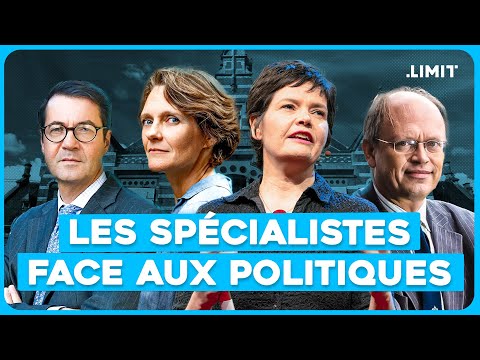
- Main Debate with Political Party LeadersParticipantsPresence of representatives from many Belgian parties (PS, MR, Ecolo, Les Engagés, Défi, CD&V, Vooruit, Groen, Open VLD, PVDA), moderated by Béatrice Delvaux and Nick Balthazar.FormatQuestions prepared by about fifty young people that same afternoon, mixing yes/no questions and timed open questions.Topics covered• Climate ambitions versus electoral concerns, climate refugee status, binding citizen panel • Kerosene taxation, day commemorating climate victims, SUV restrictions • Civil disobedience, climate and social justice, company cars, climate litigationNotable resultsUnanimous or near-unanimous agreement on several questions (kerosene taxation, commemoration day, removal of company cars); sharper disagreements on binding citizen panel.
- Closing: Tribute to Jean-Pascal van YperseleYouth speechAurélien de Thibault and a Youth Forum representative thank present politicians and stress the urgency to act, citing a climate victim and adoption of commemoration day.Biographical videoScreening of a video tracing Jean-Pascal van Ypersele's journey from childhood astronomy passion to climatologist career and IPCC vice-president role.Highlighted values• Talent as mediator in international negotiations (COP) • Commitment to social justice and against harassment at UCLouvain • Belief that 'the future is not destiny'Final tributeMarc Dubrulle, co-founder of Inter-Environnement and Ecolo, honors Jean-Pascal van Ypersele as embodiment of humanistic commitment to the planet, before the evening's festive part.