1h23 pour faire face à l'effondrement avec Keller, Hamant, Giraud.... - Économie Régénérative
How do we meet up, friends? We're going to regenerate everything. Welcome to Limite.
9 chapters
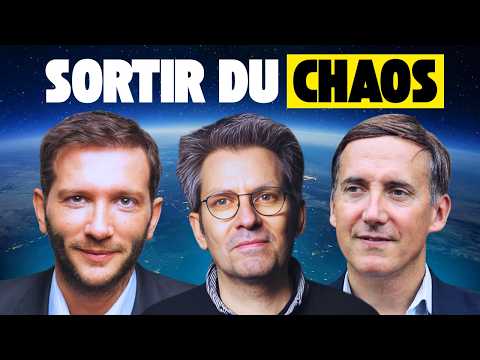
- Introduction and Speaker PresentationsContextVince introduces the event, the regenerative economy meetups in Lyon (1200 people), and presents his panel nicknamed the Avengers of tomorrow's economy.Semantic Reflection• Vince questions the etymological meaning of the word economy (oikonomia: the common home, Nomos: the rule) • He proposes neologisms to describe the current system: extractivism, thermocapitalism, externalism, business entropy, short-termism, turboconsumerism, zombie economySpeakers• Isabelle Delannoy: symbiotic economist, author of symbiotic economy, founder of Symbiotique • Gaël Giraud: economist, research director at CNRS, professor at Georgetown • Arthur Keller: engineer, specialist in systemic risks and resilience • Fabrice Bonifet: former CSR director at Bouygues Group, president of C3D, co-author of contributive enterprise • Olivier Hamant: biologist, research director at INRAE, author of robust enterprisePanel ObjectiveUnderstand why current economics is no longer an economy, and explore how to regenerate life, technology, and society—an aspect often absent from mitigation and adaptation discussions.
- Today's Mood: Speakers' MindsetIsabelle DelannoySpeaks of dual lucidity: seeing the catastrophe coming fast and democracy's fragility, but also the massive invisible movement of people doing things differently, which must now be connected like a mycelium.Gaël GiraudOvercast sky pierced by sunrays: mentions recent good news in the United States and Latin America, and local initiatives sprouting everywhere.Arthur Keller• Cyclonic weather, boiling inside • The world doesn't need a thousand isolated initiatives but a network, a shared narrative, and a shared method • Emphasizes the need for a cultural influence agent postureFabrice BonifetAgrees with Arthur on the need for method: presents Jenact, a platform created with C3D to help entrepreneurs shift from linear to permacircular models, based on cooperation and sharing.
- Grammar of a New World and Life DriveGrammar ShiftOlivier Hamant explains a shift from vocabulary to new syntax: the world we're leaving follows market law (supply/demand, nature free and unlimited), while terrestrial law rests on needs and resources, including nature as exchange partner.Life DriveLooking at a photo of a burned forest turned green two years later, people only see greenery, never the charred trees: this natural attraction to life sets things in motion, unlike media focusing on destruction.Cooperation and VulnerabilityTo create connection (the mycelium), one must accept being flawed and able to say 'I need help'; without this, no common grammar is possible.Cultural Examples• Anecdote of a burning dumpster in Lyon causing panic, contrasted with the serene attitude of Kashinawá peoples in the Amazon facing a house fire • Example of La Paz (Bolivia) in 2016: water's Day Zero, where poor neighborhoods organized through commons managed by women weathered the crisis better than wealthy neighborhoods
- Capitalization and Commons AlternativeCapitalization LogicGaël Giraud explains that since the 14th century, capitalization transforms every resource into capital, calculating its value as the discounted sum of future revenues, forbidding surprise and requiring control of the future.Commons AlternativeIn contrast, energy communities in Italy, local currencies, or La Paz favelas share risk together and set democratic rules revisable through collective deliberation.Regenerating an SME• Isabelle Delannoy details what regenerating means for a 50-person company in 24 months • Renew capacities, enable flourishing and full potential of actors • Create clear framework (commons rules) within which everyone can thrive and shape the frameworkThree Concrete Priorities• Regenerate life (arrange sites to welcome vegetation and ecological functions) • Preserve balance through reusable assets (e.g. components 94-96% recyclable, factor-16 reuse) • Regenerate society by creating ecosystems governing these commons
- From Possession to SharingCultural BarrierFabrice Bonifet evokes difficulty unlearning possession culture and immediacy (Amazon delivery in minutes), and need for new narrative.Enormous Leeway• Building space utilization rate: less than 20%, sometimes under 1% • Individual vehicles: only 4% usage for 96% idle time • Example of Leroy Merlin ad: rent a sander for €5 instead of buying it for €126Economic BenefitsSharing frees up 'disposable income' to fund higher-quality products with programmed durability; earned money must be reinvested in natural capital regeneration.Striking QuoteArthur Keller: 'when we've eaten the last fish and felled the last tree, we'll realize sucking on your credit card isn't edible'.
- Kodak, Bangladesh, and Stance Facing RuptureKodak Case• Kodak didn't miss the digital turn, they pioneered it • Error 1: thinking collapse is impossible • Error 2: treating paradigm change as mere gradual evolution (electronics on film) instead of fully rethinking the modelMacGyver PostureFacing paradigm ruptures, start from scratch using available tools (people, networks, skills) to meet new goals rather than doing the same differently.Bangladesh CaseFarmers facing monsoon disappearance dug wells in isolated 'problem-solution' thinking, causing aquifer salinization and irreversible desertification in 5-15 years.Systemic LessonAbsence of systemic thinking (silo operation) and no deep questioning: must do different, not just differently, while staying rigorous on definitions to prevent industry co-option.
- Performance Versus RobustnessPerformance CultOlivier Hamant explains that a company's legal goal is profitability, not performance; performance only works in a stable, abundant world, like a parasite.Performance-Robustness TradeoffIn a fluctuating world, profitability depends on robustness; silos are most performant but least robust; accept performance cost to gain robustness (universal physical law).Dinosaur AnalogyGaël Giraud compares increasing returns to scale (dinosaurs, GAFA) thriving in stable environments, to small adaptable metabolisms (SMEs, local associations) surviving unstable environments, like after dinosaur extinction.Targeted ExperimentationIsabelle Delannoy insists on not transforming entire company at once: create independent experimentation centers, sized to company (large have means but not fit structure, reverse for small), linked to territorial ecosystem.
- Concrete Measures Against GreenwashingQuestion AskedVince asks speakers: what concrete structural measures would you implement as CEO or president to prevent marketing co-option of terms like sobriety or regeneration?Fabrice Bonifet's Proposals• Reduce internal wage inequality (currently 1 to 200 in CAC 40 companies) • Meet customers to understand real use needs rather than product desires • Convene shareholders to bring required profitability to reasonable levels (like Earth system at 1%) • Integrate living rights representatives in boards and ban useless productionOlivier Hamant's ProposalInscribe robustness criterion in every company's mission: serve territorial robustness, preventing co-option unlike terms like sobriety, already hybrid with performance cult.Arthur Keller's PositionDeep systemic change cannot come from top (CEO or president) because even most powerful leaders cannot alone change self-organized globalized system; change must start bottom-up, network, and become cultural then political force.
- Citizen Convention, Commons, and ConclusionGaël Giraud's Proposals• Organize expanded citizen convention (climate, water, housing, work) and truly listen to conclusions • Inscribe in Constitution ban on water privatization, as Slovenia did • Generalize mission-driven enterprise status including robustness and resilienceIsabelle Delannoy's Proposals• Document and share regenerative model methods and tools to ease deployment in other territories involving local actors, municipalities, and consumers • Inscribe governance with living things, drawing from experiences where life was integrated in collective decisions, deeply changing group dynamicsVince's Closing WordHe calls speakers and audience silent revolutionaries, recalling that counter-revolution is underway (weakened duty of vigilance, European Commission retreat on Green Deal), but this different thinking movement has lasted 10000 years.ClosingCollective thanks, group photo, and invitation to register for next editions of regenerative economy meetups.