
Quand 500 jeunes ont tenu une montagne contre les nazis
21 chapters
- Context: Upper Savoy Under OccupationTerritorial DivisionAfter the French defeat in 1940, France is divided between the North directly controlled by the Nazis and the South supposedly a free zone run by the Vichy government, allied with the Nazis.Initial SituationUpper Savoy, a rural and alpine region with few industries, is not considered a threat. Conservative peasants remain relatively calm as long as they keep a French government.Tension Factors• Populations in both zones must supply a large portion of their production to Hitler's armies, creating famine • The American landing in North Africa prompts Hitler to have the southern zone invaded by Mussolini • The creation of mandatory labor service forces tens of thousands of young French to work in GermanyPublic ReactionThese events provoke mounting discontent against Vichy. Many young people choose to disappear into the wilderness rather than be sent to Germany.
- Underground Resistance OrganizationSupport NetworkJeanne Bruce, an employee of the Annecy prefecture, creates forged papers for fleeing youth, notably listing bombed cities as birthplaces to evade controls.Support Structures• Catholic youth groups house and hide young people with families in the region • The Secret Army creates maquis where it arms and trains the physically fittest youth • A secret network coordinates all these structuresUnintended EffectBy instituting mandatory labor service, Germany unintentionally sends many young recruits into the resistance's arms, some by conviction, others for lack of alternatives.Armed GroupsResistance groups emerge, such as the Simon Free Corps, an independent mobile unit led by François Servant (codename Simon), which begins with bold actions and robberies to resupply.
- Simon Free Corps: Actions and RepressionBold Beginnings• The Simon Free Corps robs the Youth and Mountain camp to obtain military equipment • They steal fuel trucks from police and distribute them to resistance villages • They loot shops in broad daylight to resupply with foodDangerous MissionsThe Secret Army leadership then uses them for assassinations of Vichy collaborators. Some missions succeed, others fail because they hesitate or are unprepared.Escalating ThreatAfter killing two German officers in Saint-Gervais, the Simon Free Corps becomes the Gestapo's and Vichy's top priority. François Servant is wounded during an arrest, hospitalized, then dies from his injuries.Group DisbandedDuring an attempt to free François Servant, the Simon Free Corps encounters 200 German soldiers. The skirmish turns into a massacre: all group members are arrested and executed the next day in a courtyard in Annecy.
- Tom Morel: Leader of Mountain BasesMilitary CareerTom Morel is a French officer who had the Legion of Honor and the military cross at age 24. Commander of an elite alpine chasseur unit, he had stopped the Italian advance in 1940 by defending the Little Saint-Bernard Pass and the ruined Redoubt.Resistance CommitmentAfter France's capitulation and the dissolution of the Vichy army, Tom Morel disappears into the wilderness. He reappears as leader of the Secret Army bases in Upper Savoy, recruiting and training young people wanting to escape mandatory labor.Authority and DecisionsTom Morel decides all military operations in the region and apparently all assassinations. He is extremely committed to obtaining the weapons promised by Churchill to equip his young resistants.Strategic ImpatienceLearning that the British will parachute weapons in February, he finds himself forced to move onto the Glières plateau 10 days early to secure the area, despite the risk with 150 men who must remain hidden.
- Glières Plateau: Strategic Choice and WaitingSite SelectionBritish intelligence and the resistance choose the Glières plateau in Upper Savoy. It is one of the few places a pilot can identify at night without GPS: a gigantic snow-covered plateau under full moon that reflects light and stands clearly apart from the territory locked down by curfew.Navigation Landmarks• From Geneva (unoccupied, thus lit), fly south • Locate Lake Geneva by moonlight reflection • Head east to identify the snow-covered Glières plateau shining distinctlyHarsh Conditions150 people climb on January 31st without lights through knee-deep snow. Elie Mufa, a former companion of Tom Morel and Water and Forestry Service employee, guides them to the summit. Conditions at the summit are catastrophic: extreme cold, insufficient food, lack of shelters.Partial ArrivalIn the first drop, the British deliver only part of the promised cargo. No one knows why. The resistants send messages and the British promise to send the rest at the next full moon, a month later.
- Complications: Incidents and EncirclementInitial GunfireA few days after arrival, a group of youth descends to find food. Police open fire without warning, triggering a firefight. Father Truffy, a resistance sympathizer, negotiates with Commander Relais, police chief and secret resistance sympathizer, to release the three arrested youth.Complicit PlanCommander Relais fears the government will blame him for the situation. Father Truffy and he devise a trick: the commander sends his laziest men up the plateau to appear active, while the priest warns resistants to hide.Plan FailedThe person tasked with alerting the resistants forgets to wake up after drinking too much. Police arrive at the plateau and the resistants, believing they are being attacked, open fire. This 30-minute firefight cannot be covered up and becomes known to authorities.Exposure RevealedLocal government, Paris, and the Germans all learn there are 200 armed people on the Glières plateau. The secret is out. The resistants face a dilemma: stay for the weapons or leave to save the base.
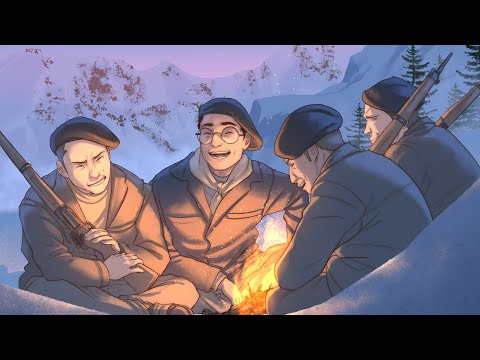
- Convergence: Arrival of ReinforcementsMission EffectsThis mission creates enormous buzz through resistance channels. It is the largest weapons shipment ever to arrive in Savoy since the armistice, inspiring reinforcements from multiple movements.Diverse Origins• Guerrillas and Partisans: communist resistance led by the French Communist Party • Former military from the Secret Army, Gaullist movement • Russians, Russian royalists in exile, Poles and Spaniards from the International Brigades • Anti-fascist Germans and AustriansMultinational UnitWithin weeks, nearly 500 resistants from 35 different groups with distinct objectives and hierarchies find themselves on the plateau. Despite their differences, they get along perfectly and patrol together to prevent militia and police from approaching.Morale and CohesionThough completely encircled, morale is excellent. This is credited to Tom Morel, who succeeds in acquiring the charisma and leadership qualities needed to be followed by 30 different groups.
- Civilian Support: Messengers in ShadowSecret ResupplyThe Water and Forestry Service organizes food delivery via unlikely routes unknown to police. One peasant even succeeds in feeding the plateau for several days by driving 25 cows behind police positions.CommunicationsMessengers, often women on bicycles, maintain contact with the outside world. They transmit messages, money and weapons, risking torture and deportation on every mission.Anonymous HeroinesColette and Lis Perès, two girls from a local village, accomplish hundreds of dangerous missions. Statistically, bicycle messengers risk their lives more often than any other resistance member.Exfiltration OperationsThese messengers also transport people, such as shot-down English pilots. Lis Perès uses a disguise as a young woman on a romantic date to pass through German patrols and get refugees into Switzerland.
- Deterioration: Rising TensionsForce ReplacementThe government realizes local police sympathize with resistants because they come from the same villages. It replaces them with the GMR (Mobile Reserve Groups), police from other regions with no sympathy for the resistance.Broken AgreementsThe GMR cease respecting established rules. Michel, a medical student assisting the plateau's doctor, is arrested during a raid to find medical supplies.RetaliationTom Morel sends 100 people to encircle a police station and take 30 officers hostage. He negotiates with Commander Lefèbre: Michel's release in exchange for the hostages. The hostages are freed but Michel never returns from Annecy.Tom's RageTom Morel, from an old Lyonnaise family where honor is paramount, is enraged. Commander Lefèbre's betrayal puts him in a fury. A few weeks later, a resistance infiltrator among the GMR reports Lefèbre is planning an attack at the plateau's base.
- The Entremont Assault: Command's DefeatTom's InitiativeTom Morel takes 300 people and attacks Entremont where Commander Lefèbre is located, seeking to reclaim lost honor or seize the initiative.Combat ChaosA dog barks and a resident shouts. The quiet Alpine village becomes chaos. For an hour, gunfire erupts everywhere. Tom eventually captures Commander Lefèbre at the Hotel de France after forcing a door on the upper floor.Fatal ConfrontationTom Morel violently insults Lefèbre, calling him a coward and traitor. He is unaware the decision to keep Michel in prison came from the colonel, not Lefèbre, and that Lefèbre had secretly aided the resistance.Pistol ShotLefèbre, impulsive and completely drunk, pulls a hidden pistol from his boot. He kills Tom Morel at close range. Tom, dead, is carried back to the Glières plateau and buried among his men.
- The Weapons Drop: Too LateFinally ArrivesThe evening of Tom Morel's burial, British planes arrive and drop tons of weapons enough to equip several maquis. Father Truffy, who had negotiated for the youth's release, fetches Tom's parents to attend the burial before being deported by the Gestapo.Urgent DistributionThe weapons must immediately be distributed to the four corners of the region and disappear. Keeping an arsenal attracts bombardment and attacks, turning the maquis into a priority target.BlizzardThe night of the drop, an extraordinarily fierce blizzard rises. The weapons disappear under snow almost as fast as resistants can secure them. Snow also blocks all roads allowing escape from the plateau.German Arrival AnnouncedNo one on the plateau knows it, but Hitler has decided Vichy failed to dislodge the resistants and he will do it himself. The 157th Mountain Division, 15,000 soldiers expert in alpine combat with artillery and air support, arrives on March 12.
- The Dilemma: Flee or Stay With WeaponsPower ImbalanceThe power balance becomes completely skewed. Against Vichy, it was already bad. Against the German army with 15,000 soldiers, artillery and air support, it is ridiculous.Only OptionThe only way to avoid being decimated by the 157th Division is to flee and never confront it directly. But resistants cannot leave without the weapons.Logistical WeightThe cargo weighs several tons. To move it on foot down from the plateau would take weeks. The German army arrives in 2 days. It is impossible to take it with them.Political Considerations• Some want to leave but fear for the resistance's reputation • Others think it is better to die with the weapons so next time the British send more • Former soldiers and youth hesitate for 2 weeks before deciding to stay with the weapons until the last second
- The Battle of Glières: First DayForce DispositionOn March 26, resistants still occupy the plateau with weapons. Militia is northwest. Germans encircle all other flanks.Initial AttacksAt 8 a.m., the Germans try to climb via Avouillon to the northeast while militia attempts the Col de l'Enclave to the west. Defenders who spent the night under snow repel both attacks.Air BombardmentAt 9 a.m., the Luftwaffe notes complete absence of air defense and bombs everything: shelters, supply caches, anything protruding on the plateau explodes.Regrouping and PauseAround 10 a.m., militia returns with twice as many troops but defenders have regrouped. Militia suffers heavy losses and must withdraw. For an hour, calm returns. Since it is winter, the sun sets early. They begin to believe in the improbable victory of 500 youth.
- The Battle of Glières: Fatal OutflankingWeak Point FoundA messenger arrives running. The Germans have found the weakness: Montbel Vrai, a poorly defended area because it is very steep and wild. It is a place where fir trees run from top to bottom of the slope, allowing hidden ascent.German TacticsThe 157th Mountain Division, expert in alpine combat, pretends to climb the main road to draw attention while part of the unit scales through the forest in complete silence.Weak PositionsThere are places at Montbel Vrai so steep resistants had posted no lookouts. No one thought passage was possible. The 157th passes carrying their weapons without making any noise.Withdrawal DecisionA defender reports most Montbel Vrai defenders with him are dead. Captain Anjo realizes German troops will soon emerge from the fir trees and kill defenders from behind. He decides he will not watch his men die: he orders retreat.
- The Rout: Massacre in RetreatDisorganized FlightDefenders must rush down the plateau in pitch darkness with German sirens behind them. Every fir tree could hide an ambush. It is too late to leave. They wanted to stay with the weapons until the last second.Command EliminationNot a single officer escapes. Those leading the largest groups draw attention. Only small teams have a chance to get through. Captain Anjo with the largest group is killed arriving at Ancy.Torent Massacre• Torent, the largest village below the plateau, is the worst spot of the rout • Many plateau youth wanted to go home • Militia obviously waited there • An illustrator, Serge Ro, was there and drew the massacre of Torent youth in the streetsHeroic Acts• The Marquis de Griffolet d'Orimon guides groups to the perimeter's exit, then returns for others until his death • Arthur Balanfha hides a group of youth in his farm, saving them from capture, but is denounced and killed with his farm burned
- Assessment and Interpretation: Defeat or Victory?Human CostOf all the youth who went onto the plateau, about half are dead. The command chain is eliminated. Survivors are scattered and lost. Germans recover almost all the weapons.Communist CriticismThe communists who lost men like everyone else are extremely critical. They publish a book in 1946 claiming the Secret Army wasted lives for a ridiculous project: staying atop a mountain hoping to hold out until the landing with weapons.Vichy PropagandaVichy speaks about it every evening on the radio, boasting how glorious police forces cleared terrorists from the plateau. It is a clearly documented military setback.British ReframingResistance radios in Paris and Algiers recall that everyone on the plateau was about 20 years old. They were practically kids trying to escape mandatory labor, untrained, inexperienced. The BBC transforms the military defeat into moral victory: the will for freedom at any cost.
- Inspiration and Consequences: Spring 1944Resistance Effect• Inspires resistants elsewhere in France who need to know others are trying • Inspires the Allies who hear about it • Gives General de Gaulle in London arguments to obtain more drops • Inspires plateau survivorsSurvivors RecoveredLouis Morel, rare section leader who brings all his men out intact (by marching them through an icy river in winter), guides 40 men to an isolated farm. For a few months, they listen to the BBC speak of their dead friends, reinforcing their determination.Return to CombatIn spring 1944, this group returns without a plateau to defend but with combat experience, leadership of enlisted military, hidden weapons, and above all conviction that resistance is possible even against the German army.Offensive Operations• Ambushes of German patrols and recovery of equipment • Explosions of police stations to retrieve denunciation letters • Derailment of trains transporting supplies for Hitler • 25 locomotives derailed in Upper Savoy in 1944, preventing any train passage through the region
- Propaganda and Liberation: The SRO FactoryStrategic TargetThe SRO factory in Annecy is the region's largest plant, producing tanks for the Wehrmacht. It is a target the Allies have tried destroying since war's start but without success, because bombing is insufficiently precise.Support OperationOn May 10, Savoyard resistants secretly enter the city, silently eliminate GMR guards at the factory, mark the roof, station and phone exchange before disappearing.Precise BombardmentAn hour later, 30 English bombers, alerted by signal, arrive and detonate all buildings still useful to Hitler. It is a joint resistance-Allied operation of remarkable precision.Worsened SituationThe militia's new chief writes to Paris: the situation in Upper Savoy is worse than before the operations. There are even places where Vichy and Germany powers no longer dare go, notably Torent, the village at the plateau's base.
- Challenge and Liberation: Toward the EndTorent's FreedomOn July 14, 1944, the resistance organizes a parade in Torent. The region is so dangerous for the government that no one comes to stop them. From July on, Torent is considered liberated. No more Vichy or Wehrmacht men will visit.Allied ContextMeanwhile, the Allies landed in Normandy. They are closer. There may be a way to receive weapons again, especially since thanks to previous sacrifices, the Allies trust the resistance relatively well.Second DropThe Americans propose sending 20 bombers to drop more weapons at once than the two previous drops combined. Symbolically, they ask where to send the weapons. The resistants ask exactly where Tom Morel is buried, at Glières.Mountain TriumphIn August 1944, 3,000 resistants climb in broad daylight without hiding to the Glières plateau to watch American bombers drop massive amounts of weapons at the same place where youth attempted the improbable 5 months earlier.
- End of Occupation: Cities FallThonon AbductionA few days after receiving weapons, the Vichy sub-prefect in the city of Thonon in northern Upper Savoy disappears, kidnapped by the resistance. Germans call for reinforcements but SS trucks meant to support them mysteriously explode.Progressive Siege• Thonon's telephone lines are cut • Water is cut • The entire city is encircled • Germans make only one unsuccessful sortieCascade of SurrendersThonon falls. It is not a village or small center like Torent, it is a real large city in Upper Savoy. Places where the Western front advances but retreat is blocked by resistants and communications cut. There are 800 soldiers surrendering at Evian. More and more cities fall: Écluse, Chamonix.Focus on AnnecyAll eyes turn to Annecy. After years of fighting, the youth know the front is advancing, that a professional army will probably land and liberate the city, but their family is still there, their friends are in prison, and the Germans are executing more and more people summarily.
- Monument and Legacy: Freedom Self-WonMonument's ReasonThis is why there is a monument on the Glières plateau 80 years later, exactly where Tom Morel was buried. It is not a war memorial but a monument to the glory of resistance.Main MeaningIt is there to remind that when the First Liberation Army climbing from Provence reached the Alps, Annecy's German garrison had already surrendered. Upper Savoy liberated itself.Self-DeterminationHere, everyone knows what they want, what they do, when they do it. The resistance did not wait for the professional army to liberate its region. It did it itself.Freedom's PoetryThe video ends with the anthem of French resistance: "Friend, do you hear..." which evokes freedom's price, the call of chains, and duty to continue the struggle. It is the spirit that animated these youth on the Glières plateau.