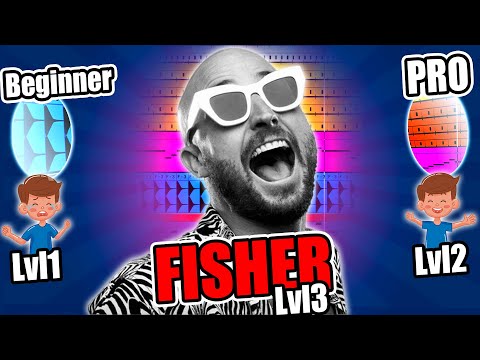
How to make TECH-HOUSE like FISHER (Compared to beginner vs pro)
4 chapters
- Beginner Level Track BuildingFoundation Elements• Focus on making the kick smash the volume levels with saturation • Use simple driving bass patterns without complex grooves • Add delay and reverb by pushing levels up without understanding patternsBuilding Process• Realize production is not that hard and add drum samples with preset sounds • Randomly introduce percussions and believe the track is already professional • Repeat the same loop for weeks until getting bored with the patternFilling The SpaceFill the track with random effects from sample packs, funky synth presets, and vocal chops, with clipping that goes unnoticed throughout the process.Common Issues• Hard to balance low end with kicks being too loud • Inexperienced with bass groove sounds making tracks robotic • Overuse of reverb and delay on individual channels instead of return channels • Lack of sidechaining between main elements • Effects and risers overpowering the groove of kick and bass
- Intermediate Level ProductionKick and Bass Design• Create a well-balanced kick with good thumb and drive without unnecessary processing • Layer bass with sub, medium, and high layers to create depth • Avoid too many top layers in tech house to prevent busy, cluttered tracksHigh-End Elements• Use multiple loops and layers that sound cool but lack personalization • Make EQ adjustments to balance stacked sounds properly • Create less organic transitions with repetitive patterns instead of groove-driven variationsPercussion and Chops• Overuse clave sounds that are cool but make tracks less original • Add vocal chops that tell listeners what is coming next with phrases like 'fill the base' or 'house music' • Overuse arp sounds as default filler when unsure what to doMain Drawbacks• Too many elements taking over the track, weakening bass groove • Long reverb tails eating space that should focus on groove • Lack of immediate catchiness compared to professional productions • Decent sounding but forgettable end result
- Professional Level: FISHER's ApproachGroove Foundation• Create a simple but gooey bass with subtle note variations giving it character • Use French LP with light drive to add organic, guitar-like feel to bass • Complement with a simple clap featuring a reverse clap filling the initial soundDrum Elements• Keep the hi-hat groove straightforward with closed hat and open hat patterns • Add percussion created from shortened open hat sounds • Use triple kick samples instead of one kick: original, shortened version, and riser version for variationLead Sound Design• Create a sophisticated lead sound with upper layer taking the first note away • Use Serum with short envelopes, unison on oscillators, and detune automation • Apply slight chorus and EQ to boost highs with same envelope automation • Design secondary lead version with smoother envelopes and removed oscillator B for variationEffects and Build-Up• Make organic effects by resampling track elements instead of using standard white noise • Create build-up by sending lead sound through delay with automated feedback parameter • Feed delay output into Vulva shimmer with increasing dry-wet and size automation • Use glue compression to control loudness during intense effect builds
- Key Production PrinciplesExecution Over IdeasThe difference between beginner and professional is not the ideas themselves but how you execute them to reflect what you have in your mind into the final product.Simplicity and Focus• Keep the groove simple so it's easy to dance to • Focus on one tiny thing happening in the bass and build everything around it • Avoid overcomplication and let small details add up to create cohesionSound Layering• Duplicate sounds and alter envelopes for variation rather than creating entirely new patches • Use multiple kick versions strategically: double kicks at specific moments for emphasis • Make creative custom effects instead of relying on standard preset effectsMix Techniques• Lift sounds subtly using utility gain instead of complex automation • Create variation by changing filter and envelope settings on duplicated patches • Keep track cohesive by making bass and lead sounds work as a team in groovy harmony