Why Pros BASS Sound SO GOOD? Here is the secret..
are you having problem with your baselines this is the hardest thing I've ever had to do in my entire life
4 chapters
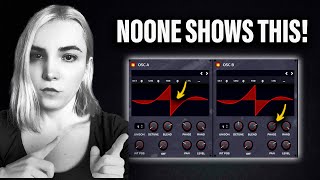
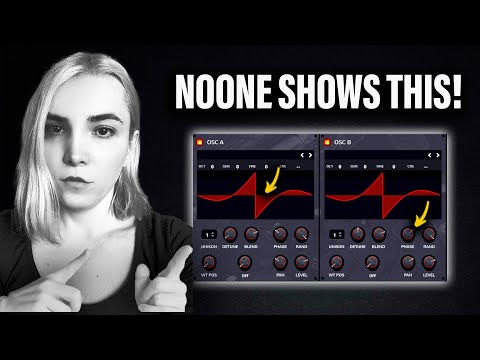
- Pro Rolling Baseline TechniqueProblem SetupRolling baselines are common, but there's a secret technique that professionals use that most people don't know about, which involves proper phase and panning control.Amateur Approach• Using Serum with envelope to create ascending and descending rolling baseline pattern • Adding Unison to achieve stereo width and using Shaper Box or side chain to the kick • Problem: stereo image is all over the place with potential mono compatibility issuesProfessional Method• Manually control individual oscillators instead of relying on Unison for better phase control • Pan oscillators to left and right while adjusting phase differences between them • Remove fundamental from both oscillators, then add sub bass back in the middle for containment • Open up stereo on the higher frequencies while keeping sub bass controlledResult ComparisonThe professional technique creates a tight, controlled stereo image similar to professional tracks while maintaining stereo width and preventing mono compatibility issues.
- Groovy Techno Baseline ConstructionFoundation Layer• Use a longer kick with body and relatively long sustain on the kick tail • Create a second channel routed to the kick channel for post effects processing • Add light reverb, overdrive, EQ, and subtle clip to create a room effect on the mid to high endSub Bass Layer• Create a warm subline using Serum with soft wave and sustain envelope • Use an 8-note pattern with spaces between notes to separate the sub from the kick • Apply Shaper Box with side chain to the kick to almost completely remove the first hit while gluing everything togetherMid and Top Layers• Add a second baseline with warm analogous sound using single soft wave with permanent filter envelope movement • Apply dry/wet and slight hyper to add stereo dimension and additional distortion for warmth • Add a squarish and softened acid sound on the side using Unison (one left, one right) with resonance, filter cutoff, distortion, delay, reverb, and final filterFinal BlendThe final filter is the main trick to clean up all the distortion while keeping the sound contained, creating a balanced groovy baseline that moves between warm and distorted elements.
- Driving Adriatic-Style BaselineKick DesignVery long kick similar to what Adriatic uses, which limits the space available for the sub bass pattern and requires overlapping elements that fit nicely together when synthesized.Sub Bass Layer• Keep it simple but strong with high saturation and very tiny second envelope on filter • Use a blend between soft wave and square wave form • Apply EQ and Shaper Box for very aggressive side chain compression to the kickTop Baseline Pattern• Create a two-bar pattern rather than one-bar for variation and longer permanence • Use FM synthesis or ring modulation for the high-frequency bass layer • Employ two engines: one for basic frequency modulation sound and one for the in-your-face top endAdditional Elements• Add a base percussion using a simple unlocked sounding bass patch • Include base horns using Unison with heavy detuning to create a big but contained sound • Apply multiple filters, distortion, compression, and EQ to control the final output
- Complex FM Synthesis Baseline Deep DiveFirst Engine Design• Use frequency modulation with a sine wave modulator tuned down to 36 (very dark and deep) • Apply position modulation using envelope to move the sound slightly upward • Use a forant filter to contain the low end and apply multiple delays and distortionsSecond Engine DesignEmploy the same frequency modulation idea with sine wave modulation to create a complementary sound that works with the first engine.Sound CharacterThe first engine creates a really bad sound in isolation, but with frequency modulation it becomes much darker and deeper, creating an authentic professional sound when combined with the second engine.Final Processing• Remove all low end to open up the baseline and give it character • Add delay effect to enhance the sound • Use final filter and EQ to clean up the top end and complete the sophisticated baseline