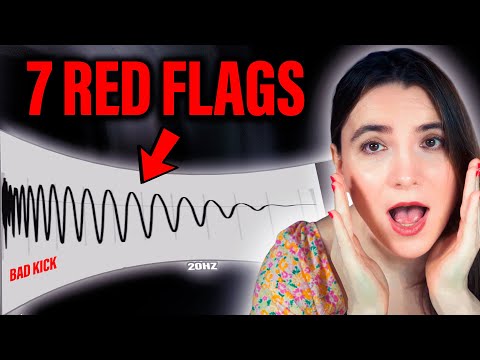
These Make Your Kicks Sound Bad
What is a good kick sample? I have been thinking about this question for a while and it is really a rabbit hole that goes deep.
4 chapitres
- Understanding Kick StructureCore QuestionWhat makes a good kick sample? The creator explores this question and discovers that understanding kick structure is essential to answering it.Three Components• Transient: A short, clicky sound at the beginning that helps the kick cut through the mix • Body/Thumb: The mid-range part (200 Hz to 3000 Hz) that gives the kick its color and where ears are most sensitive • Tail/Sub: The longest part that provides bass, typically four times longer than the transientTonal vs Atonal• Tonal kicks have a sustained note with stable frequency distance (like an F note) • Atonal kicks have unstable frequency that rolls down without any sustained note • Short sub bass can also create an atonal effect if too brief to hear notesLearning ResourceThe creator's Smooth Kicks Vol. 2 sample pack includes tonal, atonal, and unlocked style kicks plus construction kits to learn or start new projects.
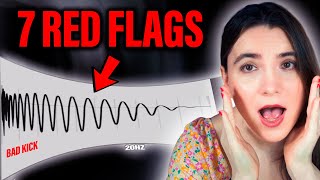
- Seven Problems with Bad Kick SamplesDC Offset IssueDC offset occurs when the audio signal is not centered in the headroom, creating an unbalanced waveform. This makes clipping occur on one side while headroom remains on the other.Stereo Problems• Stereo tail: When left and right channels differ in the bass/sub bass, creating phasing or awkward sound • Solution: Keep bass and sub bass in mono for clarity • Alternative: Use stereo bass enhancement rather than wide sub bassExtreme TransientsExtreme clickiness at the beginning causes clipping and overdrive in compressors and limiters. Late peaks can bloat the low end and drive limiters aggressively.Other Critical Issues• Extreme clipping: Avoid heavily clipped kicks unless making distorted styles like hardstyle • Loud fundamental: Energy below 20 Hz eats headroom but is inaudible to most listeners and inaudible on many PA systems • Mixed up waveforms: Constantly changing pitch creates weird bubbles and doesn't work well in regular tracks
- Choosing the Right Kick for Your TrackTransient SelectionIf your track has a lot of hi-hats and busy high-end elements, use a kick with a strong, obvious transient. Weak transient kicks will disappear in the mix.Mid-Range AdaptationFor distorted peak-time techno, use an aggressive kick with strong thumb. For smooth tracks, a gentle kick will blend better without disappearing.Sub Bass Strategy• Rumble/dark low end tracks: Use long tail kicks that blend with the rumble • Busy bass rhythms: Use short tail kicks to avoid overlap • Sustained sub bass: Short kicks work perfectly because the sub is already occupied • Moving bass: Keep kick tail shorter to accommodate rhythm changesTonality and CoherenceMatch your kick's tonality to other elements: tonal kicks work with tonal bass sounds, and atonal kicks create separation. This ensures cohesion across your low end.
- Best Practices and ImplementationRumble Kick ExampleFor rumble tracks with long, dark low-end elements, use aggressive kicks with long tails that almost feel like everything comes from the kick.Mid-Size Kick ApproachWhen the half host area isn't dominating, create a balance: use a dominant kick but ensure the rolling bass is still felt. Short kicks pop less, longer kicks provide more sustain.Glued vs Separated• Tonal kicks: Create cohesion when bass is also tonal • Atonal kicks: Sound more separated from bass elements • Key principle: Match tonality between kick and complementary bass soundsLayering TechniqueSome producers add additional bass on top of the kick in the background, creating a more regular bass layer that produces a beautiful, danceable song with filled low-end spacing.