
Des sols et des sous-sols fragilisés
Le sol joue un rôle déterminant dans nos écosystèmes. C’est un habitat pour la faune et la flore qu’il est nécessaire de protéger. Les sols et sous-sol se situent au cœur des grands enjeux environnementaux, comme la disponibilité en eau de qualité, la préservation de la biodiversité, la sécurité alimentaire ou la lutte contre le changement climatique, et ne se renouvellent que très lentement.
Soil plays a decisive role in our ecosystems. It is a habitat for fauna and flora that must be protected. Soils and subsoils are at the heart of major environmental challenges, such as the availability of quality water, biodiversity conservation, food security, and climate change mitigation, and they renew only very slowly.
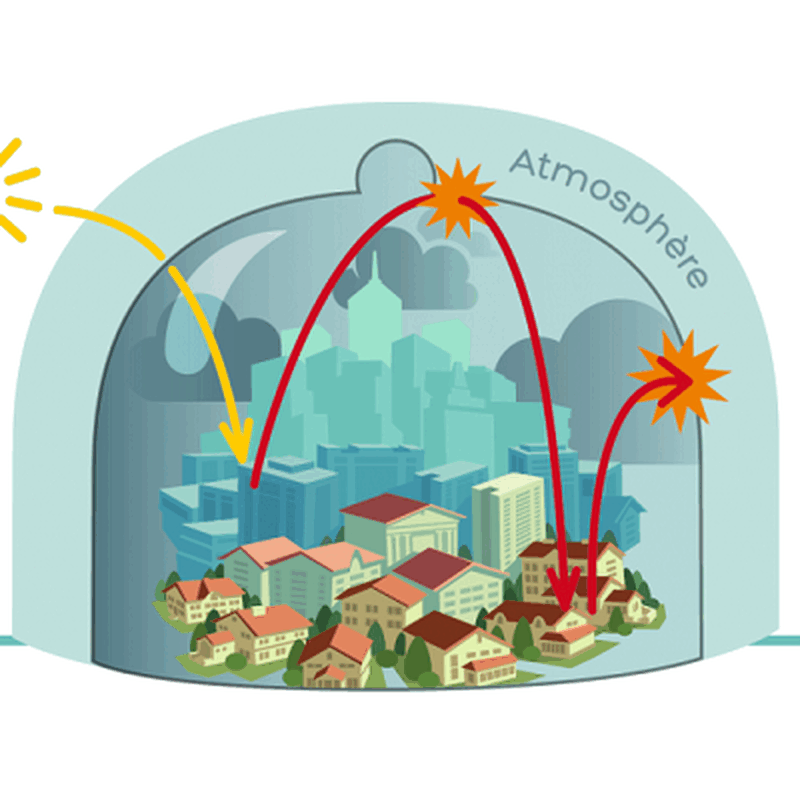
- Soils degraded by human activitiesDegradation causesSoils and subsoils degrade due to human activities such as agriculture, forest exploitation, industry, housing construction, and changes in land use. More broadly, it is soil artificialisation—the conversion of natural soil into built or developed land—that is responsible.
- Land artificialisationArtificialisation statusToday, 8.3% of land is artificialised, and most of it is impermeable, preventing water circulation, such as in parking lots or buildings. However, the rate of artificialisation has slowed since the 2010s because society has become aware of the problem.
- The "net zero artificialisation" objectiveClimate and resilience lawThe 2021 "Climate and resilience" law thus set the objective of "net zero artificialisation" to better manage land and limit the consumption of natural, agricultural, and forest spaces. The goal is to ban any net soil artificialisation over a given period by 2050.Compensation methodsThis does not mean stopping all construction, but such artificialisation must be accompanied by restoration of natural soil over an equal proportion of already artificialised spaces.
Further reading
- Rapport "L’environnement en France - édition 2019"notre-environnement.gouv.fr
L’édition 2019 du "Rapport sur l'état de l’environnement en France" est constituée d'un rapport de synthèse et de deux focus thématiques, dont la vocation est d'aborder des problématiques transversales, plébiscitées par les usagers.
- Urbanisme souterrain : un défi pour la ville de demain ?notre-environnement.gouv.fr
La brève présente les tensions urbaines actuelles et les enjeux et intérêts de l’exploitation des sous-sols pour l’urbanisation future.
- European Soil data Centre (ESDAC) (anglais)esdac.jrc.ec.europa.eu
Site de European Soil data Centre, plateforme de l'Union européenne pour l'accès aux données sur les sols en Europe
- Les multiples utilisations de données solsnotre-environnement.gouv.fr
Le Gis Sol et le RMT Sols et Territoires ont édité un document multimédia portant sur les données sols et leurs nombreuses utilisations possibles par les acteurs des territoires : agronomie, caractérisation des zones humides, protection de captage, aménagement foncier, bilan gaz à effet de serre territoriaux, référentiel de biodiversité, gestion des sols forestiers, …
- Comment se forme le solnotre-environnement.gouv.fr
Infographique illustrant la formation du sol.
- Des sols sains pour une vie sainenotre-environnement.gouv.fr
Nos sols sont en danger à cause de l’urbanisation croissante, de la déforestation, de la surexploitation et des pratiques de gestion des terres non durables, de la pollution, du surpâturage et du changement climatique.
- Sol & Biodiversiténotre-environnement.gouv.fr
Les sols hébergent un quart de la biodiversité de notre planète. Les sols constituent l’un des écosystèmes les plus complexes de la nature : ils abritent une myriade d'organismes qui interagissent et contribuent aux cycles mondiaux qui rendent toute vie possible.
- Nos sols sont menacésnotre-environnement.gouv.fr
Les sols sont soumis à une pression accrue en raison de l'intensification de leur utilisation et de la concurrence entre les divers usages des terres – agriculture, foresterie, pâturages et urbanisation. La croissance mondiale de la population devrait entraîner une augmentation de 60 pour cent de la demande de denrées destinées à l’alimentation humaine et animale, et de fibres à l’horizon 2050. La dégradation des terres résulte de ces pressions, associées à des usages et des pratiques de gestion des terres non durables, et des phénomènes climatiques extrêmes. Il est donc impératif de préserver les sols et d’encourager une gestion durable des terres pour inverser la tendance à la dégradation des sols et ainsi assurer la sécurité alimentaire et œuvrer en faveur d’un avenir durable.
- Les fonctions du solnotre-environnement.gouv.fr
Infographie illustrant les fonctions du sol.
- Les sols sont une ressource non renouvelablenotre-environnement.gouv.fr
Les sols sont une ressource limitée, ce qui signifie que leur perte et leur dégradation ne sont pas récupérables au cours d’une vie humaine.
- Des sols sains sont le fondement d’une production alimentaire sainenotre-environnement.gouv.fr
Des sols sains sont le fondement du système alimentaire. Nos sols sont la base de l’agriculture et le milieu dans lequel poussent presque toutes les plantes vivrières. Des sols sains produisent des cultures saines qui nourrissent les hommes et les animaux. De fait, il existe une corrélation directe entre la qualité des sols et la qualité et la quantité d’aliments.
- Les sols sont fondamentaux pour la végétationnotre-environnement.gouv.fr
Des sols sains sont essentiels pour assurer une croissance régulière de la végétation – naturelle ou gérée – qui fournit des denrées, des fibres, des combustibles et des produits médicinaux et qui assure des services écosystémiques tels que la régulation du climat et la production d’oxygène.
- Les sols aident à combattre le changement climatique et à s’y adapternotre-environnement.gouv.fr
Les sols sont fondamentaux pour la végétation que l’on cultive ou gère pour produire aliments, fibres, combustibles et produits médicinaux.
- Les sols stockent l’eau et la filtrentnotre-environnement.gouv.fr
L’approvisionnement en eau propre et la résistance aux inondations et à la sécheresse ne peuvent se concevoir en l’absence de sols fonctionnels.
- La vie cachée des solsnotre-environnement.gouv.fr
Le sol abrite plus de 25 % des espèces animales et végétales actuellement décrites. L'activité de ces organismes assure la fertilité des sols, la qualité de notre alimentation, la pureté de l'air et la qualité de l'eau.
- 4 pour 1000 : la séquestration du carbone dans les solsnotre-environnement.gouv.fr
Infographie illustrant la séquestration du carbone dans les sols pour la sécurité alimentaire et le climat.
- 4 pour 1000 : la séquestration du carbone dans les sols pour la sécurité alimentaire et le climatnotre-environnement.gouv.fr
Infographie illustrant la séquestration du carbone dans les sols pour la sécurité alimentaire et le climat.
- Vers une gestion durable des terres et des solsnotre-environnement.gouv.fr
Infographie illustrant les pressions exercées sur le sols et les actions permettant une utilisation des sols plus durable.
- État des lieux des sols en Europenotre-environnement.gouv.fr
Infographie présentant l’état des lieux des sols en Europe.
- Sol, terres et changement climatiquenotre-environnement.gouv.fr
Infographie illustrant les conséquences du changement climatique sur le sol.
- Cycle des matières organiques du solnotre-environnement.gouv.fr
Infographie illustrant le cycles de l'azote, du phosphore et du phosphates dans le sol.
- Le sol est les objectifs de développement durable (ODD) des Nations Uniseea.europa.eu
Infographie illustrant les liens entre les sols et certains des objectifs de développement durable (ODD) des Nations Unies.
- Groupement d’intérêt scientifique sur les sols (GIS Sol)gissol.fr
Structure ayant pour mission de constituer et gérer un système d’information sur les sols de France et répondre aux demandes des pouvoirs publics et de la société au niveau local et national.
- BRGMbrgm.fr
Établissement public de référence dans les applications des sciences de la Terre pour gérer les ressources et les risques du sol et du sous-sol.
- Infoterrenotre-environnement.gouv.fr
Portail d'accès aux données du BRGM : cartes géologiques du 1/1 000 000 au 1/50 000, dossiers de la Banque de données du Sous-Sol et logs géologiques, cartes des risques naturels et industriels, données sur les eaux souterraines...
- Observatoire des espaces naturels, agricoles, forestiers et urbains (Nafu) en Nouvelle-Aquitainenotre-environnement.gouv.fr
Outil de suivi des espaces naturels, agricoles, forestiers et urbains, qui a pour mission de disposer des données fiables et objectives sur l’occupation des sols et ainsi contribuer à l’élaboration de lignes directrices aux différentes échelles en matière de consommation des espaces.
- L’information sur les sols de France, quels outils disponibles pour quelles utilisations ?notre-environnement.gouv.fr
Interview vidéo de Jérôme Mousset, Chef du service forêt alimentation et économie à l'Ademe.
- Quatre idées reçues sur les solsnotre-environnement.gouv.fr
Vidéo sur les idées reçues sur les sols.
- La pédologie au service de l’aménagement fonciernotre-environnement.gouv.fr
Interview vidéo de Mireille Hurst, Chef d’unité aménagement foncier au Conseil général du Haut-Rhin sur la pédologie au service de l’aménagement foncier.
- Mieux délimiter les zones de captage grâce à la pédologienotre-environnement.gouv.fr
Interview vidéo de Daniel CALAME Paysan, maire de Saint Plantaire, Président du syndicat intercommunal des eaux du Val de Creuse sur la délimitation des zones de captage grâce à la pédologie.
- Un guide méthodologique pour inventorier les zones humidesnotre-environnement.gouv.fr
Interview vidéo de Diane Laure Sorrel, Chargée de mission zones humides et bassins versants au Syndicat mixte pour le développement durable de l'Estuaire de la Gironde et Philippe Chéry, Maître de conférences à Bordeaux Sciences Agro.
- Les bases de données sur les sols, l’outil du pédologuenotre-environnement.gouv.fr
Interview de Joël Moulin, Pédologue à la Chambre d'agriculture de l'Indre.
- Intégrer le stockage de carbone dans les bilans GES des territoiresnotre-environnement.gouv.fr
Interview de Thomas Blais, Ingénieur ADEME, Direction régionale Hauts-de-France.
- TypTerres : une typologie de sols prenant en compte les attentes des agronomesnotre-environnement.gouv.fr
Interview de Alain Bouthier, Agronome et pédologue chez Arvalis.
- Ajuster la fertilité des sols cultivésnotre-environnement.gouv.fr
Interview de Philippe Eveillard, Directeur Agriculture Environnement et Statistiques de l’UNIFA Union des Industries de la fertilisation.
- Développer des diagnostics de la qualité biologique des solsnotre-environnement.gouv.fr
Interview de Lionel Ranjard, Directeur de recherche à l'Inra et Julien Halska, Conseiller agricole à la Chambre d'agriculture de Saône-et-Loire.
- Le projet Agrinnov : développer le diagnostic de la qualité biologique des sols agricoles pour et par les agriculteursnotre-environnement.gouv.fr
Interview de Interview de Lionel Ranjard, Directeur de recherche à l'Inra.
- Meilleure connaissance de la capacité du sol à stocker l’eau dans un contexte de changement climatiquenotre-environnement.gouv.fr
Interview de Daniel Hannock, Conseiller agricole à la Chambre d'agriculture du Finistère et Blandine Lemercier, Ingénieure de recherche à AgroCampus Ouest.
- Estimer le réservoir d’eau maximum dans les solsnotre-environnement.gouv.fr
Interview de Blandine Lemercier, Ingénieure de recherche à AgroCampus Ouest.
- Les sols forestiers, déterminants de la ressource bois : pour une gestion durable des rémanentsnotre-environnement.gouv.fr
Interview de Noémie Pousse, Agronome et pédologue à l'Office national des forêts (ONF).
- Développer des référentiels sur les sols de Guyane pour mieux les préservernotre-environnement.gouv.fr
Interview de Michel Brossard, Pédologue et Représentant de l’IRD en Guyane.
- Estimer les stocks de carbone dans les sols forestiers susceptibles d’être transformés en terres agricolesnotre-environnement.gouv.fr
Le projet CarSGuy dans le cadre du programme de recherche sur l’Atténuation du changement climatique par l’agriculture et la forêt. Interview de Michel Brossard, Pédologue et Représentant de l’IRD en Guyane.