
La connaissance de la biodiversité
La biodiversité, c’est la variété de l’ensemble du monde vivant diversité des gènes, des espèces et des écosystèmes. La France, avec ses territoires ultramarins répartis sur l’ensemble du globe, figure parmi les dix pays hébergeant le plus grand nombre d’espèces menacées au niveau mondial. De plus, la France héberge près de 10 % des espèces connues et, chaque jour, de nouvelles espèces sont découvertes.
Biodiversity is the variety of all living things—the diversity of genes, species, and ecosystems. France, with its overseas territories spread across the globe, ranks among the ten countries hosting the greatest number of threatened species worldwide. Moreover, France is home to nearly 10% of known species, and new species are discovered every day.
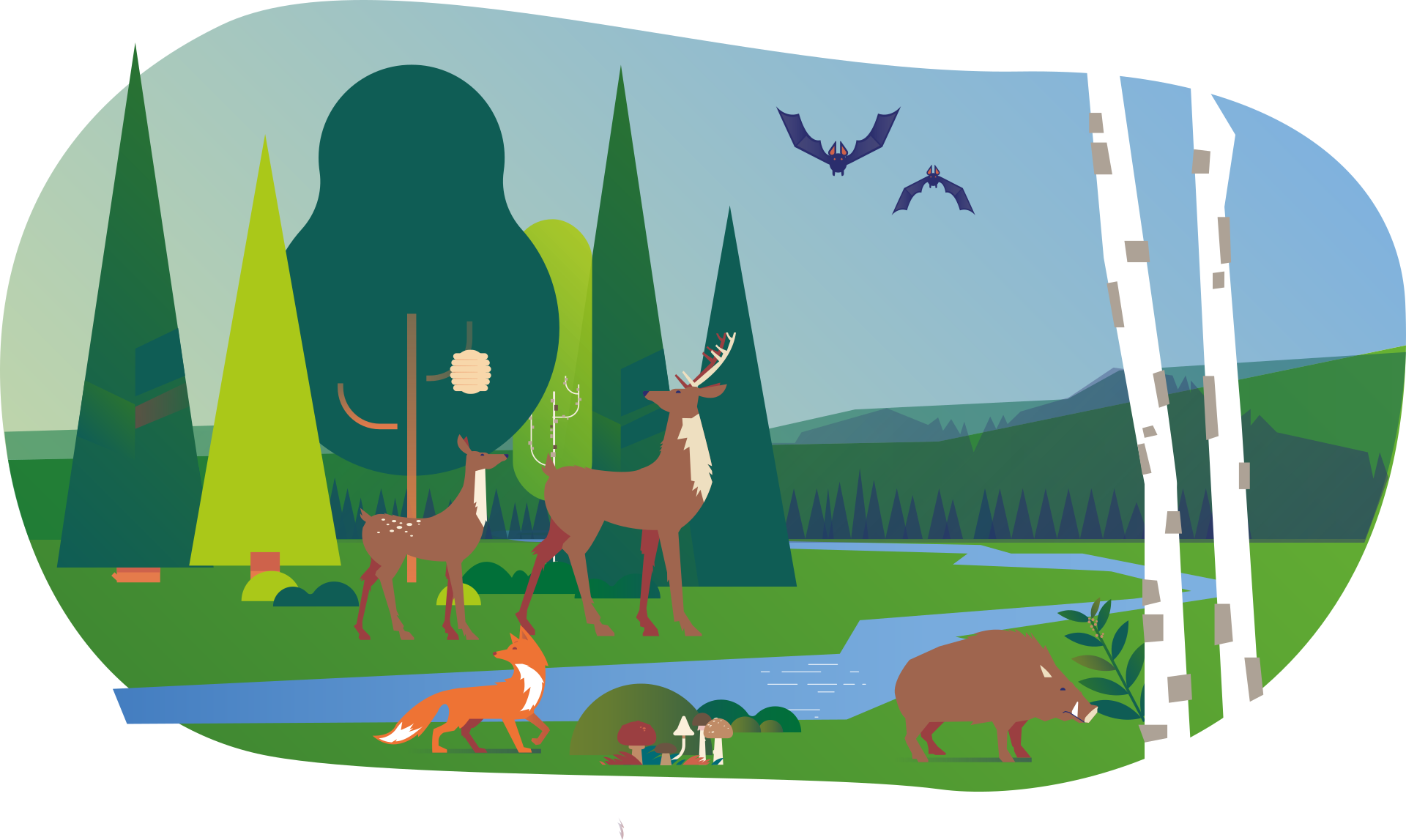
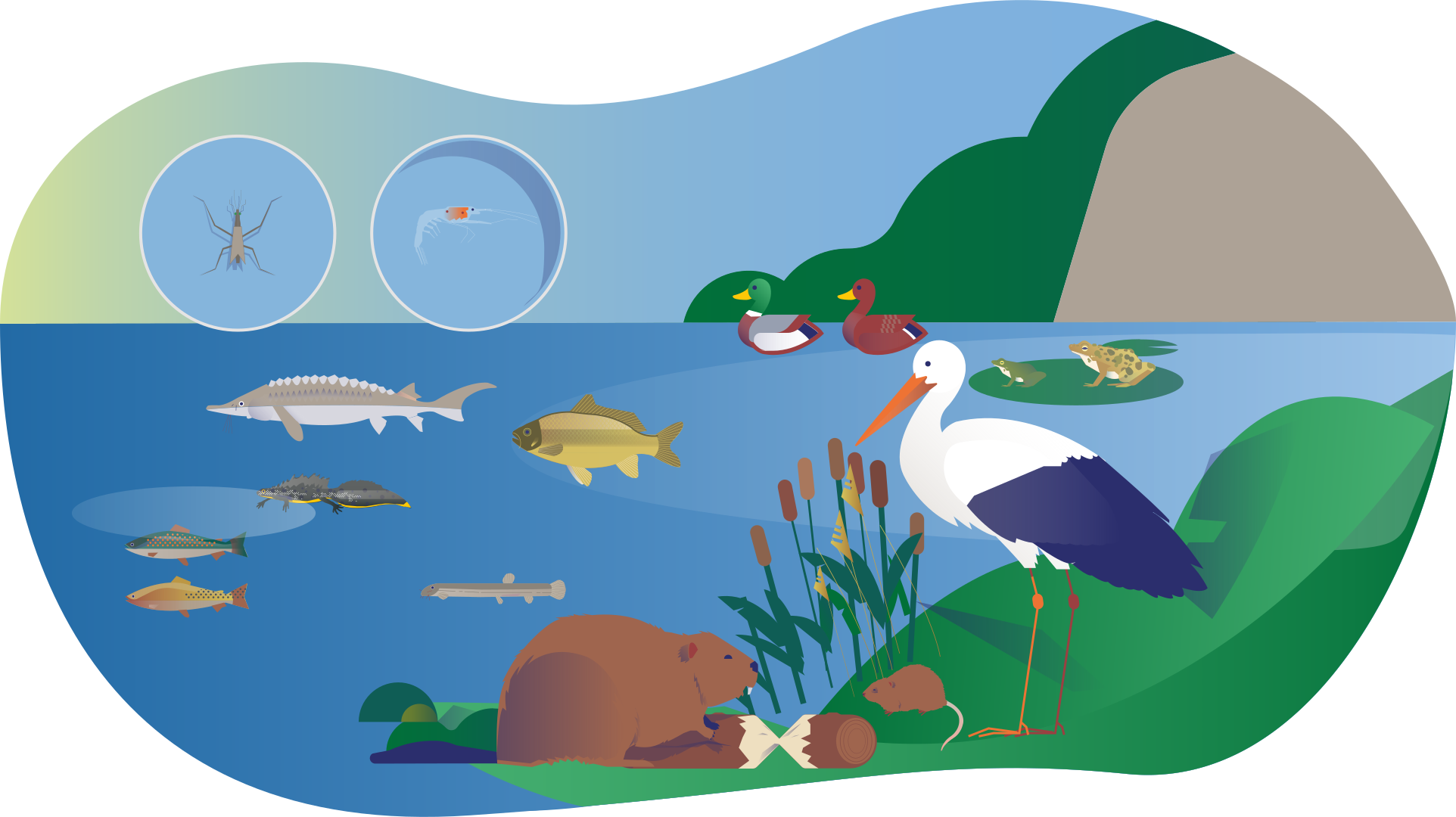
- Biodiversity, a Shared ResponsibilityInternational Responsibility• With its overseas departments and territories, France is present in all four major oceans. Its natural heritage, enriched by 22,775 endemic species, gives it significant international responsibility. Humans use these natural resources to meet their needs. They depend closely on ecosystems that provide food, materials, energy, regulate water reserves and climate, and are sources of well-being and tourism activities. The decline in biodiversity is linked to various causes: destruction of natural habitats, overexploitation of resources, increased pesticide use in agriculture, and climate change caused by human activity.Habitat Degradation• The degradation of these natural habitats increases the number of threatened or extinct species in the territory. Some spaces are considered more vulnerable than others. According to the European Habitats Directive (EHD), European-interest habitats are spaces in danger of disappearing, with reduced distribution ranges or constituting remarkable environments with very rich biodiversity. In 2019, one in five community-interest habitats in mainland France showed a favourable conservation status. Increasing soil artificialisation causes damage to these habitats. • Between 2009 and 2022, in mainland France, approximately 25,000 hectares per year on average were transformed by artificialisation. Agricultural practices, increased pesticide consumption, and closure of open spaces threaten biodiversity, as does ocean acidification which threatens coral reefs.Threatened or Growing Species• To illustrate species endangerment, in 2019, 18% of species assessed on the national Red List are extinct or threatened. Between 1989 and 2018 in mainland France, populations of common specialist birds (belonging to particular habitats: agricultural, forest, or built) declined by 23%. Between 2006 and 2016, the population of the most common bats (inhabiting a wide variety of habitats) decreased by 38%. Between 2006 and 2015, in mainland France, approximately 66,000 hectares per year on average were transformed by artificialisation. • However, the situation of certain species, such as otters and beavers, is improving. The same applies to migratory water birds that winter in France, which increased by 77% between 1980 and 2018. Protection measures, reduced pressures, and better awareness and involvement of stakeholders explain these positive trends.Solutions?• Facing these environmental pressures and threats, numerous initiatives aim to preserve this natural heritage, whose good condition is essential to ensure everyone's well-being and health. The creation of protected areas contributes to this. In 2024, France exceeded its protection target: 33% of national territory, maritime and terrestrial, is covered by a protected area, or 363 million hectares (Mha) out of 1 billion. Furthermore, part of the territory is placed under strong protection, meaning human activities that could degrade these spaces are prohibited or severely restricted. In France, 4.2% of territory, or 46 million hectares, is under strong protection in 2024, compared to 1.8% in 2021.
Further reading
- Biodiversité tous vivantbiodiversitetousvivants.fr
Le portail interministériel biodiversitetousvivants.fr est un site d’information dédié à la biodiversité. Il est porté par le ministère de la Transition écologique avec l'appui de l'Office français de la biodiversité (OFB).
- Naturefrance.fr : le portail de référence pour accéder aux données sur la biodiversité en Francenotre-environnement.gouv.fr
L'Office français de la biodiversité et ses partenaires du système d'information de la biodiversité mettent en ligne le portail web naturefrance.fr : le nouveau point d'entrée incontournable pour accéder aux données sur la biodiversité en France.
- Disparition des papillons de jour dans les départements de métropolenaturefrance.fr
NatureFrance
- Système d’information sur la nature et les paysages (SINP)notre-environnement.gouv.fr
Base de données fournissant une vision globale des données existantes dans le domaine de la nature et des paysages (espèces, habitats, espaces naturels...), de leurs modalités de production et de stockage, de leur accessibilité.
- Autorité internationale des fonds marinsisa.org.jm
Site de l'autorité internationale des fonds marins : organisme international dédié à la gestion responsable et durable des ressources marines
- Exposition itinérante : découvrez la Tournée du Climat près de chez vousnotre-environnement.gouv.fr
En 2024, l’exposition itinérante la Tournée du Climat et de la Biodiversité poursuit son parcours dans plusieurs villes de France. Conçue par des scientifiques, elle vise à sensibiliser tous les publics au changement climatique.
- L’Inventaire national du patrimoine naturelinpn.mnhn.fr
L’Inventaire national du patrimoine naturel (INPN) est un organisme français dépendant du Muséum national d'histoire naturelle, depuis 2002. Il gère et diffuse en ligne des informations sur le patrimoine naturel terrestre et marin (espèces animales, végétales fongiques et microbiennes actuelles et anciennes, habitats naturels, espaces protégés et géologie) en France métropolitaine et en outre-mer.
- État de l’environnement en Francenotre-environnement.gouv.fr
Le rapport sur l’État de l’environnement en France (REE), publié tous les 4 ans par le Commissariat général au développement durable, fournit des informations objectives, fiables et scientifiquement fondées. Il apporte des clés de lecture et de compréhension des grands enjeux de la transition écologique. La dernière édition 2024 revient en détail sur quatre défis environnementaux, étroitement liés : l’épuisement des ressources naturelles, la pollution des milieux naturels, le changement climatique, et le déclin de la biodiversité.
- Préserver la biodiversité, c’est aussi NOUS préservernotre-environnement.gouv.fr
Préserver la biodiversité, c'est aussi NOUS préserver ! La Biodiversité. On en entend souvent parler mais on ne sait pas toujours ce que c’est concrètement. C’est vrai, après tout, c’est quoi la biodiversité ? Pourquoi est-elle si importante ? Et pourquoi la biodiversité nous concerne TOUS ?
- État actuel de la planète et de la biodiversiténotre-environnement.gouv.fr
Gilles Boeuf fait état de l'érosion de la biodiversité et présente les quatre grands facteurs qui peuvent être associés à cette dynamique : destruction et pollution, surexploitation des ressources, dissémination d'espèces, changement climatique.
- L’Humain dans la Biodiversiténotre-environnement.gouv.fr
Dans cette vidéo (25'28), Gilles Boeuf, professeur à l'université Pierre et Marie Curie, présente les grands enjeux globaux auxquels est aujourd'hui confrontée l'Humanité. Il centre son propos sur la biodiversité, dont l'érosion actuelle soulève de profondes interrogations du point de vue écologique, sanitaire, humain et économique.
- Impacts du changement climatique sur les écosystèmes et la biodiversiténotre-environnement.gouv.fr
Dans cette vidéo, Paul Leadley discute de l'adaptation des écosystèmes et de la biodiversité au changement climatique, en cours et à venir. Il met en évidence la capacité plus ou moins forte de certains groupes d'espèces à s'adapter aux changements affectant leurs conditions de vie.