S’adapter au changement climatique
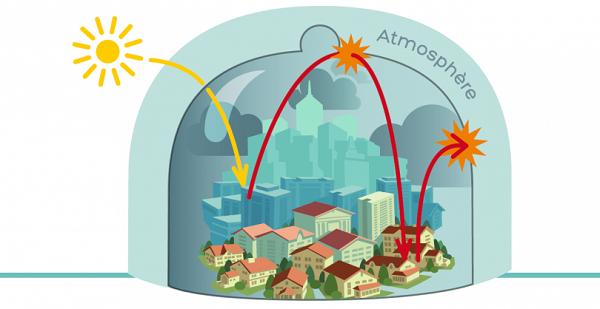
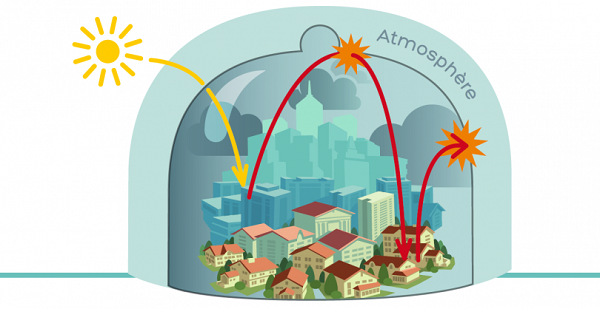
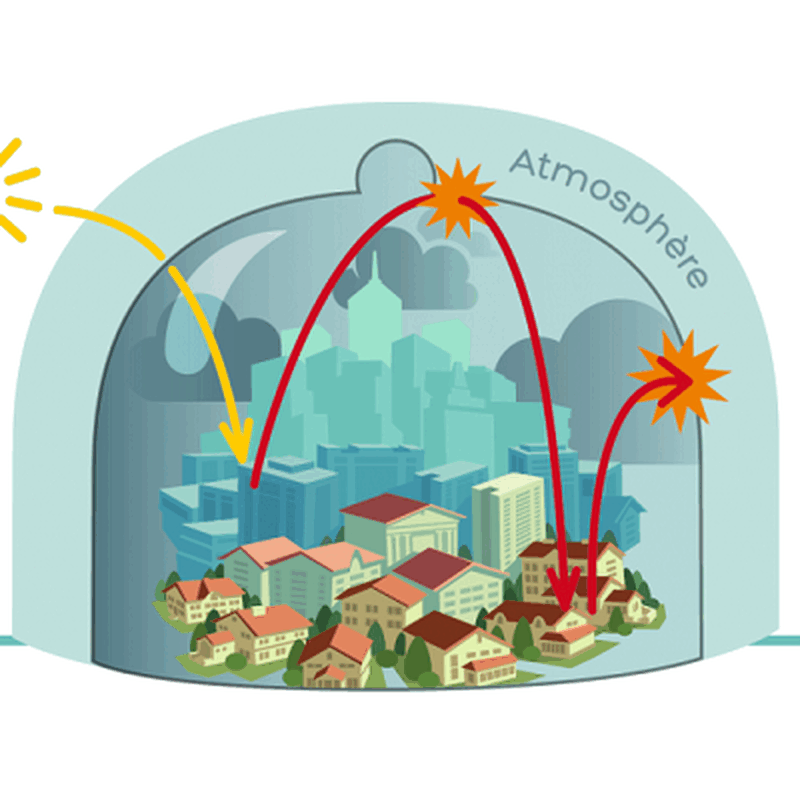
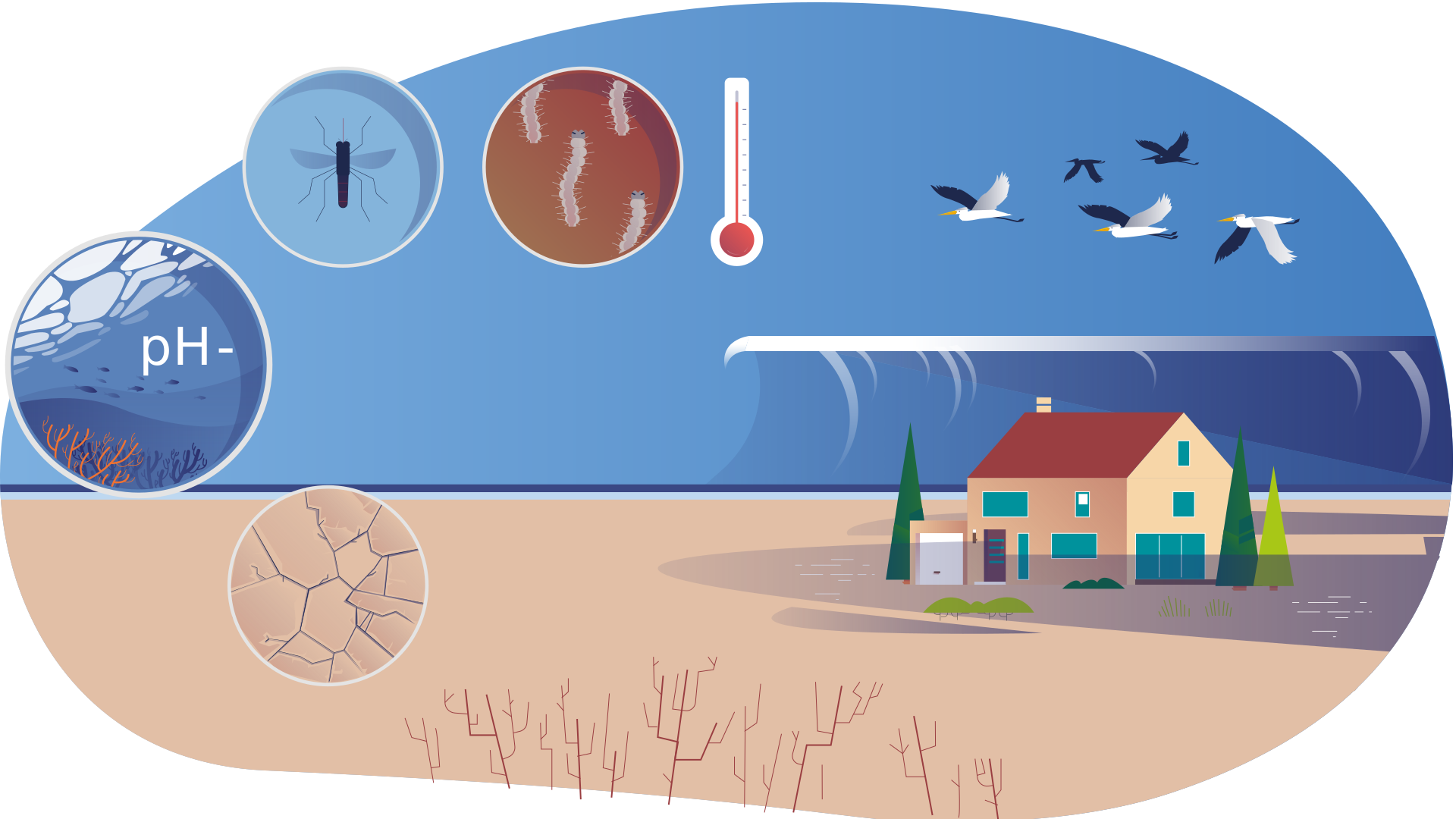
Depuis le 19e siècle et en seulement 150 ans, les activités humaines ont beaucoup augmenté la quantité de gaz à effet de serre dans l’atmosphère. Conséquence : l’équilibre naturel du climat se modifie et la surface de la Terre se réchauffe très rapidement. Les effets de ce réchauffement sont déjà observés au niveau mondial. Il est donc nécessaire d’agir pour limiter effets du changement climatique, mais aussi pour s’adapter aux changements en cours et à venir. Logement, transport, énergie… tous les aspects de la vie quotidienne sont concernés et doivent prendre en compte les conséquences du réchauffement accéléré du climat.
Since the 19th century, and in just 150 years, human activities have greatly increased the quantity of greenhouse gases in the atmosphere. As a result, the natural balance of the climate is changing and the Earth's surface is warming very rapidly. The effects of this warming are already being observed worldwide. It is therefore necessary to act to limit the effects of climate change, but also to adapt to changes underway and those to come. Housing, transportation, energy—all aspects of daily life are affected and must account for the consequences of accelerated climate warming.
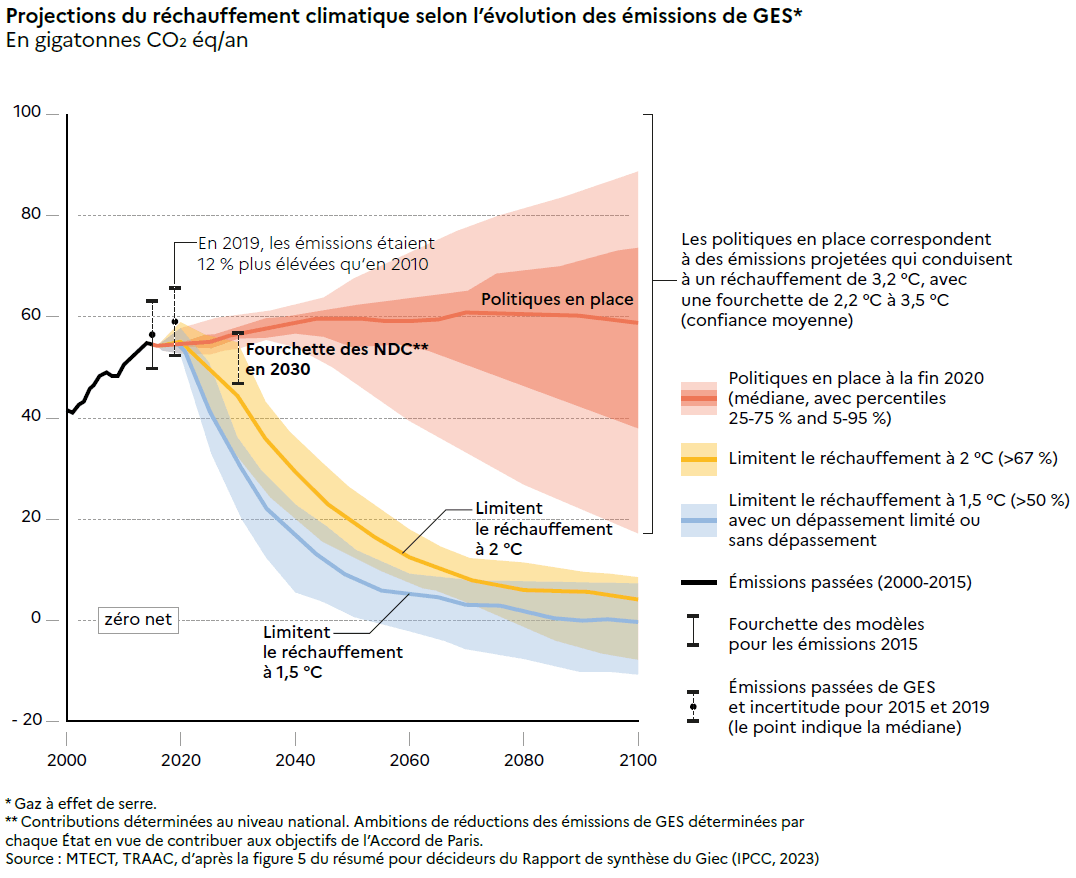
- Why and how to adapt?Mitigation and adaptation: complementary strategies• Facing climate change, our societies have two courses of action: mitigation and adaptation. The IPCC (Intergovernmental Panel on Climate Change) defines mitigation as "human intervention to reduce the sources or increase the sinks (storage) of greenhouse gases." It therefore corresponds to actions addressing the causes of climate change. Adaptation is "an adjustment process to actual or expected climate and its effects." It thus aims to manage the effects of climate change and its consequences. • Greenhouse gas emissions from human activities will continue to strongly influence the climate. The IPCC demonstrated this by proposing several scenarios extending to 2100 in its work, depending on emissions trends. This is why the primary way to combat global warming is to significantly reduce greenhouse gas emissions. This is the mitigation strategy. • But the consequences of climate change (flooding, coastal erosion, heat waves, drought, etc.) are already visible and require us to adapt now, by transforming our cities, our transportation, our lifestyles. The second approach is therefore adaptation to climate change. This involves reducing risks by making populations, infrastructure, and businesses more resilient—that is, more capable of withstanding crises and overcoming them.Coordinate action, prevent conflicts• These two approaches can reinforce each other. Adaptation sometimes accelerates mitigation policies: for example, replanting hedgerows to stabilize agricultural soils also stores carbon and thus reduces CO2 emissions. In turn, mitigation efforts greatly condition adaptation capacities: it is easier to adapt to a climate that has warmed less. • Mitigation and adaptation can also have opposite effects: adapting to extreme heat sometimes leads to increased air conditioning use, yet this increases outdoor heat and energy consumption. This is called "maladaptation." This is why we must consider these two strategies together.Practical adaptation steps• Necessary adaptation actions affect all sectors of daily life. These may include promoting sustainable mobility like cycling, which offers numerous benefits—for example, roads that are less costly to maintain or rebuild following extreme events. For housing, renovation can improve building insulation, benefiting occupant comfort and health regardless of temperatures. • Depending on the populations and regions affected, sensitivity to climate change differs. Adaptation policies therefore cannot be the same everywhere. • For example, certain islands and coastal regions are on the front lines facing rising sea levels: they must adapt their housing and prepare for economic and social consequences for local populations. In other regions facing greater drought, different solutions are needed: greening cities or water management, for instance.
Further reading
- «Changement climatique – il y a urgence à s’adapter!» par l’Agence de la transition écologique (Ademe)archives.qqf.fr
Infographie interactive
- Chiffres clés du climat - France, Europe et Monde - Édition 2025statistiques.developpement-durable.gouv.fr
Cette publication a pour ambition d’informer sur le changement climatique, ses mécanismes, causes et effets ainsi que sur les dispositifs mis en place pour le circonscrire, aux échelles internationale, européenne et nationale. Datalab – Service des données et études statistiques – novembre 2025
- Drias, les futurs du climatdrias-climat.fr
Présentation de l’évolution future du climat en France et des objectifs du Plan national d’adaptation au changement climatique. Ministère de la Transition écologique & Météo France
- Comprendre le Plan national d’adaptation au changement climatiqueecologie.gouv.fr
Explication et présentation du 3e Plan national d’adaptation au changement climatique (PNACC). Ministère de la Transition écologique Guide le PNACC- Ministère de la Transition écologique - 2018
- Observatoire national sur les effets du changement climatique (ONERC)ecologique-solidaire.gouv.fr
L’ONERC a pour missions principales de collecter et diffuser les informations sur les risques liés au réchauffement climatique, formuler des recommandations sur les mesures d’adaptation à envisager pour limiter les impacts du changement climatique et être en liaison avec le GIEC. Ministère de la Transition écologique
- L’écart entre les besoins et les perspectives en matière d’adaptation aux changements climatiquesunep.org
Rapport 2024 du PNUE (Programme des Nations Unies pour l’environnement) intitulé « Contre vents, marées et flammes ». Celui-ci constate que les nations doivent accroître considérablement leurs efforts d’adaptation au climat, en commençant par s’engager à agir sur le plan financier.
- Travail et santé-environnement : quels défis à relever face aux dérèglements climatiques ?lecese.fr
Avis du CESE (Conseil économique, social et environnemental) publie en avril 2023 au sujet de la prise en compte des impacts du changement climatique sur les conditions de travail.
- Tourisme de montagne : la transition des stations de sport d’hiverinrae.fr
Face à la fragilité de l’enneigement, l’INRAE (Institut national de recherche pour l’agriculture, l’alimentation et l’environnement) s’intéresse à la transition des stations de sport d’hiver.