HOW TO WATCH THE ECLIPSE - Extended Discussion - Smarter Every Day 2
This is a very raw video here on Smarter Everyday 2 about me learning about total solar eclipses.
18 chapitres
- Introduction and SetupVideo ContextDestin explains this is a raw, unedited discussion with Dr. Gordon Telpin about total solar eclipses, featuring real-time learning and some misspoken moments.Learning ApproachRather than providing a surface-level understanding, this video goes deep into eclipse concepts and is intended for viewers ready to learn in detail.Key ToolDr. Telpin has created an app that uses smartphone geolocation to determine exact timing for eclipse contact points (C1, C2, C3, C4) with tenth-of-a-second accuracy.Practical BenefitThe app provides audible countdowns so viewers don't have to look at watches during totality when it becomes too dark to see camera settings.
- Eclipse Frequency and AlignmentOrbital MechanicsSolar eclipses don't occur at every new moon because the moon's orbit is pitched 5° to Earth's orbit, requiring perfect alignment at specific times called nodes.Occurrence RateThere are between two and four eclipses per year, but not all are total eclipses. Eclipse seasons occur roughly in winter and summer when the orbital inclination aligns.Geographic CoverageThe entire country will experience a partial eclipse, but only the path of totality provides the complete experience where viewers can remove eclipse glasses.Shadow CharacteristicsThe umbra creates a deep shadow while the penumbra creates a lighter partial eclipse. At greatest eclipse in Kentucky, the umbral shadow is about 71 miles in diameter.
- Contact Points and Totality DurationFour Contacts• C1: Moon first touches the sun's disc as it approaches from east to west • C2: Moon completely obscures the sun, totality begins • C3: Moon moves off the sun's far side, totality ends • C4: Moon completely leaves the sun's disc, eclipse is overPartial PhasesViewers must wear solar glasses from C1 to C2 and from C3 to C4. The time between C1 and C2 varies by location, approximately 1 hour and 35 minutes in this eclipse.Totality WindowThe sweet spot between C2 and C3 is when glasses can be removed. In Hopkinsville at maximum eclipse, totality lasts 2 minutes and 40 seconds.Duration VariationTotality duration changes based on observer location within the path. The edge of totality offers only seconds, while the centerline provides maximum duration.
- Angular Diameter and Annular EclipsesCosmic CoincidenceThe sun is 400 times bigger than the moon but also 400 times farther away, creating similar angular diameters of approximately 0.52 degrees in the sky.Annular EclipseWhen the moon is too far from Earth, its umbra doesn't reach Earth's surface. The moon obscures the sun but a rim of photosphere remains visible around it.Orbital FactorsBoth Earth's and moon's orbits are elliptical. When the sun is closest (perihelion) or moon is farthest (apogee), total eclipse may not occur.Current Eclipse AdvantageThis particular eclipse is extra special because the moon is bigger than the sun in the sky, ensuring a total eclipse rather than an annular one.
- Shadow Speed and Coverage AreaDistance PerspectiveThe sun will be 94 million miles away and the moon 277,000 miles away, casting a shadow 40 to 70 miles wide across Earth.Shadow Velocity• Initial speed at Pacific Ocean: 9,500 miles per hour • Speed at Oregon coast: 2,400 miles per hour • Maximum slowdown near peak: 1,448 miles per hour • Speed leaving South Carolina: 1,400 miles per hourEclipse Statistics• Total ocean-to-ocean path length: 8,600 miles • Time on Earth: 3 hours and 13 minutes • Average US speed: 1,700 miles per hour • Total surface area covered: 0.3% of EarthRarity FactorOn average, any spot on Earth experiences a total solar eclipse approximately once every 375 years, making this American eclipse an exceptional opportunity.
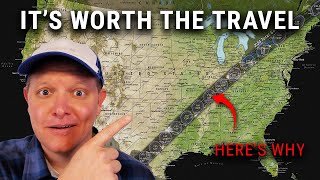
- Eclipse Path and Geographic DistributionUnited States CoverageTwelve states have the centerline running through them, and two additional states have portions of the umbra, totaling 14 states touched by the total eclipse.Global RarityLooking at eclipses from 2001 to 2040, most total solar eclipses occur in remote locations like Antarctica, Russia, and over oceans, making the US eclipse unusually accessible.Travel DifficultyHistorically, getting to a total solar eclipse requires international travel to difficult, expensive locations. This American eclipse offers an unprecedented opportunity to drive to totality.Next OpportunityWhile another eclipse will hit the US in 2024, this current one may be a once-in-a-lifetime event. Weather uncertainty and accessibility make each eclipse precious.
- Choosing an Observation LocationPriority Factors• Weather is the first, second, and third priority • Totality duration determines viewing quality • Accessibility and safety along the path • Proximity to supplies and facilitiesLogistical NeedsPlan for approximately 3 hours from C1 to C4, plus setup time one hour before. Ensure bathroom facilities, access to food and water, and ideally electricity at the site.Dr. Telpin's StrategyHe selected observation spots about 350 miles apart because weather systems typically clear in about 10 hours, allowing flexibility to chase clear skies on eclipse day.Booking ConsiderationsMany hotels in the path are already booked and some are making reservations non-refundable with price markups of three to four times. Look for refundable options when booking.
- Why Dr. Telpin Became an Eclipse ExpertFirst ExperienceDr. Telpin's first eclipse was in 2001 in Africa with his wife. They practiced extensively but were overwhelmed by the event's emotional and sensory impact.Missed OpportunityHe regrets missing the 1991 eclipse in Mexico (6 minutes 53 seconds, the longest of this era) while in his second year of plastic surgery residency training.Personal PassionHis hobby and passion for total eclipses drives him to help everyone in the country reach the path of totality, even spending personal money on his app project.Continuing CommitmentAfter each eclipse, he immediately loads Besselian elements for the next eclipse. For Chile in 2019, he'll begin the same meticulous preparation process.
- Photography Challenges and PlanningUnrepeatable EventThere is no way to practice for an eclipse because the dynamic range of lighting and the exhilaration of the event throw off photographers. You only get one shot.Knowledge SourceLearning to photograph an eclipse requires studying other people's experiences and understanding focal lengths, shutter times, and gear setup through dedicated research.Psychological PressureEclipse photography is a huge personal challenge combining mathematical calculations, location selection, and photography expertise under unnerving conditions with no second chances.Expert PerspectiveDr. Telpin, a meticulous surgical professional, finds eclipse photography even more pressurizing than his surgical work because of the inability to practice and irreversible stakes.
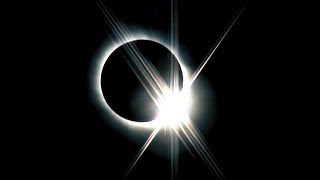
- Partial Phase Phenomena OverviewObservable Changes• Temperature drops noticeably as totality approaches • Lighting changes dramatically throughout the eclipse • Animals become confused, thinking nighttime is approaching • Crickets and birds exhibit unusual behavior in daytime darknessImportant Visual EffectsBailey's beads appear as the moon's surface features create light patterns against the sun. The diamond ring effect occurs as a final bright flash before and after totality.360-Degree SunsetBecause the sun illuminates the entire perimeter of the moon's shadow, observers see a 360-degree sunset effect all around the horizon during totality.App AnnouncementsDr. Telpin's app provides timed announcements at 45, 30, and 15 minutes before C2 to observe temperature changes, at 10 minutes for lighting changes, and at 8 minutes for animal behavior.
- Shadow Bands PhenomenonVisual DescriptionShadow bands appear as thousands of parallel, very faint gray serpentine shadows crawling across the ground in unison, resembling thousands of snakes moving together.Timing and DurationShadow bands occur only when the sun is a final slit, approximately 60 seconds before C2 and 60 seconds after C3. They last only 20 to 30 seconds total.Physical MechanismLight bends as it passes through warmer and cooler atmospheric cells at the interface between the umbra and penumbra, possibly similar to optical interference patterns.Rarity and ObservationShadow bands don't occur at every eclipse or in every observation area. They require contrast on light-colored surfaces like white sheets, light dirt, or white house sides.
- Filming Shadow BandsDocumentation ChallengeThere are very few good videos of shadow bands on the internet because they are difficult to catch, making this a critical documentation priority during the eclipse.Camera Setup• Use manual exposure mode (no auto-adjustment) • Mount on a king-size white sheet or light concrete • Alternatively, use light-colored house side or white car • Run camera from 5 minutes before to 5 minutes after totalitySetup DetailsPlace gray reference lines or paper on the sheet to help with contrast adjustment. Pre-set exposure to proper levels since the camera cannot auto-adjust during the quick 20-30 second phenomenon.Research ContributionDestin commits to setting up a dedicated shadow bands camera after learning about this phenomenon, contributing to scientific documentation of this rare eclipse effect.
- Eclipse Equipment RecommendationsUse Existing GearTry to use existing camera equipment first before buying new gear. Many people have SLR cameras or point-and-shoot devices that work effectively for eclipse photography.Optional Purchases• 90-degree eyepiece for better viewing angles (helpful when eclipse is 62 degrees high in the sky) • Remote shutter release for hands-free shooting • Solar filters for partial phase photographySolar Filter Types• Baader filter: produces white sun image • Metalized glass filter: produces yellow sun image (preferred by Dr. Telpin) • Black polymer: produces yellow sun image • Welder's glass #14: usable but poor optical quality and green tintFilter CostPre-made glass filters cost between $40 and $80 depending on diameter. Thousand Oaks Optical is a recommended supplier for quality solar filters.
- Focal Length and Corona PhotographyWhy Telephoto MattersThe sun is small in the sky, requiring telephoto lenses to capture reasonable pictures of the corona. 100mm lenses are too short to show corona detail effectively.Optimal Range• Focal lengths of 200mm show very small sun and minimal detail • 400-600mm shows more definition in corona • 800-1200mm is the sweet spot for full corona with outer filaments • Above 1000mm risks cutting off outer corona edges depending on sensor cropTesting StrategyTest focal length now with a solar filter to ensure about two sun diameters of room around the sun. You cannot practice exposures with a filter, but you can practice composition and framing.Dr. Telpin's SetupHe plans to shoot one sequence at 1000mm and another at 950mm to compare results, ensuring the outer corona filaments are captured without being cut off at sensor edges.
- Exposure Settings and Shutter SpeedFixed VariablesF-stop and ISO are fixed during eclipse photography and cannot be changed. Eclipse photography is entirely about finding the correct shutter speed for different phases.Exposure CalculationDetermine what creates a nice yellow sun disk with your setup. This exposure is good for inner corona. For Dr. Telpin's 1000mm setup at f/12.6 ISO 200, this was 1/60th second.Tracking FormulaFred Espinak's formula: 340 divided by focal length equals maximum shutter speed before Earth motion blur. For 1000mm, this gives about 1/3 second, though 1/2 second is achievable.Motorized MountsUsing a motorized tracking mount allows longer exposures and the ability to decrease ISO and increase shutter speeds, providing more flexibility for corona photography.
- Manual Mode and Bracketing StrategyManual Mode RequirementAlways shoot in manual mode because the dynamic range of totality confuses camera autofocus and autoexposure systems. Dark sky, bright corona, and bright moon create impossible metering conditions.Manual FocusUse manual focus and aim for infinity, but sunspots help achieve crisp focus. Camera autofocus cannot handle the transition from bright partial phases to dark totality.Bracketing ApproachUse auto-bracketing if available: one normal exposure plus two stops above and two stops below. This captures the full dynamic range of corona from inner to outer filaments.Dynamic Range ChallengeNo single exposure captures the entire corona detail. Bracketing across 10 stops is necessary because inner corona and outer corona filaments require vastly different exposure times.
- Chromosphere and Exposure SequencesChromosphere LayerThe chromosphere is the second layer down in the sun, visible as red bands when shooting at very fast shutter speeds like 1/1000th second during totality.Exposure Progression• 1/1000s: Shows red chromosphere only (no corona) • 1/60s: Shows inner corona but chromosphere is washed out • Longer exposures: Reveal outer corona filaments • 10+ stops of variation needed for full dynamic rangeStop CalculationsUnderstanding camera stops and relationships between focal length, ISO, and shutter speed is essential for eclipse photography. Going from chromosphere view to outer corona requires about 4 stops of exposure increase.Complete SequenceA well-executed sequence shows progression from first contact through all partial phases, totality with varying exposures, back through partial phases to fourth contact, creating a comprehensive eclipse documentation.
- Eclipse Day Checklist and SummaryVisual Observations• Watch for temperature drops as eclipse progresses • Observe the 360-degree sunset around the entire horizon • Look for Bailey's beads showing moon surface features • Catch the diamond ring effect before and after totalityContact TimesKnowing exact times for C1, C2, C3, and C4 is essential for both photography and observation planning. These determine when to photograph versus when to watch with your eyes.Rare Phenomena• Shadow bands appear as serpentine shadows before C2 and after C3 • Bailey's beads show lunar topography • Diamond ring creates a photogenic moment • Partial phase phenomena reveal atmospheric and astronomical effectsFundamental RuleThe heart of scientifically viewing an eclipse is understanding and observing the four contact times. This knowledge enables both effective photography and meaningful observation of this rare cosmic event.