April 8, 2024 Total Solar Eclipse: Here's what you need to know -Smarter Every Day 295
Once you see it, it was one of the most amazing and emotional experiences I've ever had, other than seeing my own children being born.
9 chapitres
- Why Total Solar Eclipses MatterPersonal JourneyDestin saw his first total solar eclipse in Wyoming in 2017 after being encouraged by Dr. Gordon Telepun, a surgeon. The experience was so profound it changed his perspective on life completely.Emotional Impact• Viewers describe it as one of the most amazing experiences comparable to seeing children being born • The event creates feelings of awe, fear, and insignificance due to the immensity of astronomical bodies • It changes perception and creates a desire to experience more natural phenomenaSensory ExperienceDuring totality, you can see stars in daytime, witness the sun's corona, and experience changes in insect behavior. One observer noted cicadas changed their sounds to cricket sounds as darkness fell.2024 OpportunityThe April 8, 2024 total solar eclipse is the biggest opportunity for people in the United States and northern Mexico to witness this phenomenon, and you must be in the path of totality to see it.
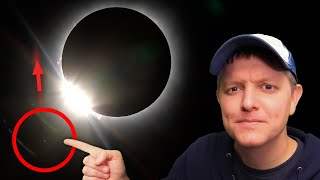
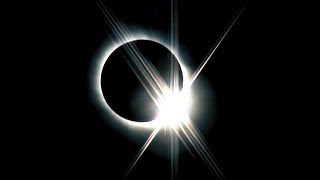
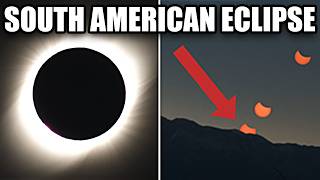
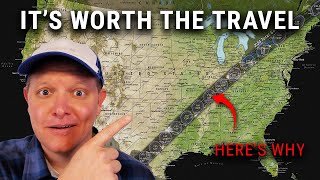
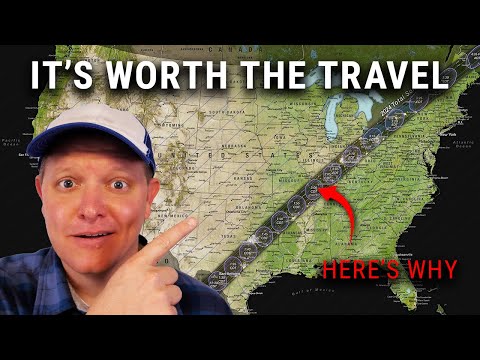
- Understanding Totality and the PathWhat is TotalityTotality occurs when the disk of the moon completely obscures the disk of the sun. During this moment, you can see Bailey's beads (jagged edges of the moon), a diamond ring (ejecta around the sun), and the sun's corona.Path RequirementsYou must physically be on the strip of land where totality occurs across the country. Being even 5 miles outside this path means you cannot see the total solar eclipse because the math does not work out.Animal ResponseWhen tested outside the path of totality, animals like chickens showed no significant behavioral changes. They simply continued eating as the eclipse darkened and cooled the environment, then warmed again.Planning AdviceIf financially and work-wise possible, make the trip to the path of totality with someone you love. Tens of millions of people will watch this event, making planning and weather monitoring essential.
- Science Stations and Partial Phase PhenomenaConcept OverviewDr. Gordon Telepun created science stations to teach about partial phase phenomena. An eclipse is more interesting than just totality, with fascinating science happening during the hour and a half between first contact (C1) and second contact (C2), and between third contact (C3) and fourth contact (C4).Contact Points• C1 (First Contact): When the moon first takes a bite out of the sun • C2 (Second Contact): When totality starts and the moon obscures the sun completely • C3 (Third Contact): When the photosphere reappears as the moon moves off • C4 (Fourth Contact): When the moon moves completely off, ending the eclipseSolar Eclipse Timer AppDr. Telepun created a free app called Solar Eclipse Timer that uses your GPS location to count down contact times. The app guides you through the eclipse with voice announcements, helping you know exactly what to look for and when.Observation ToolsViewers should bring certified solar eclipse glasses (ISO 12312-2 certified) for all partial phases. Welding glasses are not certified as they do not block the correct amount of infrared and ultraviolet light.
- Temperature and Weather PhenomenaTemperature MonitoringA four-station temperature data logging tower monitors air and ground temperatures. The ground sensor cools before air sensors because it is heated directly by the sun, documenting a mini inversion layer during the partial phases.Felt EffectsPeople at the event will start feeling the temperature change before sensors at higher elevations register it. This creates a noticeable cooling effect that varies across different heights and locations.Eclipse BreezeThe eclipse breeze is a subtle phenomenon that occurs when hills or mountains to the east or south cool before the observing site. The cooler, denser air rolls down valleys creating a cool breeze from the direction of umbra approach.Cloud DissipationConvective clouds created by ground warming and moisture can dissipate 10 to 15 minutes before totality. However, big thick gray rain clouds from weather fronts will not dissipate because they do not rely on solar energy.
- Pinhole Projection and Safe ViewingLight Refraction PrincipleLight from the top of the sun crosses through a hole and goes to the bottom, while light from the bottom crosses and goes to the top. This creates projections that show the sun's shape and phase changes during the eclipse.Crescent PatternsDuring normal conditions, pinhole projections show round circles. During the partial phases, these turn into crescents. Before totality, the crescent points one direction, and after totality, it flips to point the opposite direction.DIY Viewing Methods• Use paper with punched holes to create pinhole projections • Bring a kitchen colander to project crescent shapes safely • Use a cheese grater for pinhole projection effects • Create a pinhole projection shoebox with tinfoil, a viewing box, and white card at the bottomEye Safety RulesEveryone must wear certified solar eclipse glasses during all partial phases. Only during totality is it safe to remove glasses. Do not look directly at the partial phase eclipse as it can injure your eyes.
- Shadow Effects and Atmospheric PhenomenaSharp and Fuzzy ShadowsWhen you rotate something 90 degrees during the eclipse, the edge aligned with the crescent becomes sharp, while the perpendicular edge remains fuzzy like an extended light source. All parallel sides to the crescent direction are sharp, and all perpendicular parallel sides are fuzzy.Visual ExplanationWeird shadow behavior during the eclipse is explained by the crescent-shaped sun acting as a focused light source. People may notice their shadows look strange without understanding the science behind it.Shadow Bands (Shadowsnakes)The little slit of light from the crescent sun creates rectangles on the ground arranged in rows. Atmospheric perturbations cause these rows to shift left and right, look like leapfrogging snakes, or remain stagnant depending on air movement.Observation Tips• Look for shadow bands at 90 seconds, 60 seconds, and 30 seconds before C2 • They are more dramatic after C3 when dark adaptation is complete • Place a white sheet or whiteboard in front of your group to see them clearly • They resemble boiling water but always appear in organized rows
- Animal Behavior During EclipseBehavioral TriggersAnimals respond to the darkness of the eclipse by thinking nighttime is coming, so they start their nighttime behaviors. Humans understand the eclipse is happening, but animals only sense light changes.Cricket and Bird Activity• Crickets start chirping intensely about 10 to 15 minutes before totality, often going wild in natural environments • Birds fly to their nighttime resting spots in the 15 minutes before totality, appearing to travel somewhere purposefully • This is not random behavior but a response to light level changesBee Navigation ChangesBees use the sun to navigate to flowers and back to their hive. Before totality, hive activity increases as bees try to return home before darkness. Bees unable to return will land and wait for the sun to reappear.Documentation OpportunityBeekeepers should set up video cameras at their hives to document activity changes. During partial phases, hives are very busy, but activity decreases as totality approaches. Cameras on bee-visited flowers show similar busy-then-quiet patterns.
- Color Perception and Visual PhenomenaThe Purkinje EffectThe human eye contains rods and cones. Cones are light sensitive to colors, while rods are more monochromatic. As the eclipse progresses, color sensitivity changes and bright colors appear muddy, creating a weird visual sensation.Eyes AdaptationAs the eclipse gets darker, the color sensitivity of your eyes changes. This phenomenon makes normal bright colors look different and creates an unusual perceptual experience during the partial phases.Practical ApplicationWear bright colored shirts and clothing on eclipse day to help you sense the color sensitivity changes in your eyes. This makes the Purkinje effect more noticeable and memorable.Educational ReminderDr. Telepun created a Purkinje Effect shirt with the label to help viewers remember and recognize this phenomenon during the eclipse. This humorous approach makes the concept more memorable.
- Independent Media Initiative and Final AdviceSensational Content ProblemYouTube creators have incentive to make sensational content because higher views mean more sponsorship and money. This market pressure can result in content that is not good for society despite being attention-grabbing.IMI Solution• Independent Media Initiative partners with foundations to get nonprofit money into creators • They select authentic, genuine creators making educational and artistic content • They create an alternative path to promote quality creators beyond the sensationalism incentive structure • They aim to create intelligent, respectful content on the internetViewing RecommendationBe thoughtful about the video you watch after this one. What you put in your mind is important. Independent Media Initiative provides a selection of quality creators on their website as a good starting point.Eclipse Day Tips• Watch weather patterns a few days before and plan to drive to areas with high pressure systems • Have multiple location options and remain mobile to avoid clouds • Use pinhole projection with your name or the date on it • Observe both sharp and fuzzy shadows • Let crickets and animal behavior happen naturally