The Science Behind Dogs' Incredible Sense Of Smell
9 chapitres
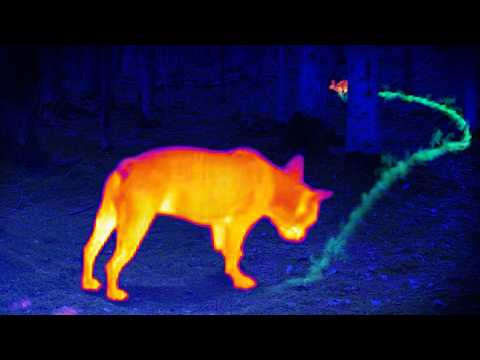
- Dogs' Superior Olfactory SystemDetection Applications• Scientists use mirrors, lights and lasers in government labs to illuminate air temperature and density differences • These tools track how drug powder settles in rooms, determine which person fired a gun, and spot particles escaping sealed packages • Dogs' noses serve as nature's best chemical detectorBreathing MechanicsDogs breathe out and in rapidly around five times a second, creating pulsating air motion that allows them to detect faint scents from far awayAir Flow Strategy• When dogs exhale, turbulent air jets come out of each nostril • Dogs vector exhaled air back towards their rear, creating a reverse flow that pulls air from ahead • This in-and-out bellows effect increases their detection reach by roughly a factor of 18Real-World ImprovementScientists designed nostrils that plug onto commercial vapor detectors to make them sniff like dogs, improving detection capabilities by a factor of 16 to 18 on average
- Visualizing Air Flow with Schlieren ImagingSetup Components• Automotive headlamp as light source • Condenser lens to focus light to a point • Large mirror to collect diverging light beams • Two-way mirror to redirect light • Razor blade positioned at focal point to block shifted light raysHow It WorksLight rays passing through objects of different refractive index or density refract and bend slightly; a razor blade cuts off the shifted rays while allowing straight rays through, creating visible contrast of temperature and density differencesShadowgraph VariationA simpler alternative using a flashlight and white wall that casts shadows of hot plumes; less sensitive than Schlieren but easier to buildPractical ApplicationsBoth techniques visualize flow patterns and can determine bullet speed and gunshot loudness by analyzing shock wave intensity and characteristics
- Analyzing Ballistics and Projectile MotionBullet Dynamics• Supersonic bullets create tiny bow shocks visible in Shadowgraph footage • A Smith & Wesson handgun fires at roughly Mach 1.05, just above sonic speed • An AK47 assault rifle produces bullets traveling at approximately Mach 2-2.5Sound Intensity MeasurementThe darkness of the shock line in footage indicates firearm loudness; darker lines represent louder reports due to greater pressure, temperature and density changes across the shockShock Wave PhysicsObjects moving faster than sound compress pressure waves into a single conical shock wave, creating a tiny sonic boom; the shock angle relates to object speed through the sine of the angle equaling the ratio of sound speed to object speedSpeed CalculationThe angle of the conical shock wave can be measured and used to calculate the Mach number and determine the exact speed of the projectile
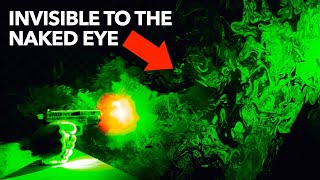
- Gunshot Residue Visualization with Laser SheetsTechnique SetupA laser beam is steered through a cylindrical glass rod that spreads it into a two-dimensional wall of laser light; this sheet illuminates fine particles to make them visibleResidue Dispersion• Gunshot residue is burned and unburned propellant generated when a firearm is discharged • Residue plumes spread far beyond visible range to the naked eye • In home environments, five shots in seconds produce enormous amounts of material dispersing everywhere • Much lands on the shooter's hands but significant amounts also disperse into the local environmentForensic InvestigationInvestigators must differentiate between residue from an actual shooter versus bystanders who entered the scene minutes later using trace detection techniquesPractical VisualizationHigh-speed cameras combined with laser light sheets reveal detailed gunshot residue plumes and air turbulence patterns invisible to the naked eye
- Human Thermal Plume and Locard's Exchange PrincipleThermal SignatureEvery person generates a warm plume of air called the human thermal plume containing water and shed skin cells at a rate of thousands per hourLocard's PrincipleEvery contact leaves a trace; people constantly shed skin cells and take things, meaning anyone in a space contaminates it and takes contamination awayDetection Sensitivity• Chemical detection systems can identify a single particle of explosive residue • Illicit manufacturers inevitably contaminate themselves with bulk material through very small particles • This contamination becomes detectable evidence despite being invisible to the naked eyeLaw Enforcement ApplicationThese principles enable detection of explosive residue on people, shoes and surfaces to identify those involved in manufacturing explosives or other illegal substances
- Package Screening and Trace Detection MethodsScreening ChallengeOperators have only 10 seconds to sample packages at screening facilities; finding the optimal location to point detection devices significantly increases the chance of detecting hidden contrabandBurping Technique• By squeezing or disturbing a package, vapor inside is released through gaps • Acetone vapor testing shows vapors escaping from all package gaps and corners • Corners and edges provide the highest chance of detection since materials permeate through these areasParticle VisualizationLaser light sheets reveal how talc powder or other fine particles escape from sealed containers when disturbed, though invisible to the naked eyeContamination LevelsWhen simulating illicit drug manufacturing, enormous amounts of powder contamination spread throughout a room and land on surrounding surfaces, creating widespread trace evidence
- Advanced Air Flow Analysis and Drone SamplingReal-Time MonitoringLaser sheet techniques visualize turbulence and air flow patterns in real time; graphs show live particle counts representing inhalation exposure of materials being handledSurface Contamination Mapping• Fluorescent powder added to materials visualizes where contamination spreads • Quantitative swabbing methods sample surfaces, same as airport security hand-swabbing procedures • This identifies trace explosive particles on people potentially involved in manufacturingDrone Innovation• Drones equipped with special collectors on their belly use prop wash to stir up particles from surfaces • Drones can safely sample suspected illegal manufacturing facilities without risking Hazmat crew exposure • Chemical analysis of collected particles determines if a location is clean or contaminatedCost and Safety BenefitsThis approach avoids expensive and dangerous Hazmat crew deployment; the drone buzzes around, collects samples, returns to base for analysis, then hazmat teams can be called if necessary
- COVID Mask Effectiveness and VisualizationTesting System• A pneumatic breathing system replicates human breathing rate and includes a fog generator • The system breathes like a human would, exhaling millions of particles • Image processing code analyzes pixel brightness to count particles passing through masksMask Performance Results• N95 masks allow only 5% of particles to pass through • Cloth masks allow significantly higher particle penetration with visible light transmission • Thinner masks show greater heat transfer effects and more particle leakage over the topPublic Communication ChallengeInitial messaging about mask effectiveness created confusion; visualization videos communicate more effectively than scientific journal articles to the average viewerBreathing Pattern VisibilityThermal imaging shows distinct color changes when breathing naturally; inhalation makes the view dark while exhalation produces lighter appearance from warmed lung air
- Standards Development and Future ApplicationsFederal Research Process• Three-letter agencies bring specific security needs to NIST laboratory • NIST researchers figure out good sampling methods, identify poor approaches, and determine measurement requirements • Standards are then created to support these measurementsIndustry SupportNIST packages findings and gives them to sponsoring agencies, who distribute to industry; this gives companies a head start in developing detection systemsExpanding Applications• Indoor air quality monitoring • Two-person interaction analysis to visualize transfer between individuals • Flow visualization as a critical tool for understanding particle generation and spreadKey TakeawayFlow visualization combined with quantitative surface analysis reveals where particles originate and how they spread, providing comprehensive understanding of contamination and detection challenges