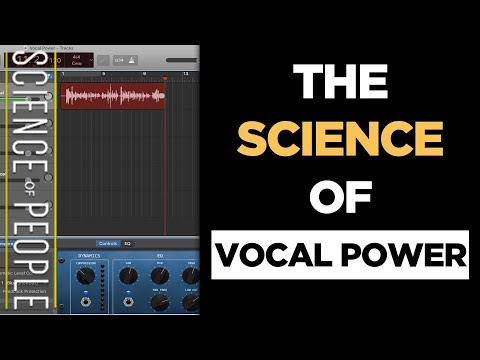
Can You Make Your Voice Sound Better? Use the Science of Vocal Power
5 chapitres
- Introduction to Vocal Power and Maximum Resonance PointWhy Voice MattersCertain voices like Morgan Freeman's deep resonance and Sean Connery's accent are loved, while others like Fran Drescher's nasal voice drive people crazy.Key ConceptMaximum resonance point is a voice tone that provides the most confidence and vocal power, coined by Dr. Nick Morgan.Video Goal• Show how to find your maximum resonance point • Help people listen to and love your voice • Increase confidence through vocal optimizationFoundationYour voice plays a critical role in how you are perceived by others.
- Finding Your Comfortable Vocal RangeSetup RequiredAccess an online virtual keyboard from scienceofpeople.com/voice to play and match notes.Range Discovery• Find the lowest note you can comfortably sing • Find the highest note you can comfortably sing • Count the white notes between these two pointsTypical RangeAccording to Dr. Morgan, the comfortable range is usually about two octaves or 16 white notes.Personal ExampleThe presenter's comfortable range spans about 15 white notes, from C to a higher C.
- Locating Your Maximum Resonance PointCalculation MethodDivide your total comfortable notes by 4 to find the range size, then count up that many notes from the bottom of your range.The Sweet SpotThe notes in the middle section of your range represent your perfect resonance point where you should focus your speaking voice.Why It WorksSpeaking in your maximum resonance point sounds natural and confident, avoiding extremes that sound unnatural or strained.Presenter's RangeFor the presenter, the maximum resonance point falls between F and D, creating a natural and pleasant speaking voice for videos.
- Testing and Recording Your VoiceSelf-Assessment Challenge• Record your end of a recent video or phone call • Pull up a keyboard and match the notes to your recording • Check if you're speaking too low or too highVoicemail ExampleThe presenter's original voicemail message was recorded too high, above the maximum resonance point, sounding tense and unnatural.Corrected VersionWhen rerecorded in the optimal resonance range, the voicemail sounds relaxed and confident without straining.Real Impact• Voicemail may be someone's first impression of you • Speaking too high can make you sound nervous, tense, or childlike • Speaking too low can make you sound forceful or aggressive • Hitting the resonance point prevents these misperceptions
- Action Steps and ConclusionYour Challenge• Find your maximum resonance point using the keyboard method • Re-record your voicemail message in your optimal range • Record a conversation and verify you're hitting your resonance pointInvisible ForcesSmall optimizations in your voice are invisible forces that drive behavior and change people's first impressions of you.Presenter's CommitmentThe presenter will check future YouTube videos to ensure they stay within the perfect resonance point range.Call to ActionViewers are encouraged to comment, like, and engage with this unique type of video content about voice optimization.