
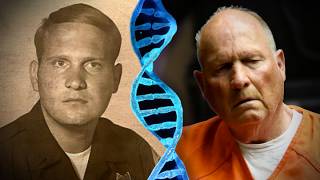

How They Caught The Golden State Killer
This video includes a discussion of serious crimes which may be disturbing for some viewers
9 chapters
- The Golden State Killer's Crime SpreeEarly CrimesIn Visalia, California in the mid-1970s, the criminal began with burglaries, stealing small items like cash, coins, and jewelry. He was dubbed the Visalia Ransacker before escalating to more serious offenses.Pattern of Assaults• Moved to Sacramento in 1976 and committed over 50 sexual assaults across Northern California • Known as the East Area Rapist during this period • Crimes spanned three years with multiple victims throughout the regionKilling PhaseIn 1979, the offender moved to Southern California starting in Santa Barbara and began committing murders. He became known as the Original Night Stalker in this region.Overall ScaleLater identified as the Golden State Killer, responsible for at least 12 murders, 50 rapes, and numerous burglaries spanning California counties between 1976 and 1986.
- Criminal Method and EvasionOperating Tactics• Would break into houses with a gun, targeting homes with a man and a woman • Tied victims up and placed plates on the man's back, threatening to kill both if the plates moved • Separated the couple to sexually assault the woman while the man remained restrained • Spent time in the house eating, stealing, and taking valuables before leavingPhysical EvidenceWore a mask or hood, shorts and a t-shirt during crimes. Always wore gloves to avoid leaving fingerprints, demonstrating deliberate efforts to prevent identification.DNA AwarenessStopped committing crimes in 1986, which was the same year the first DNA murder case was solved. Investigators believe he recognized DNA technology as a threat and feared leaving DNA evidence.Crime Scene EvidenceDespite precautions, left DNA at crime scenes throughout California. Investigators recovered DNA from three sexual assault kits from Northern California cases.
- DNA Profiling and CODIS DatabaseDNA BasicsCrime scenes contain tiny amounts of DNA, typically less than one nanogram that is often degraded. The human genome consists of 23 pairs of chromosomes with short tandem repeats (STRs) at particular locations.STR Analysis• Forensic labs count repeating DNA sequences at specific locations to create STR profiles • Initially, 13 locations were analyzed; expanded to 20 by 2017 • Different people have different numbers of repeats at each location • Identical STR profiles across all locations is extremely rareCODIS SystemThe FBI established the Combined DNA Index System (CODIS) in 1990 to store DNA profiles from convicted criminals and persons of interest. The database now contains over 18 million STR profiles.Investigation ObstacleThe Golden State Killer's DNA profile was in CODIS since 2001 with no matches despite searches in national and Interpol databases. CODIS kinship analysis was limited to first and second order relatives, making it insufficient for finding distant relatives.
- Consumer Genetic Testing RevolutionTechnology AdvancementAfter the Human Genome Project completion, private companies began offering genetic tests directly to consumers. These tests provided far more genetic data than CODIS, examining 700,000 to 800,000 positions instead of just 20.SNP Analysis• Tests measure single nucleotide polymorphisms (SNPs), individual letter changes in DNA • All humans share 99.9% identical DNA; only about 3 million bases differ between people • Example: blue eyes result from a single base change • SNPs are sprinkled throughout DNA roughly every 2000 basesKinship DetectionBy comparing hundreds of thousands of SNPs, the tests can quantify how related two people are. Closer relationships share longer blocks of identical DNA, similar to inheritance patterns of genetic material.Data VolumeFamily Tree DNA and other companies store millions of samples. By 2021, over 30 million people worldwide had taken direct consumer genetic tests, with most using Ancestry and 23andMe.
- GEDmatch and Genealogical InvestigationDatabase AccessGEDmatch is an independent website allowing people to connect with relatives. Users can upload raw DNA data from any major testing company and search for matches without direct law enforcement access to 23andMe or Ancestry databases.Investigation Strategy• Initial GEDmatch searches returned third cousin matches sharing about 1% DNA • Investigators built family trees using traditional genealogy methods and public documents • Used census records, obituaries, newspaper articles, and FindAGrave.com to trace ancestry • Built comprehensive family trees with over 1000 individualsCommon Ancestor MethodBy taking multiple DNA-related individuals and building their family trees, investigators identified where two relatives shared great-great grandparents, narrowing down possible descendants to approximately five male suspects.Final IdentificationInvestigators followed the main suspect to a Sacramento Hobby Lobby store and collected DNA from a car door handle. DNA from a discarded tissue also registered as a match to crime scene evidence.
- Arrest and Investigation SuccessThe CaptureFormer police officer Joseph James DeAngelo was arrested and identified as the Golden State Killer. A team of six investigators solved the 44-year case in four and a half months using genealogical DNA analysis.Breakthrough Impact• After DeAngelo's identification, law enforcement agencies began identifying multiple serial killers regularly • Over 70 cases have been solved using similar genealogical DNA methods • Cases continue to be solved at a regular rate with increasing frequencyLaw Enforcement AssessmentMultiple law enforcement agencies have called this the most revolutionary investigative tool since the adoption of fingerprinting. The technique has proven transformational for solving cold cases.Cold Case Scale• Approximately 100,000 cold case murders with DNA evidence remain unsolved in the US • An estimated 650,000 sexual assault cold cases have DNA evidence • The technique could potentially solve a significant portion of these cases
- Privacy Implications and DNA ExposureUniversal Exposure• Each person who uploads DNA reveals identities of hundreds of relatives, including parents, siblings, aunts, uncles, and cousins • Average person in UK has 175 third cousins • Each person shares identifiable DNA with nearly 1000 people past and futurePopulation Coverage• Using a database of 1.3 million people, researchers could identify 60% of all Americans of European descent • With just 2% of the population in a database, scientists estimate finding a third cousin or closer match in 99% of casesIndirect ExposurePeople who do not want their DNA searchable can still be exposed through relatives. If a sister uploads her DNA, it nearly equals the person uploading their own DNA due to shared genetic markers.Information PermanenceOnce genetic information is uploaded to a database, it cannot be revoked or changed like a credit card. The information is permanent and represents genetic data shared with relatives, which individuals cannot control.
- Policy and Company PracticesDatabase Policies• Family Tree DNA accepts law enforcement samples only for sexual assault, homicide, child abduction, and identification of remains • These are the only case types accepted by the company • Majority testing companies do not work with law enforcementGEDmatch ChangesGEDmatch initially allowed unrestricted law enforcement searches but changed policy after a Utah case where a woman attacked by an assailant (but survived) prompted genealogy community backlash for stretching terms of service beyond homicide and rape cases.Opt-in ShiftGEDmatch was sold to Verogen and changed to an opt-in system for law enforcement searches. Approximately 73% of new users consent to allow law enforcement matching, indicating strong public support.User ConsentUsers can remove themselves from law enforcement matching on their own DNA. However, relatives with DNA already in databases cannot control whether their relatives are searchable through family connections.
- Ethical Debate and BalancePrivacy Concerns• Americans express discomfort with mandatory national DNA databases • Concerns about genetic information being used for insurance discrimination • Worry about health insurance rates increasing based on genetic predispositions • Fear of genetic data falling into wrong handsPublic Safety ArgumentSupporters argue people have rights not to be murdered or sexually assaulted. Helping catch criminals can be viewed as an activist responsibility, encouraging people to participate in genetic databases.Consent ProblemThose unwilling to submit DNA cannot prevent indirect exposure through relatives. The choice to be searchable is not entirely personal but shared with relatives who may have already submitted their DNA.Future Resolution• Technology has outstripped current laws regarding genetic databases and law enforcement • Legal experts believe the issue will ultimately reach the Supreme Court • Society must make informed decisions about balancing public safety with public privacy • There will be both winners and losers in whatever policy decisions are made