

This is why we can't have nice things
This is a video about things like cars, phones, and light bulbs and an actual conspiracy that made them worse.
12 chapters
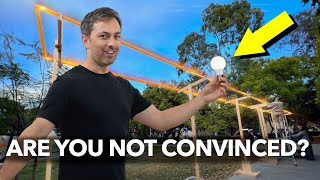
- The Centennial Light Bulb MysteryThe WonderA light bulb at Livermore Fire Station has been continuously on for 120 years since 1901, operating for over a million hours far longer than any modern bulb is designed to last.The QuestionHow has this hand-manufactured bulb lasted so extraordinarily long when contemporary bulbs fail much sooner, despite modern manufacturing advances?The LegendAn everlasting light bulb was supposedly invented long ago but never sold because it would destroy the business model through lack of repeat customers.Initial SkepticismThe idea that companies intentionally made products worse seemed implausible, since superior products should outsell competitors and command higher prices.
- The Physics of Incandescent BulbsThe ChallengeInventing a viable electric light was difficult because most materials melt or burn at the extreme temperatures needed to make them glow.How They Work• Incandescent bulbs work by passing electric current through a filament, making it hot enough to glow • Less than 5% of energy becomes light, while 95% is released as heat • Filament temperatures reach 2,800 Kelvin, half as hot as the sun's surfaceEarly Solutions• Warren De la Rue placed filaments in vacuum bulbs to prevent oxygen from reacting with the hot material • Thomas Edison created a cotton thread filament bulb lasting 14 hours by 1879 • Materials evolved from carbon to tungsten, which has a much higher melting pointProgress EraBy the early 1920s, average bulb lifespans reached 2,000 to 2,500 hours, representing substantial progress from Edison's 14-hour benchmark.
- The Phoebus Cartel ConspiracyThe MeetingIn December 1924 in Geneva, executives from Phillips, International General Electric, Tokyo Electric, OSRAM, and Associated Electric formed the Phoebus Cartel to control the world light bulb supply.The Problem• Longer-lasting bulbs devastated sales, with OSRAM dropping from 63 million bulbs sold in 1923 to only 28 million in 1924 • The cartel's greatest threat was competition from light bulbs that lasted too long • Companies faced declining revenue as the product improvedThe SolutionAll cartel members agreed to reduce light bulb lifespan to 1,000 hours, cutting the existing average almost in half.Enforcement Mechanism• Manufacturers submitted sample bulbs for testing on large test stands • Companies were fined if bulbs lasted significantly longer than 1,000 hours • The fine was 200 Swiss Francs per 1,000 bulbs sold for bulbs exceeding 3,000 hours • Records prove these fines were actually issued to companies
- Making Products Intentionally WorseThe ReversalEngineers who had previously been tasked with extending bulb lifespan now had to find ways to decrease it through different materials, filament shapes, and thinner connections.The Results• By 1934, the average light bulb lifespan dropped to just 1,205 hours • Since the cartel's formation, light bulb lifespans steadily decreased • The strategy worked exactly as plannedThe Profit• Sales for cartel members increased by 25% in the four years after 1926 • Despite component costs declining, the cartel kept prices virtually unchanged • Profit margins increased significantlyThe Cover Story• The Phoebus Cartel claimed its purpose was to increase standardization and efficiency • They did establish the standard screw thread found on virtually all light bulbs worldwide • Evidence points to profit and increased sales as the true motivation, not consumer benefit
- Why the Centennial Bulb SurvivedTiming AdvantageThe light bulb at Livermore Fire Station was manufactured before the cartel era, when improving bulb lifespan was still the industry goal.Low Power DesignThe bulb operates at just four to five watts, designed as a nightlight to provide minimal illumination for firemen navigating at night.Thermal ProtectionRunning continuously at low power reduced thermal cycling of the filament and components, limiting stress from thermal expansion and contraction.Cartel's Decline• The Phoebus Cartel was initially planned to last until 1955 • It fell apart in the 1930s due to outside competition and non-compliance • World War II finished off what remained of the cartel
- Planned Obsolescence in Modern TimesContinuing PracticeThe Phoebus Cartel's methods survive to this day through a tactic known as planned obsolescence, where companies intentionally shorten product lifespans.Apple's iPod Case• Casey Neistat's 2003 viral video exposed Apple's battery replacement policy charging $255 plus mailing fee • The video sparked a class action lawsuit settled out of court • However, Apple continued practicing planned obsolescenceiPhone Throttling• After an iOS update in 2017, older iPhones experienced significantly slower app loading and device shutdowns • Apple claimed they throttled performance to protect battery longevity • The issue wouldn't exist if batteries were replaceableLegal Consequences• Apple faced multiple lawsuits concluding in 2020 • The company paid hundreds of millions in fines and settlements • This payout remains minuscule compared to extra revenue from shortened product lifespan
- The Economic Argument for Planned ObsolescenceDepression Era ProposalDuring the 1930s Great Depression when 25% of Americans were unemployed, real estate broker Bernard London proposed mandatory planned obsolescence to stimulate the economy.London's VisionGovernment would assign a fixed lifespan to shoes, homes, and machines, after which they'd be legally dead, destroyed, and replaced to create jobs.Public FearPeople were genuinely afraid that technological progress and overly durable products would eliminate jobs and put workers out of work.Cultural ExpressionThe 1951 Oscar-nominated film 'The Man in the White Suit' dramatized these fears through a scientist who invents an unbreakable, unstainable fiber, prompting both factory owners and workers to chase and destroy him.
- Nylon Stockings and Fashion CyclesThe InnovationIn the 1940s, synthetic fiber nylon replaced silk in stockings and was so durable it created an overnight sensation with literal riots as women scrambled to buy them.The ProblemManufacturers realized they had made the product too good, threatening repeat sales and revenue.The ResponseFollowing the example of the Phoebus Cartel, manufacturers instructed engineers to find ways to weaken the product and shorten its lifespan so people would buy more frequently.Fashion Pattern• In fashion, real innovation is nearly impossible, so the only way to drive purchasing is through seasonal style changes • Styles burn through quickly, forcing recycling of old designs from decades past • There is no 'best' design, only 'different' to remind consumers they lack the latest version
- General Motors and Automotive StyleFord's Vision• Henry Ford released the mass-market Model T in 1908 as an affordable, durable tool • In 1922 Ford stated his ambition: no improvements should make previous models obsolete • By 1920, 55% of American families already owned a car, saturating the marketGM's Innovation• When DuPont took controlling share in General Motors in 1921, they began experimenting with car colors • Ford had only offered black, but in 1924 GM released cars in different colors • GM introduced new colors each year to make cars feel outdatedStrategic ObsolescenceGM's goal was not just to outdate Ford's Model T but to make their own cars feel obsolete every year, encouraging trade-ins for new models.Design Leadership• GM's head of design Harley Earl called his work 'dynamic obsolescence' • He stated: 'Our big job is to hasten obsolescence' • Average car ownership dropped from five years in 1934 to two years by 1955, with Earl's goal being one year
- Apple's Design PlaybookThe BlueprintApple copied directly from General Motors' playbook: new styles each year, new special colors annually, and marginal technological improvements.Design Cycles• iPhone edges shifted from rounded to squared off to rounded again and back to squared • These design cycles repeat every few years, recycling older styles • The pattern creates the perception of newness without functional changePsychological DriverDesign and styling have no objective 'best' state, only different variations that remind consumers they don't have the latest and greatest, driving repeated purchases.Market DominanceBy copying the GM strategy, the world's most valuable company (Apple) demonstrates the enduring power of style-based obsolescence in the modern era.
- LED Bulbs and True ProgressThe EvolutionLight bulbs have transformed from incandescent technology unchanged for 100 years to compact fluorescent and now to LED.Efficiency Gains• LED bulbs use just a tenth of the energy of incandescent bulbs • They last 10 to 50 times longer than previous technologies • These represent genuine technological improvements, not style changesConsumer ImpactLED adoption means consumers are more likely to sell their house than to replace an installed LED bulb, approaching the ideal of an essentially everlasting light bulb.The Right TypeTechnological obsolescence, where genuinely better products replace inferior ones, is the only type of product obsolescence that should be supported.
- Right to Repair MovementConsumer ActionConsumers are finally fighting back against planned obsolescence through legislative action.Legal Framework• The European Union has proposed right to repair legislation • Over 25 US states have introduced similar proposals • These laws aim to enshrine consumer rights in lawLegal Requirements• Manufacturers would be required to provide repair information and access to parts • Consumers could replace batteries or fix screens at third-party shops without warranty voiding • These changes directly combat planned obsolescence tacticsLimitationsEven if right to repair becomes law, artificial obsolescence won't disappear completely because style and design-based obsolescence remain tools manufacturers can use.