
Why You Should Want Driverless Cars On Roads Now
8 chapters
- First Autonomous Ride ExperienceInitial ImpressionsDerek takes his first ride in a fully autonomous Waymo vehicle in a Phoenix, Arizona suburb. The car has no driver and operates entirely on its own.Public Perception• Poll of YouTube viewers showed 50% are excited about autonomous vehicles • Over 40% believed the technology was still over 10 years away • Technology is currently functional under good road conditionsSafety ObservationsThe car demonstrates safe driving behavior by smoothly merging into traffic, waiting for oncoming cars before turning, and avoiding problems.Video SponsorshipFull disclosure that this video is sponsored by Waymo.
- History of Autonomous TechnologyWaymo's OriginsWaymo started as the Google self-driving car project, beginning with the Firefly, a simple vehicle with no steering wheel or dashboard designed for public roads in October 2015.Firefly Features• Ridden by Steve Mann, who is legally blind • No steering wheel, no dashboard • No AC but has an emergency stop button • Super basic design with minimal featuresDriverless Elevator AnalogyBefore the 1940s, almost all elevators had drivers. When driverless elevators were introduced, the public was very resistant. An elevator drivers strike in New York City helped adoption of automated elevators. Today, finding a driver in an elevator would seem unusual.Automation in AviationAirplanes are extensively flown by computers. CAT II autoland procedures allow planes to land themselves in heavy fog. In 2013, manual intervention led to the Asiana Airlines crash, demonstrating that computers are often safer in difficult conditions than human pilots.
- Levels of Autonomy and Safety ConcernsAutonomy LevelsThere are different levels of autonomy, with levels up to four still requiring a human driver to remain responsible and keep their hands on the wheel.Driver Distraction Problem• Google employees testing early autonomous vehicles were observed rummaging through bags • Drivers were seen checking phones, putting on makeup, or even sleeping • Drivers were trusting the technology too much despite being told they were responsibleWhy Level Four MattersWaymo decided the only safe way to proceed is with fully autonomous vehicles at level four autonomy, where no human driver is required or present.Safety ManagementWaymo operates a depot with fleet dispatchers, rider support teams, and monitoring systems to ensure all missions are assigned daily and completed successfully on the road.
- Sensor Technology and PerceptionAdvanced Sensors• 360-degree LiDAR on top can see 300 meters away • 29 cameras provide full 360 vision with close and long range capabilities • Can detect a stop sign or pedestrian 500 meters away • Microphone listens for sirens to pull over for emergency vehiclesLiDAR FunctionLiDAR shoots invisible laser beams that scan millions of times per second, detecting reflections to determine distance. This paints a 3D picture of the world around the car.Prediction CapabilitiesThe vehicle constantly predicts where pedestrians and other road users are likely to go, imagining multiple possible futures and weighing the likelihood of each option.Real-World TestingThe car handled a sudden stop when detecting a person with a cart on a pedestrian crosswalk, demonstrating its ability to respond to unpredictable situations in parking lots.
- Safety Data and Moral QuestionsThe Trolley Problem MythYears ago, people debated who autonomous cars should hit in accidents (orphan vs nun, motorcyclist with/without helmet), but this misses the reality: 99% of accidents don't involve such dilemmas.Human Error Reality• Around 1.3 million people killed yearly on roads due to human error • 60 million killed in 20th century—equivalent to a world war • National Transportation and Safety Board identifies human error as cause of 94% of accidents • Up to 200 people killed annually in US from backup incidentsAccident PreventionMost human errors are impossible for machines to make: speeding, driving under the influence, and distracted driving. Backup blind spots cause deaths that autonomous vehicles with 360 vision cannot.Real Moral QuestionIf autonomous cars reduce fatalities, the real moral dilemma is not having them on roads sooner rather than fearing they won't handle unlikely hypothetical scenarios.
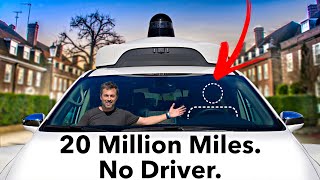
- Safety Performance and EvidenceExperience ComparisonWaymo vehicles have accumulated 20 million miles of driving on public roads. An average human driver would need to drive for a thousand years to accumulate this experience.2019 Safety Study• Studied 6.1 million miles of automated driving in Phoenix metropolitan area • 18 total accidents occurred, none serious enough to expect significant injury or death • Types of accidents completely eliminated: going off road, hitting stationary objectsAccident AnalysisOf eight significant accidents over six million miles, all eight involved human drivers doing something stupid: driving on wrong side, running red lights, failing to yield, or speeding 20+ mph over limit.Pedestrian IncidentsThree incidents involving Waymo vehicles and pedestrians: in all three cases, the Waymo vehicle was stationary and the pedestrian or cyclist/skateboarder ran into the vehicle.
- Training Through SimulationReal-World Data UseWaymo takes real-world data from actual driving and puts it into simulations, adjusting parameters like bicyclist speed, car turning speed, and other variables.Simulation TrainingThe software has been trained on an additional 20 billion miles of driving in simulation, providing a thousand times more experience than the real-world 20 million miles.Continuous ImprovementBy tweaking scenarios in simulation, Waymo tests what the software will do under various conditions without risking public safety on roads.Safety FrameworkWaymo would never launch a rider-only service without meeting a base safety framework confirming the vehicles are safer than average human drivers.
- Public Acceptance and Future OutlookConfidence BuildingAfter witnessing confident handling of parked cars, cyclists, and pedestrians, Derek stopped thinking about the car being autonomous. It takes about two minutes to forget you're in a driverless vehicle once you feel safe.Societal Benefits• Riders with disabilities, seniors, and the blind can get around more easily • Transportation will become cheaper • Recovery of time spent in traffic, improving happiness • Reduction of traffic through better vehicle awarenessUrban TransformationWhen all cars are fully autonomous, they can execute coordinated driving like a beautiful ballet. This allows elimination of parking lots and addition of green spaces to cities.Safety Impact• Widespread adoption could prevent tens of thousands of fatalities in the US alone • Expected significant changes in big cities within the next five years • Waymo needs to drive sufficient miles to demonstrate safety to regulators