The “SECRET” To Best Synth Sounds Ever Made
7 chapters
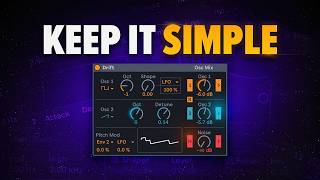
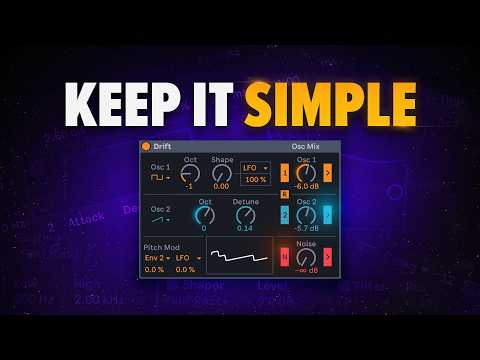
- Introduction to Sound Design FundamentalsThe ChallengeMany producers use presets and struggle to create sounds better than famous presets, feeling like they're communicating with aliens.The SolutionSound design is not rocket science and can be learned with the right approach and tools.Tool SelectionDrift synthesizer is chosen as the weapon of choice because every version of Live has it, it's straightforward, and it lacks a key feature that will be added later.Starting PointBegin with one oscillator by turning off the second one and switching to square wave, then bring it down an octave for a nasty bass.
- Frequency Modulation with LFO and EnvelopesFM BasicsSquare wave oscillators can compete with third-party synthesizers using simple FM modulation, thanks to Ableton Live's built-in tools.LFO Method• Turn LFO to 1:1 ratio • Replace default slide with LFO • Drag the percentage up to activate FM • Change LFO shapes to affect the sound character • Increase ratio for more modulationEnvelope Method• Use cycling envelope (second envelope) • Click button to loop envelope and turn it into LFO • Set to 1:1 ratio for same FM effectPractical ApplicationAdd a second oscillator down an octave and switch it to different waveforms while activating FM modulation to create complex bass sounds.
- Filter Techniques and Resonance ControlFilter FundamentalsA basic filter is the first essential element for bass design, but reducing cutoff alone loses the sound's character.Filter Modulation• Activate modulation using the second envelope • Adjust envelope time parameters for variation • Make decay longer and reduce sustain • Increase resonance for squishy, lovely effectResonance BalanceWhile high resonance sounds cool, it can eliminate the bass's low frequency content, so balance is crucial.Velocity ControlModulate filter cutoff frequency with velocity using the modulation matrix to add variation between different notes in the baseline.
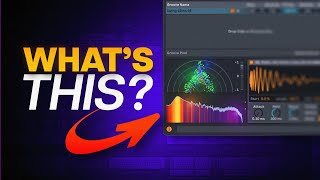
- Saturation and Harmonic EnhancementThe ProblemFilters mute the harmonics previously added through FM and additional oscillators, reducing the richness of the sound.Base Shaper Solution• Use new base shaper to add harmonics while preserving low frequency content • Drive the signal to increase harmonic content • Use color curve to increase high distortion amount • Add width to capture more frequenciesSound CharacterSaturation not only adds distortion but also determines the color and character of the whole sound independently of oscillator and filter choices.Roar MultibandSince Roar's release, it replaces basic saturator for most applications with multiband control for precise harmonic shaping across frequency ranges.
- Advanced Roar Shaping and Stereo WidthMultiband Strategy• Solo mids and apply halfwave rectifier with drive for midrange richness • Solo highs and apply shards option for crunchiness and shimmer • Use global knap to drive the whole signal, then drive shapers individuallyAlternative ToolGM multiband saturator offers a straightforward alternative that allows maximum drive without overdrive and introduces asymmetric distortion.Stereo Enhancement• Add chorus to mono basis to create side information • Use utility plus rack to boost side channel volumeMono CompatibilityCheck mono compatibility after adding stereo effects to ensure the bass translates properly across different playback systems.
- Crest Factor Reduction and Sound LoudnessSaturation BenefitsAdding saturation reduces crest factor, which is the difference between transient and sustained parts of sound.Loudness PerceptionReducing crest factor through saturation makes sounds perceivably louder, faster, and more present, which is essential for bass sounds.Master ApplicationThe same saturation principle applies to the whole master mix, improving overall loudness and translation.Melodic SoundsWhile saturation is crucial for bass, melodic sounds like keypad and pad benefit from adding filter motion and Roar for character enhancement.
- Final Patch Design and TakeawaysPad Synthesis• Use two instances of Drift stacked together • First instance: basic two-oscillator configuration in C note • Second instance: two oscillators an octave higher with different unison values for widthLead DesignLead sounds benefit from filter modulation and Roar processing similar to bass techniques for cohesive sound design.Oscillator TypesWhile wavetables are not bad, they are more complex and reserved for another discussion; focus on basic waveforms for fundamentals.Community EngagementShare your favorite oscillator type and synthesizer engine in comments; check out related video on Life synthesis for newcomers.