This is How You Avoid Making Boring Drums
6 capitulos
- Understanding Drum FoundationFoundation ElementsStart with a floor kick and clap snare as the foundation of your drum loop in electronic dance music. Kicks land on the beats while the clap hits every other beat.Adding DepthLayer in a rumble bass element to ensure the bass frequencies are audible in your drum loop.Approach PhilosophyYou can create interesting drums while keeping them minimal rather than overly complex and housey. These techniques apply to any drum style you're creating.Tempo Feel Decision• Placing the snare behind the quantization point creates a lagging feel • Placing the snare ahead creates a rushing feel • Choose your preferred feel at the start of production
- Building the Roof SectionHigh-End ElementsThe roof refers to the high-end, brighter part of your drum loop where you add off-hats, accents, and other hi-hats.Off-Hat Placement• Place off-hats manually to create grip in your drums • Use groove libraries if preferred, but manual placement offers more control • Position off-hats with varied timing relative to the gridCreating AccentsLayer accents that emphasize the off-hats by using the same sample but changing the attack and decay to create slightly different hits each time.Other Hi-HatsFor a minimal feel, use 16th note hi-hats with consistent sound selection that works with your other hats without needing EQ. Pan them left and right for stereo width.
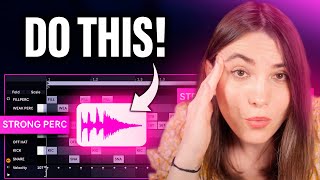
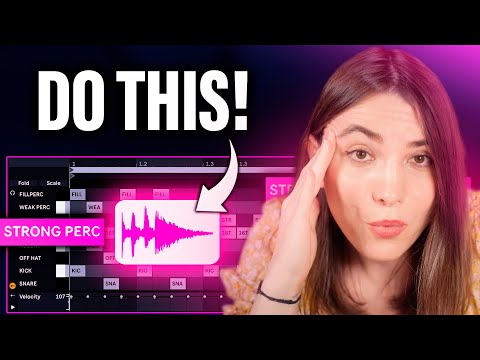
- Adding Percussion LayersPercussion Categories• Strong percussion: dominant and prominent in the mix • Weak percussion: less dominant with free placement • Fill percussion: adds space and energy to the trackStrong Percussion SetupPlace strong percussion in empty spaces between hats and claps. Use distortion like Arteria Walter Culture and keep timing loose from the grid to create a relaxed feel.Weak Percussion VariationCreate weak percussion sounds with subtle effects like EQ and reverb automation. Duplicate patterns across a 2 or 4-bar loop with varied placements to add variation and interest.Fill Percussion ApproachFor an 8-bar loop with ambience, use simple sounds like claps and shakers. Add reverb like Valhalla Vintage Verb to create an ethereal, spacious feel.
- Painting and Coloring Your DrumsGenre DefinitionPainting transforms your drum loop into different genres through extra elements. These additions make drums fit into Techno, Idiom, Deep House, or any other genre you're targeting.Vocal and Sound Layers• Add vocal sounds, vocal chops, or vocal phrases as melodic elements • Include vocal faces or old noises for character • Use these elements sparingly like pieces in your drum arrangementDrones and AtmospheresLayer drones and pads that fill and support your drum loop. Use preset packs to access quality sounds that add ambience and a rainy, ethereal vibe to your drums.Character BuildingPainting significantly increases the character and identity of your drums, transforming them from basic foundation into a complete, genre-specific drum loop.
- Creating Variation and ExcitementPitch Variation TechniqueUse simple pitch variation on the same sound throughout your hi-hats. Vary pitches in response to accents rather than randomly to create cohesive dancing between elements.Ghost Notes MethodAdd ghost notes to claps and other elements. This typical example makes drum patterns much more interesting and complex without adding new sounds.Automation for Dynamics• Automate gain on high-end frequencies to create excitement and change throughout the loop • Use sends and effects automation, like EQ or reverb automation, to build expectations • Apply 16th-note sidechain automation on hi-hats for tension buildingMinimal Variation PhilosophySmall, minimal changes keep the listener's brain engaged and curious about what's happening next. This approach maintains interest throughout the loop without overwhelming complexity.
- Final Effects and MixingEffect Placement StrategyAvoid reverbs and delays on individual tracks until the end to prevent over-filling the space. Use sends and returns instead to apply effects more efficiently and minimize overuse.Reverb Setup• Start with two reverbs: a larger reverb and a smaller room-sounding reverb • The larger reverb creates depth and background character • The smaller reverb adds tight, natural room ambienceEffect RoutingRoute claps to smaller room reverbs as they typically need tighter spaces. Route percussions to darker, bigger reverbs placed in the background so they don't sound too forward or in-your-face.Final ResultBy combining minimal drums with careful variation through pitch, ghost notes, and automation, you create interesting, dynamic drum loops that hold listener interest throughout.