DO NOT sample anything before you see this
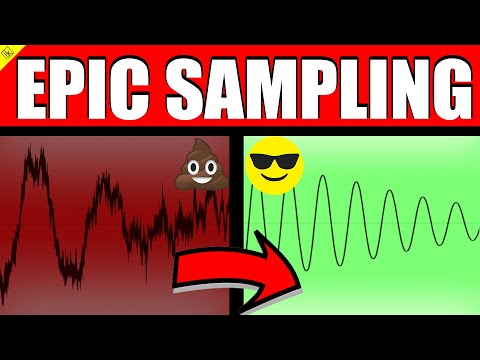
we are jumping into probably one of the most important topic in the electronic music production sampling
11 capitulos
- Introduction to Sampling in Electronic MusicTopic OverviewThe video covers sampling, one of the most important topics in electronic music production, including both traditional sampling and multi-dimensional sampling techniques.Famous Examples• Edam Beyer sampled a track from another artist • Daft Punk's 'Harder Better Faster' contains a sample • Prodigy's 'Smack My [Expletive] Up' samples three different tracksWhy It MattersUnderstanding multi-dimensional sampling is extremely important if you want to sample a track effectively in music production.Video StructureThe video will cover important details on sampling throughout, with emphasis on both traditional and advanced sampling techniques.
- Understanding Sample Length and TempoCore ConceptWhen getting a sample in a DAW, the first thing to understand is that the sample's length and tempo may not match what you need.Pitch vs Length• Slowing down a cassette player decreases pitch and increases length • This approach often changes the pitch, which is undesirable • Modern DAWs use algorithms to stretch samples without changing pitch or creating artifactsWarping OptionsAbleton Live offers different warping algorithms: Beats, Tones, Texture, Repeat, Complex, and Complex Pro to stretch samples without unwanted artifacts.Traditional Steps• Cut out a piece from the track that you like • Change the sample duration using warp engines • Add effects to finalize the sample
- Finding and Matching Sample TempoDetection MethodFind the sample's tempo by identifying where the sample loops itself, then use that information to match it to your track's tempo.Warping Process• Play the sample and identify the loop point • Adjust the track's tempo to fit the sample into four bars • Double-click and enable warp to maintain the original tempo and lengthAlgorithm SelectionChoose the appropriate warping algorithm for your sample type. The Beats algorithm works best for drums and percussion, while Complex works better for textured samples.Artifact AvoidanceUsing the wrong algorithm can leave artifacts in the sample. Experiment with different options to find the one that sounds most natural for your specific sample.
- Adjusting Pitch and Key MatchingKey ProblemWhen the sample is in a different key than your track, they won't sound good together and require pitch adjustment.Quick FixTranspose the sample to match your track's key using the transpose function in your DAW.Precise Alignment• Find specific pieces of the sample that work for your track • Use warping markers to match the exact tempo of your track • Quantize markers using keyboard shortcuts to align with the gridFine-tuningYou can manually insert additional markers and adjust them to match your track's timing. Perfect alignment is not necessary, just having markers close to the tempo is sufficient.
- Processing Samples with EffectsTraditional ApproachIn traditional sampling, once you've adjusted the sample, you add effects to get the sound you're looking for.Common Effects• EQ to shape the frequency response • Overdrive for additional coloring • Delay for spatial effects • Reverb for ambient qualities • Compression for dynamic control • Saturation for warmthResultsEffects can help reduce artifacts from the original track and make the sample blend better with your track, creating a cohesive sound.Method NameThis one-dimensional approach focuses on processing a single sample with different effects to achieve the desired sound.
- Introduction to Multi-Dimensional SamplingDefinitionMulti-dimensional sampling means thinking about your sample in different time and frequency domains, allowing separate control over different frequency bands.Key Advantages• Control the length of each frequency band separately • Apply different effects to different layers • Achieve much more control over how you process the sampleDimensions ExplainedYou can increase the number of bands and dimensions as needed. Each band represents a different frequency range, and each dimension provides a separate layer to work with.Control ParametersThis method gives control over different frequency ranges, different time domains, and different effects on a single sample.
- Multi-Dimensional Sampling Technique for Isolated ElementsSample SelectionAlways look for places where the sample is as isolated as possible. Busy tracks with many sounds are good candidates for multi-dimensional sampling.Traditional LimitationWith classical sampling methods, isolating specific elements like a kick from a busy track is difficult. Even with EQ and compression, you won't get a clean sound.Multi-Dimensional SolutionSplit the sound into multiple layers or dimensions, each with its own frequency response and length control, allowing you to isolate specific elements much more effectively.Dimension Count• Two layers = two-dimensional sampling • Three layers = three-dimensional sampling • Each layer is a separate dimension with different frequency response and length
- Practical Multi-Dimensional Sampling SetupTool SetupUse a multiband processor like Pro-MB to split the sound into different frequency areas, creating separate layers for processing.Band Creation• Create a sub-bass area for low frequencies • Create a mid area for mid-range frequencies • Create a treble area for high frequencies • Disable compression on each band to use it purely as a splitterLayer IsolationDuplicate the multiband processor three times and solo each frequency band separately on different tracks. This creates isolated layers for each frequency range.ConsolidationConsolidate or freeze each isolated layer so you have separate audio files for each frequency band, ready for individual processing.
- Separating Kick Components by FrequencyComponent AnalysisA kick drum consists of different parts: tail (sustain), thump (main body), and transient (initial attack).Length Flexibility• The tail can stay long for natural sustain • The thump doesn't need the exact same length as the tail • Each component can be cut to its ideal length independentlyProcessing PowerThis approach allows you to cut and shape each frequency component to the exact length needed without affecting other parts, eliminating unwanted artifacts with minimal additional EQ.ResultsThe final multi-dimensional sampled kick is almost as clean as if it were recorded in isolation, showing the power of this technique.
- Multi-Dimensional Sampling on Clap SoundsSimilar ApproachThe multi-dimensional sampling approach for claps is exactly the same as for kicks: create multiple frequency bands and process each layer separately.Band Resolution• Splitting into more bands increases resolution and control • More bands means longer processing time • Greater number of bands provides exponentially more power and controlLayer Components• Remove unwanted elements like kick transient from layers where you only want the clap • Keep desired components like clap transient and air in the appropriate layers • Adjust length of each component based on desired characteristicsCreative ProcessingYou can creatively process each layer differently. For example, boost low and high end for more aggression, and add distortion to mid-layer for a grittier clap sound.
- Advanced Control with Multi-Dimensional LayersLayer FlexibilityBy having different frequency layers and resolutions, you gain extreme control over how the sample sounds and behaves in your track.Effect Application• Apply different effects to different layers for greater control • Resampling different layers separately allows for unique processing combinations • Each layer can be treated as an independent sound sourceUniversal ApplicationThis multi-dimensional method can be applied to any sample as long as you want to isolate specific elements from a track.Workflow BenefitsThe multi-dimensional sampling approach significantly improves isolation and sampling quality compared to traditional methods alone.