4 Methods to Instantly Glue Kick and Bass
I have given thousands of feedback to my fellow producers and this is one of the biggest recurring problem I have seen the lack of glue between the bass and the kick
5 capitulos
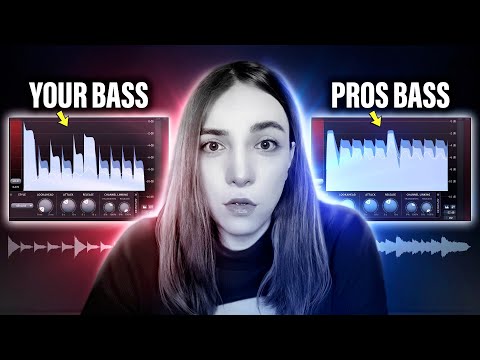
- Understanding Time and Frequency DomainTime Domain BasicsIn time domain, a kick is a short pulse high in volume that disappears quickly, while bass consists of continuous pulses. When mixed together without adjustment, they create an awkward sound rather than sounding glued.Response MethodWhen the kick and bass respond to each other rather than hitting simultaneously, the time domain response becomes much smoother and more cohesive.Frequency Domain Analysis• Kicks and basses with completely different frequencies often sound separated and not glued together • When kick and bass share common frequencies, they provide natural glue that works well with time domain separationKey TakeawayUnderstanding both time and frequency domains is essential for creating glue between kick and bass elements.
- Separation Techniques for CohesionSeparation Options• Full separation: kick and bass are completely separated when the kick hits with no bass during the attack • Partial separation: kick hits are clearly separated but bass remains in the tail area to provide gluePartial Separation BenefitsPartial separation avoids awkward sounds by allowing the kick tail and bass to blend together while keeping the initial kick attack clear.Sidechain Compression Method• Use a high pass filter on the incoming kick signal, targeting the initial click and looking ahead 10 milliseconds • Apply a slower sidechain for pumping effect on the kick tail • Target the sub bass area with a slow pumping effect to achieve similar gluing resultsResultThese sidechain compression techniques create the same cohesive effect as time domain separation.
- Frequency Shaping and EQ MethodShaping PrincipleA shaper applied to kick and sub bass emphasizes the sub area while slightly reducing the character area, keeping the overall sound warm and glued together.Pultec Emulation Approach• Use a low shelf boost for sub bass enhancement • Apply attenuation in the 100-400 Hz range to create separation • Always use gain compensation on the utility to maintain consistent levels when A/B testingManual EQ AlternativeUse a shelf EQ combined with a narrow bell cut, allowing more flexibility with curves and frequencies. Additional shelves can be added and adjusted together for better control.ResultProper EQ shaping separates mid frequencies while maintaining bass glue and allowing better focus on the low end.
- Glue Compression TechniqueGlue Compressor Setup• Use VCA compressor or glue compressor on grouped kick and bass tracks • Set medium attack to create visible pumping movement • Use makeup gain to compensate for level reductionCompression EffectGlue compression brings the kick and bass closer together, creating the sensation that all elements are glued together with a pumping feel.Advanced AlternativeUsing tape emulation like Empirical Labs Pultec R2 squishes more aggressively and sounds warmer while achieving the same gluing effect.Sub Smoothing Technique• Apply sub smoothing to the low end pass below 100 Hz • Set threshold carefully to compress sub bass effectively • Increase range and release for sustained sub bass smoothing with ramp up and ramp down curves
- Parallel Processing for Ultimate GlueParallel Return Setup• Insert a return track from your low end • Send around -6dB from the main track to the return channel • Keep the send level consistent to avoid affecting the return channelProcessing Chain• Add distortion or saturation like iZotope Crush Station for gritty texture • Use Pultec to cut super mids and soften the sound • Apply gentle compression like Ozone Vintage Compression for additional cohesionLevel BalanceAdjust the return track amount carefully to find the sweet spot where the parallel processing enhances glue without overpowering the original track or becoming inaudible.Final ConsiderationUse a limiter on the parallel return to prevent volume increase from the extra processing, ensuring the final mix maintains proper levels.