
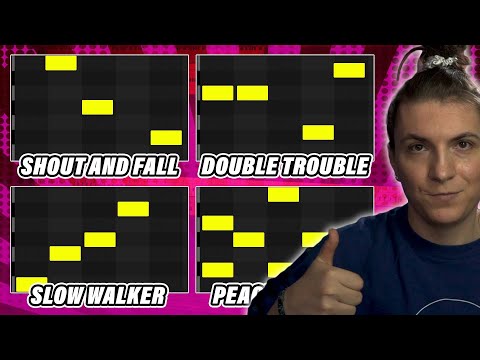
4 smart arpeggio patterns that can improve your music
5 chapitres
- Understanding Arpeggio FundamentalsKey Components• Ceiling note: the highest note in the arpeggio • Floor note: the lowest note in the arpeggio • Central note: the note that other elements gravitate towardsFocus DirectionArpeggios can have upper focus in the first half and lower focus in the second half, creating directional movement.Pattern StructureUnderstanding how notes are positioned and avoiding double notes by returning to previous positions keeps the arpeggio clean and efficient.Foundational KnowledgeThese concepts help explain arpeggiation patterns that are documented in music literature and theory.
- Shout and Fall PatternPattern DefinitionShout and Fall is an arpeggiation pattern that oscillates between the ceiling note and the floor note, creating a wave-like feeling.Building the Melody• Use contrasting tricks like jumping back to the root note for sudden transitions • Balance the movement by filling the space between ceiling and floor notes • Create a small sine wave motion before repeating the patternSound DesignUsing a plucky preset with delay is important; the preset should have envelope automation that cuts down the delay mix when new notes come in, preventing cluttering.Final ResultThe pattern produces an elegant sound with the delay filling the background while maintaining a clean, defined original attack.
- Half Build-Up Drop PatternPattern OverviewA popular pattern that combines a half build-up followed by a drop, known from earlier music production trends.Core Technique• Start with a sustain preset and focus mainly on ceiling notes • Move the bass note to add melody and depth • Pull down at the end to create a settling feeling • Include an escape note to add a turning field effectArpeggiator ApplicationUse a 16-step arpeggiator that doubles the notes being played, then activate it during the build-up to increase tempo and create tension while emulating the doubled BPM.Enhancement Elements• Side-chain the kick to the melody for more pumping feel • Automate filter cutoff parameters to enhance the build-up effect
- Bass-Switching Melody PatternMethodologyBuild arpeggios by alternating bass notes in your fingers, switching between different root positions like G and D for half the time each.Simple Construction• Create a simple melody using the bass note switching approach • Use this as the foundational structure of the arpeggio • Fill in the remaining space with additional notes following the same techniqueCreative DevelopmentMove the melody around based on feel, add different octaves between notes, and use color notes that fit your chord progression to create a more glued arpeggio.Result QualityThis method produces a complete, beautiful arpeggio with clear melodic content while maintaining simplicity and musicality.
- Classical Sustained Arpeggio PatternTraditional ApproachThe most classical way of playing arpeggios, traditionally taught when learning piano, using the left hand to play bass notes slowly.Sound Foundation• Sustain the notes so the bass field fills the space • Use grand piano sound with minimal processing like tape saturation, EQ, and reverb • Build a pulsating melody with repeated note patterns to maintain rhythmic feelMelody DevelopmentKeep melody development subtle and relaxed, using pauses between note groupings to prepare transitions and create breathing space before changing melodic phrases.Velocity Control• Drop velocities when approaching the end of a bar to create settling feel • Increase velocities leading to the end to brighten the sound • Use proper velocity variation to enhance the overall musicality and dynamics