
Érosion de la biodiversité
L’érosion de la biodiversité, au même titre que le changement climatique, constitue un défi majeur à l’échelle planétaire.
Biodiversity erosion, like climate change, constitutes a major challenge at the global scale.
- Global ChallengesDefinition and Causes• Biodiversity erosion is characterized by increased species extinction rates, declining populations of certain species, and degradation of natural habitats. It results mainly from the destruction and fragmentation of natural environments (due to human activities: increasing urbanization, intensification of agricultural practices, etc.), their pollution (from domestic, industrial, and agricultural sources), overexploitation of wild species (overfishing, deforestation, etc.), introduction of invasive alien species, and also climate change.Sixth Mass Extinction• The extinction rate of animal and plant species is estimated to be 100 times higher than the rates of the five major mass extinctions on Earth (Ceballos, 2015), to the point that we are witnessing a sixth mass extinction today. While most species extinctions previously occurred on ocean islands, nearly half of extinctions have occurred on continents over the past twenty years. Biodiversity is now widely threatened across the entire planet (Rockström, 2009).Ecosystem Consequences• Biodiversity erosion is harmful in several ways: it causes a loss of genetic heritage (species extinction, loss of populations); it also affects the functioning of terrestrial and aquatic ecosystems (habitat modification, species displacement, surface water eutrophication, etc.) as well as their ability to adapt to changes in physical and biotic conditions (resilience). Yet ecosystems provide numerous benefits to humanity (food, water, genetic resources, etc.). These services, known as "ecosystem services," are degraded, and in the long term, their sustainability is threatened.Planetary Boundaries• Within the framework of work on nine planetary boundaries (Rockström et al., 2009), the "biodiversity erosion" boundary is characterized by species extinction rate. The threshold not to be exceeded is 10 species extinctions per one million species per year. In 2009, the boundary is crossed with 100 extinctions per one million species. • During the revision of the conceptual model (Steffen et al., 2015), a second approach is defined. It accounts for the biosphere's role in providing ecosystem services and in the functioning of the Earth system. An indicator, the Biodiversity Intactness Index (BII), assesses the evolution, since the pre-industrial era, of population abundance by biome, by major region (for example, Southern Africa) or by major ecosystem (for example, coral reefs). The BII must not fall below 90%. In 2015, the boundary, applied to Southern Africa, is crossed (84%).
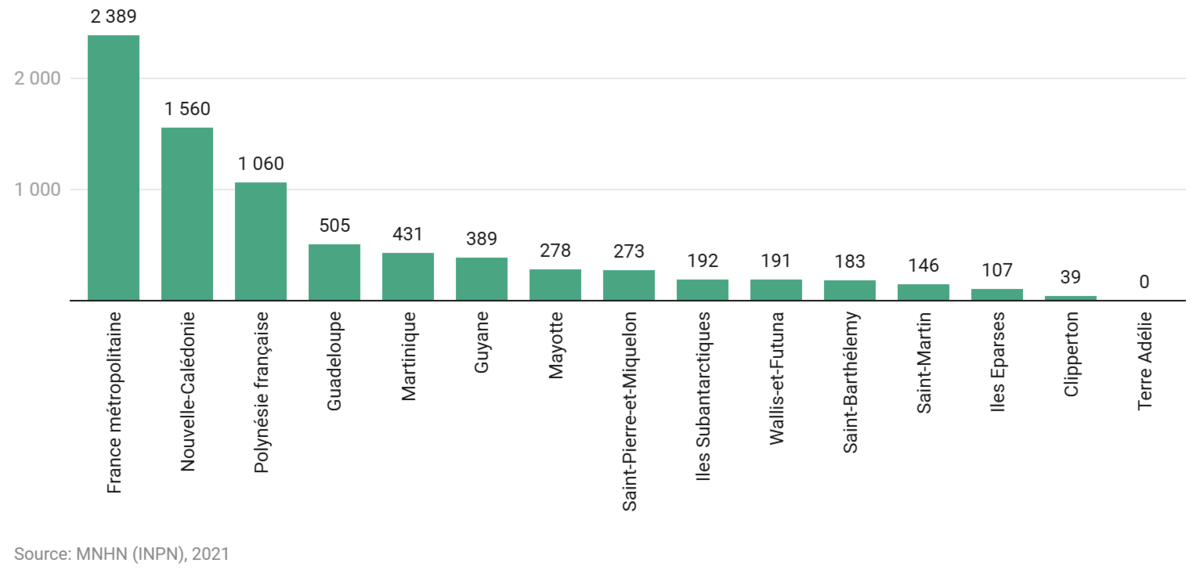
- France's SituationFrance's Responsibility• The IUCN Red List enables assessment of France's responsibility in protecting global biodiversity. In total, 9,800 of the 96,951 species assessed worldwide are present in at least one French territory. Overseas territories hold significant importance with 6,554 species. Of these, 1,364 are extinct or threatened, representing 14% (compared to 28% globally). Analysis by major taxonomic group reveals that the rate of extinct or threatened species reaches 73% in fungi, 29% in plants, and 11% in animals. Certain island territories are particularly affected, notably New Caledonia with a rate of 20%, French Polynesia (16%), and Réunion (11%); in mainland France, this rate is 9%. The Fragrant Funnel (Tricholoma apium), Cryant's Violet (Viola cryana), and the Martinique Amazon (Amazona martinicana) are examples of species that have today disappeared or are endangered.Concerning Extinction Risk Trends• By examining actual changes in threat status of a species between two assessments, the Red List Index (called "RLI") invites states to monitor the effects of their actions to halt biodiversity loss, by providing a trend. • In mainland France, a concerning evolution of the RLI has been observed since the early 1990s, across all taxonomic groups studied (Amphibians, Birds, Mammals, Reptiles, Corals, Cycads). Over 26 years (from 1993 to 2019), the extinction risk index increased by 138% in mainland territory, while it follows a less pronounced dynamic globally (48%). • Overseas territories, which concentrate most species (4/5 of France's endemic species), are vulnerable territories subject to various disturbances. Between 1993 and 2019, territories with the most marked index evolution are Mayotte (260%), French Guiana (148%), Wallis and Futuna (73%), Australian Antarctic Lands (61%), and Réunion (51%). • Over the same period, other territories, such as Saint-Martin (French part), Martinique, New Caledonia, French Polynesia, observe less marked evolution (approximately 20%), while Saint-Barthélemy, Saint-Pierre and Miquelon, and Guadeloupe are overseas territories with very low or even negative red list index evolution (respectively -5%, 1%, and 4%).Endemic Species Threatened with Extinction• In France, based on current knowledge, 10% of present species are endemic (exclusive to a territory) or sub-endemic (found almost exclusively in a territory), representing more than 19,000 species. Endemism, very present in overseas island communities, is less marked in continental areas (mainland and French Guiana). This situation places France under strong responsibility for this unique heritage, often threatened. • Endemism, more studied in terrestrial environments, appears less marked in marine species. According to the latest inventories recorded in national red lists, of more than 1,200 terrestrial animal and plant endemic species assessed in the territory (excluding sub-endemic), 645 species are threatened and 55 are extinct (mainland and overseas). • In 2019, 65% of endemic animal species (114 species) and 37% of endemic plant species (61 species) are threatened with extinction in mainland France, and respectively 34% (43 species) and 58% (427 species) in overseas territories. The Insipid Wormwood (present in mainland) and the Ground Gecko (from Mayotte) illustrate this concerning situation in France. • While only one endemic plant species is today extinct in mainland France (Cryant's Violet), 54 animal and plant species are extinct in overseas territories, including the Réunion Fruit Bat (a Réunion chiropteran species) and the Guadeloupe Parrot. Predominantly insular and geographically isolated, these territories remain vulnerable to pressures (overexploitation of resources, degradation or loss of natural habitats, pollution, introduction of invasive alien species, etc.). • Endemic threatened species benefit from specific preservation provisions. The law for the reconquest of biodiversity, nature, and landscapes (2016) complements the framework provided by national action plans (NAP). By January 1, 2020, NAPs for endemic threatened wild fauna or flora species, identified as "critically endangered" or "endangered" in the national red list, should be developed and will allow for defining, in light of current issues, a preservation strategy for these particularly vulnerable species.Corncrake, Emblematic Species in Decline• The Corncrake (Crex crex), a bird species of natural meadows in alluvial plains, has experienced decline in France and Europe since the mid-20th century with notable acceleration over the past forty years (90% loss of populations). Present in 74 departments in the 1930s, the Corncrake is today found in only 23 departments. • A species of community interest classified as "endangered" in the national red list, the Corncrake ranks among the 55 threatened bird species in Europe at risk of extinction without strengthened populations. The Lower Angevin Valleys constitute the last stronghold of the species in France. Although populations are subject to large interannual variations, the site hosts a significant share of the national population (45% on average over the last ten years). In parallel, sites in the northeast of the country now appear to constitute a second important complex for the species (Middle Oise Valley, Meuse Valley, Seine Valley). • Local associations are interested in population abundance by inventorying the number of singing males. According to the latest national survey, in 2018, 139 singing males were counted, compared to 655 in 2007, representing a decline of nearly 80% in 12 years. • Changes in agricultural practices (intensive agriculture, disappearance of wetlands through drainage, disappearance and fragmentation of meadows, mechanization of practices and early mowing, etc.), as well as variability in climatic conditions, causing floods and drying of alluvial valleys, constitute the main causes explaining this trend. Other factors (increasing urbanization on the periphery of its range, population disturbance, predation) can affect the species' reproductive success and worsen this decline. • The Corncrake is subject to numerous management and preservation measures (designation, definition of protection or management perimeters, national action plan, adapted agro-environmental and climate measures, communication actions, etc.), which can also benefit other meadow species (umbrella species). Despite these measures, populations of this bird continue to decline, prompting authorities to strengthen their actions.Ecosystem Services in France Endangered• Biodiversity and ecosystems provide numerous goods and services to humanity. Their degradation, due to ecosystem anthropization on a global scale, jeopardizes this interaction. Launched in 2012, the French Assessment of Ecosystems and Ecosystem Services (EFESE) covers terrestrial and marine ecosystems, mainland and overseas (agricultural, inland wetlands and aquatic environments, forests, urban areas, marine and coastal environments, rocky and high mountain areas). It aims to inform the debate by strengthening consideration of biodiversity issues and multiple values in public policies and private decisions. • In agricultural settings, depending on cultivation practices (conventional or environmentally-friendly agriculture), services rendered are of different types: soil structuring, erosion limitation, provision of nitrogen and other minerals, water storage and restoration to cultivated plants that benefit, moreover, from other services such as pollination (72% of species cultivated for human food depend on pollinating insect action). These ecosystems can also participate in regulating global climate by considerably reducing greenhouse gases and storing carbon (47% of the total carbon stock in soils of major French crops and grasslands). Pressures on this biodiversity (phytosanitary treatment, soil work that can disrupt species biological functioning, or excessive irrigation) jeopardize services from which agriculture and consumers can benefit today. • Inland wetlands and aquatic environments contribute to regulating surface water quality through their capacity to retain molecules and matter (nitrogen, phosphorus, suspended matter, organic micropollutants, etc.). Nationally, each year, more than 2 billion euros are saved thanks to nitrogen retention in rivers by these ecosystems. With over 8,500 km of navigable waterways in France, numerous economic returns (which can also have negative impacts) linked to tourism are generated (over 500 million euros annually in revenue, for a tourist offering targeting over 10 million users). Yet these ecosystems, representing over 23% of the territory and hosting 45% of threatened species in mainland France, are today subject to significant pressures. Receptacles of numerous anthropogenic pollutants (nitrogen, phosphorus, heavy metals, organics), these spaces undergo strong fragmentation (over 80,000 obstacles recorded on waterways), habitat destruction, and irrigation pressure that can be non-negligible (case of irrigated corn cultivation). • Moreover, French society gains numerous advantages from forest environments in goods and services. Forestry contributes to the national economy through timber production valued at nearly 3 billion euros annually. The wood-energy sector contributes to fighting climate change by representing a "net carbon sink" of 130 million metric tons CO2 eq/year, equivalent to a quarter of annual French emissions. Furthermore, forests are used by the pharmaceutical and cosmetic industry exploiting 77 animal and plant species in mainland France today. Other important services rendered to society by forest environments exist: pollutant removal and filtering, role in water availability, in protecting goods and people against natural hazards (avalanche, landslide, flood, coastal erosion). Yet the situation of French forests is very contrasted depending on territories. While local species richness is increasing, climate change is already affecting French forests, with some environments like aquatic forests today found in poor conservation status. • In France, while urbanized areas continue to expand, currently covering 55 million hectares in mainland, 2.7 million hectares are artificially developed. The role that urban ecosystems can play in providing a varied bundle of ecosystem services is essential. Thus, they include air quality and climate regulation (global but also local by intercepting pollutants, atmospheric particles, and mitigating temperatures during heat waves), qualitative and quantitative regulation of the water cycle, particularly by reducing flood risk, and allow soil permeabilization during development operations. Like other environments, they also provide recreational, educational, and sports leisure services that raise awareness of biodiversity issues through, for example, citizen science (Vigie-Nature, Spipoll, etc.). Soil and subsoil impermeabilization, strong habitat fragmentation, and emissions in water, air, and soils (chemical and light pollution) are pressures that authorities today seek to mitigate on these fragile environments. • With the world's second-largest exclusive economic zone, France has vast, diverse marine and coastal ecosystems (over 240,000 marine species recorded worldwide) that provide numerous goods and services. This ecosystem, if its conservation status permits, can supply a high volume of essential food goods (240,000 metric tons of commercial fishery production valued at 680 million euros in 2014 in mainland) and welcomes numerous tourists annually (31% of nights). Furthermore, it helps regulate climate (by capturing, via oceans, a quarter of anthropogenic CO2 emissions globally). Similarly, the presence of such an ecosystem regulates water quality along coasts by reducing health problems related to eutrophication (50 million euros estimated in 2009 in fighting coastal eutrophication). Coral ecosystems, mangroves, etc., can play a role in coastal protection by preventing damage (service valued at nearly 0.6 billion euros annually). While presenting a significant proportion of non-artificially developed ecosystems, marine and coastal ecosystems are increasingly threatened both along the coastal perimeter (chronic pollution causing eutrophication phenomena, coastal development, excessive fishing and aggregate extraction practices, etc.) and offshore (accumulation of heavy metals and synthetic molecules, plastic waste, accidental pollution and illegal discharges). Climate change also induces major environmental condition modifications in these environments (ocean acidification, temperature rise and sea level rise, etc.). • Sanctuaries for numerous threatened species (4 mammal species, 28 bird species, 12 reptile and amphibian species), rocky and high mountain French environments ensure a diversity of goods and services (forage production, hydrological regulation determining hydroelectric power production, erosion control and natural hazard mitigation, soil carbon storage, contribution to human health through nutrition, nature recreational activities, etc.). While these environments are today in rather favorable conservation status, their diversity is today threatened. Climate change, as well as increasing urbanization linked to winter tourism (ski resort infrastructure), agricultural decline, or changes in pastoral practices (localized overgrazing) affect certain habitats now threatened (glaciers, wetlands and peatlands, etc.). • The first phase of the EFESE 2012-2018 program reviewed available knowledge on French ecosystems, their services, and what human societies derive from them. To date, there is no quantitative indicator yet accounting for all ecosystems and their evolution. Better understanding of ecosystem services remains a strong priority for authorities to better integrate today's and tomorrow's biodiversity issues in human and economic activities. • This article is an excerpt from the synthesis report of the 2019 edition of the report on the environment in France.
Further reading
- Le dangereux déclin de la nature : Un taux d’extinction des espèces « sans précédent » et qui s’accélèrenotre-environnement.gouv.fr
La nature décline globalement à un rythme sans précédent dans l'histoire humaine - et le taux d’extinction des espèces s’accélère, provoquant dès à présent des effets graves sur les populations humaines du monde entier », alerte le nouveau et historique rapport de la Plateforme intergouvernementale sur la biodiversité et les services écosystémiques (IPBES), dont le résumé a été approuvé lors de la 7ème session plénière de l'IPBES, qui s’est réunie la semaine dernière (du 29 Avril au 4 mai) à Paris.
- L’évaluation française des écosystèmes et des services écosystémiquesnotre-environnement.gouv.fr
Destinée à mieux connaître et faire connaître l’état de la biodiversité et ses multiples valeurs, l’évaluation française des écosystèmes et des services écosystémiques, dite Efese, est une plateforme entre science, décision et société destinée à en renforcer la prise en compte dans les politiques publiques et les décisions privées en France.
- UICN : Liste rouge mondiale des espèces menacéesnotre-environnement.gouv.fr
La Liste rouge de l’UICN est un indicateur privilégié pour suivre l’état de la biodiversité dans le monde. Grâce à cet état des lieux, on sait aujourd’hui qu’une espèce de mammifères sur quatre, un oiseau sur huit, plus d’un amphibien sur trois et un tiers des espèces de conifères sont menacés d’extinction mondiale.
- UICN : Liste rouge des espèces menacées en Francenotre-environnement.gouv.fr
Pour préserver la diversité de la faune et de la flore, il est important de connaître la situation précise de chaque espèce, de surveiller l’évolution des menaces et d’identifier les priorités d’actions : c’est l’objectif de la Liste rouge nationale des espèces menacées.