Les espèces exotiques envahissantes : une menace silencieuse pour notre biodiversité
Les espèces exotiques envahissantes sont des animaux ou des plantes venus d’ailleurs, qui s’installent dans de nouveaux territoires, souvent au détriment de la nature locale. Aujourd’hui, elles représentent la cinquième cause de disparition de la biodiversité dans le monde, et leur propagation s’accélère à cause des échanges commerciaux, du tourisme… et du changement climatique. C’est une menace pour près d’un tiers des espèces terrestres menacées, qui peut avoir des conséquences pour la santé et l’économie. Des espèces comme le ragondin et le vison d’Amérique peuvent être introduites volontairement, mais d’autres accidentellement, comme le frelon asiatique. Face à cette situation, la France a mis en place une réglementation et coopère au niveau international et européen pour arrêter l’expansion de ces espèces.
Invasive exotic species are animals or plants from elsewhere that settle in new territories, often to the detriment of local nature. Today, they represent the fifth leading cause of biodiversity loss in the world, and their spread is accelerating due to trade, tourism, and climate change. This is a threat to nearly one-third of threatened terrestrial species and can have consequences for health and the economy. Species such as the coypu and American mink can be introduced intentionally, but others accidentally, such as the Asian hornet. Faced with this situation, France has implemented regulations and cooperates at the international and European level to stop the expansion of these species.
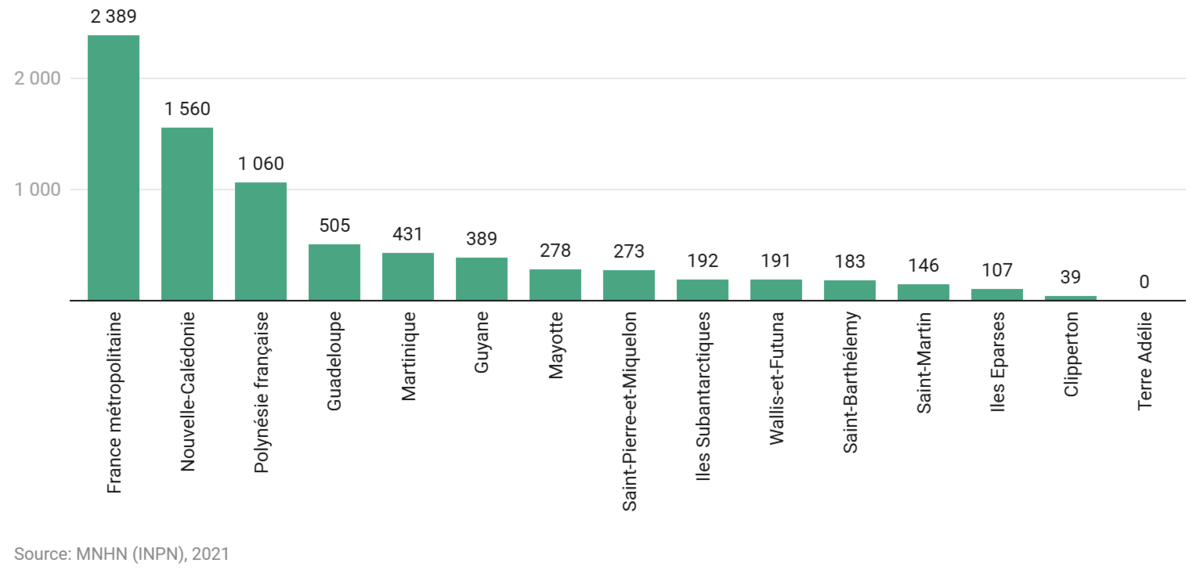
- A rapid invasionGeography favors spread• In mainland France, more than 2,500 introduced species were recorded in 2023. Among them, 94 are considered invasive because they harm local species, agriculture, health, or the economy. • France is a country favorable to the expansion of invasive exotic species due to its varied climate and position as a geographical crossroads. Outside overseas territories, 12 new species become established every ten years since 1982 in each department. This trend has accelerated since the 2000s.Introduced and invasive speciesAffected territories• Today, no region is spared. Departments such as Nord, Essonne, Seine-et-Marne, and Maine-et-Loire are the most affected. • Many species colonize ecosystems such as the coypu, which has no predators in France, the Louisiana crayfish, the bullfrog, ragweed, and water-lilies, an aquatic plant that asphyxiates waterways.Consequences and Asian hornets• These species can cause the decline or even extinction of local species and reduce agricultural yields. This can also have consequences for human health by causing allergies, as is the case with ragweed, or by promoting the transmission of viruses and bacteria. • Some species can invade regions very rapidly, such as the Asian hornet which arrived in 2004 in Lot-et-Garonne and occupied all departments by 2023 except Corsica and overseas territories. It is now one of 49 species of concern to the European Union.
- Overseas territories on the front lineIsolated and vulnerableIn overseas territories, these are often fragile spaces because they are isolated. Their isolation makes them unique but very vulnerable to invasive exotic species.Identified threatening speciesNearly 400 species pose a threat there. Among the best known are the black rat, the domestic cat, the blackcurrant, the giant African snail, and the Gabon tulip tree.Major impact on extinctionsThey are responsible for 53% of local species extinctions. 60 of the 100 most invasive species worldwide are already present there. New Caledonia, French Polynesia, and Réunion are the most affected.
- Rules to limit damageInternational commitmentsIn 1992, the United Nations adopted the Convention on Biological Diversity, which asks 193 signatory states to combat exotic species. This is also what is requested in the Ramsar Convention on wetlands, signed by 171 countries.European Union action• The European Union also acts. For example, the Life CROAA project focuses on combating invasive exotic amphibians, such as the bullfrog and the smooth xenopus. • European laws on marine environment strategy and water also contain measures to stop these species.French regulatory frameworkIn France, the law for the reconquest of biodiversity requires the control, capture, and eradication of invasive species, as well as sanctions in case of illegal introduction. The rural and maritime fishing code regulates imports. The public health code governs the transport and sale of exotic species. The environmental code indicates harmful species that can be hunted, such as the coypu or the muskrat. The National Strategy for Biodiversity 2030 aims to reduce by half the number of new established invasive exotic species in France.
- Collective mobilizationVigilance from allThe fight against invasive exotic species depends on the vigilance of everyone.Surveillance networks and citizen scienceA European network shares information on invasive species. Working groups exchange on the best ways to act, particularly in aquatic environments. Citizen science programs allow anyone to report an invasive species observed in nature. In France, a surveillance network was established in accordance with European regulations.Individual actionsEveryone can also act and participate in the fight. Do not release exotic animals or plants into the wild, try to buy local to avoid the introduction of foreign species, or participate in reporting and surveillance actions organized in our regions.
Further reading
- Espèces invasives en Europe : des progrès, mais la menace demeurenotre-environnement.gouv.fr
Du frelon asiatique aux autres espèces invasives, les actions menées en Europe portent leurs fruits, sans encore stopper leur progression.
