Les risques naturels majeurs en France
Les évènements naturels comme les inondations, les mouvements de terrain ou les tempêtes peuvent avoir de lourdes conséquences sur la vie des personnes, leurs logements et leurs biens matériels. Depuis 2001, la France compte en moyenne quatre évènements très graves par an : c’est quatre fois plus que pendant la seconde moitié du vingtième siècle. Les Français ont davantage conscience d’être exposés aux risques naturels dans les outre-mer et les régions qui ont déjà vécu des catastrophes.
Natural events such as floods, ground movements, or storms can have serious consequences on people's lives, homes, and property. Since 2001, France has experienced an average of four very severe events per year: four times more than during the second half of the twentieth century. French people are more aware of their exposure to natural hazards in overseas regions and areas that have already experienced disasters.
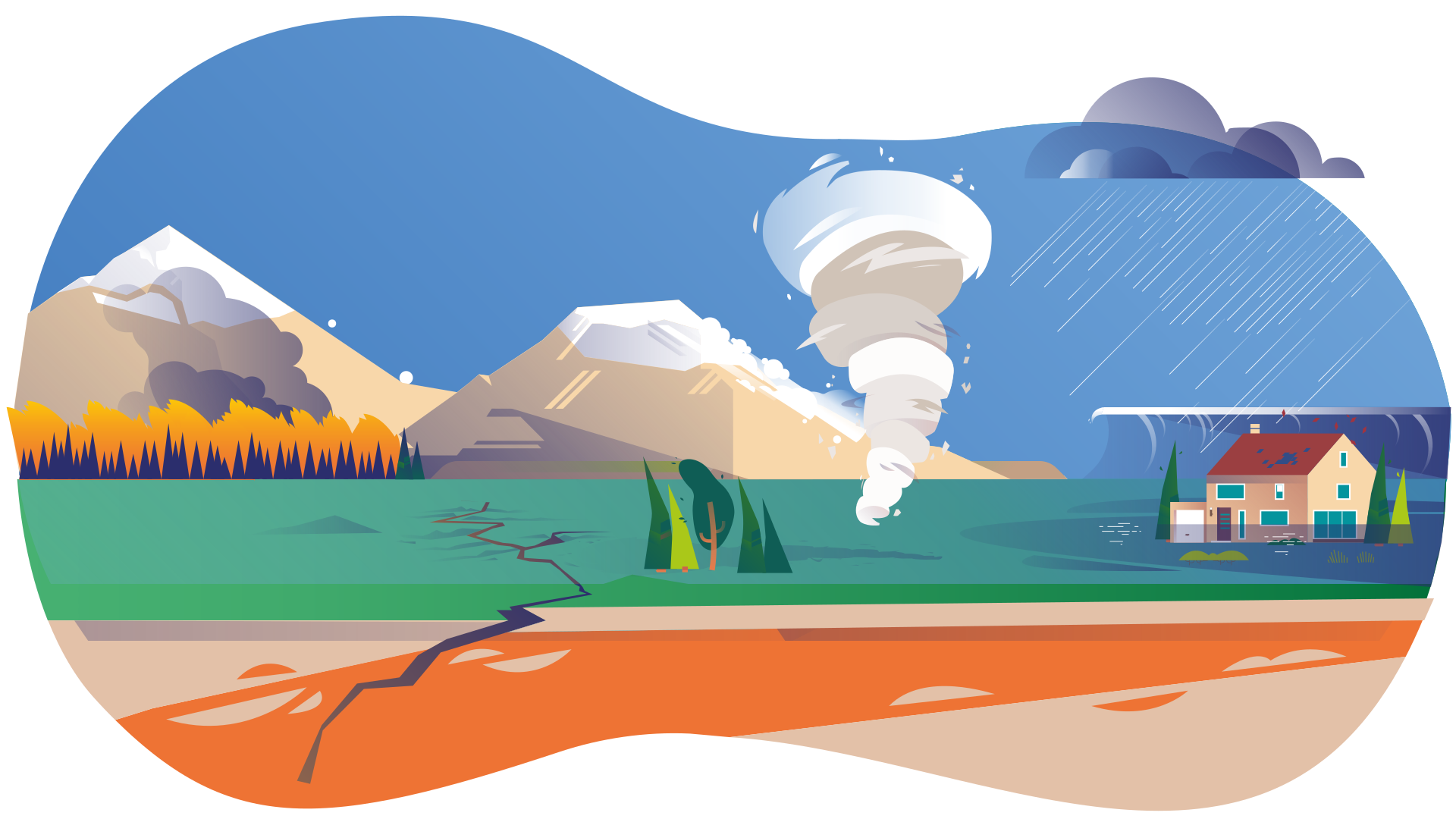
- What are the natural hazards in France?Hazard overviewFrance faces a variety of natural hazards: floods, storms, cyclones, ground movements, forest fires, avalanches, volcanic eruptions, and earthquakes.Hazard or riskHazard or natural risk: what is the difference? A hazard is a natural phenomenon, such as a storm or flood. It becomes a risk when it threatens people, property, or economic activities. For example, a river overflow is a hazard. When there are homes or businesses nearby, this overflow has significant consequences for people and their property. It is then considered a risk.Severity scaleSevere event, natural disaster: how is damage severity defined? In France, natural events are considered "very severe" when they cause the death of at least 10 people, or material damage reaches 30 million euros. A natural disaster corresponds to an event resulting in the death of at least 100 people, or material damage exceeding 300 million euros. (See the French damage severity scale)
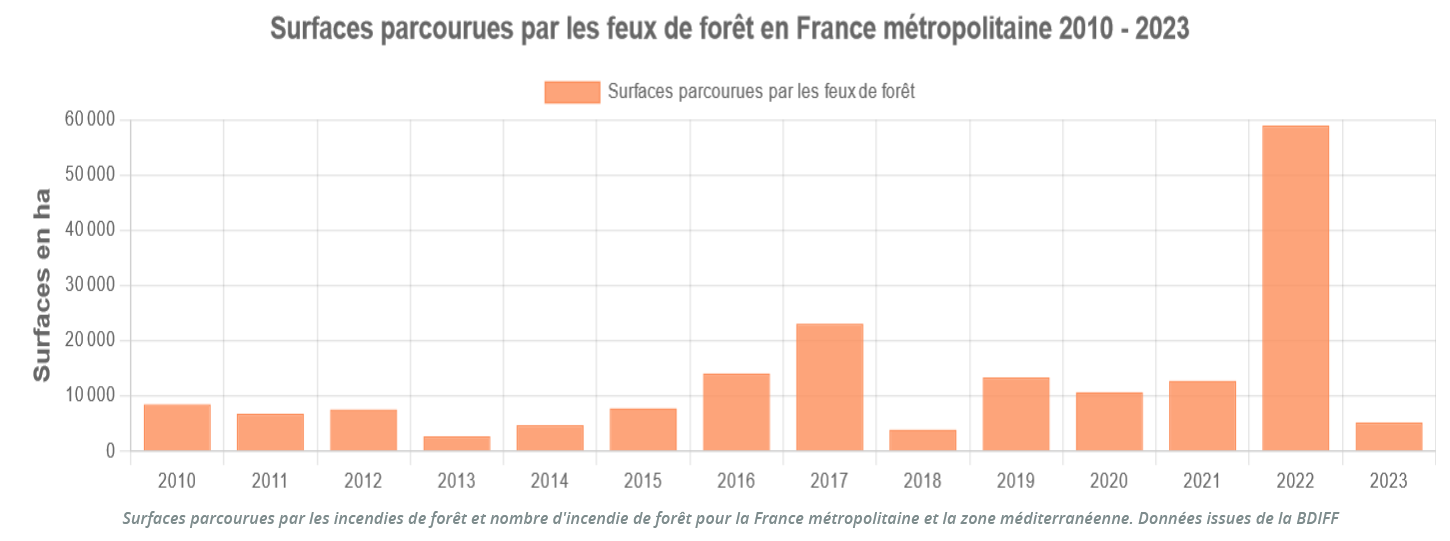
- Severe natural events increasingly frequentRising frequency• Natural hazards have become more frequent since the second half of the twentieth century. Between 2001 and 2024, France experienced an average of four very severe natural events per year, whereas between 1950 and 2000, there was only one per year. This is mainly explained by increased exposure of French regions to natural hazards. For example, when buildings are constructed in flood-prone areas or activities concentrate on coastlines, the same phenomenon affects more people and property. • Of the 161 very severe events that occurred in France since 1950, two-thirds were floods. Flood risk worsens with urbanization in the most exposed areas and soil sealing: covering the ground with an impermeable material, such as concrete, prevents water from infiltrating the soil (Source: SDES, Natural Hazards in France – State of Knowledge in 2025).Number of severe natural events per year, 1950–2024 in FranceSome events, such as heavy rains, droughts, or forest fires, can also be amplified by climate change effects. They are becoming increasingly frequent and significant due to greenhouse gas emissions in the atmosphere.
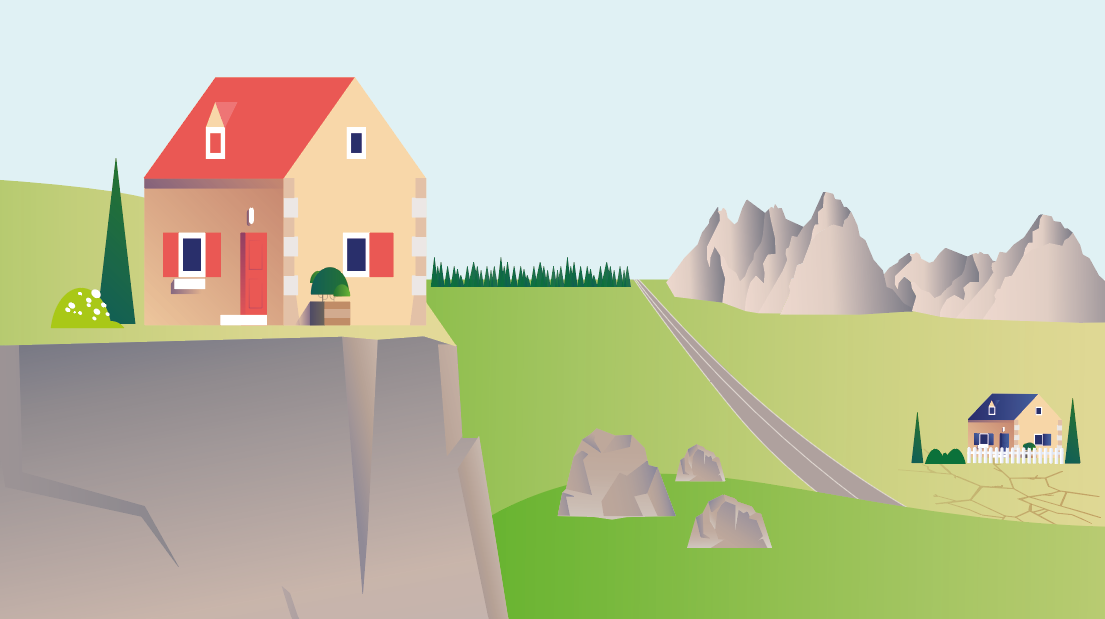
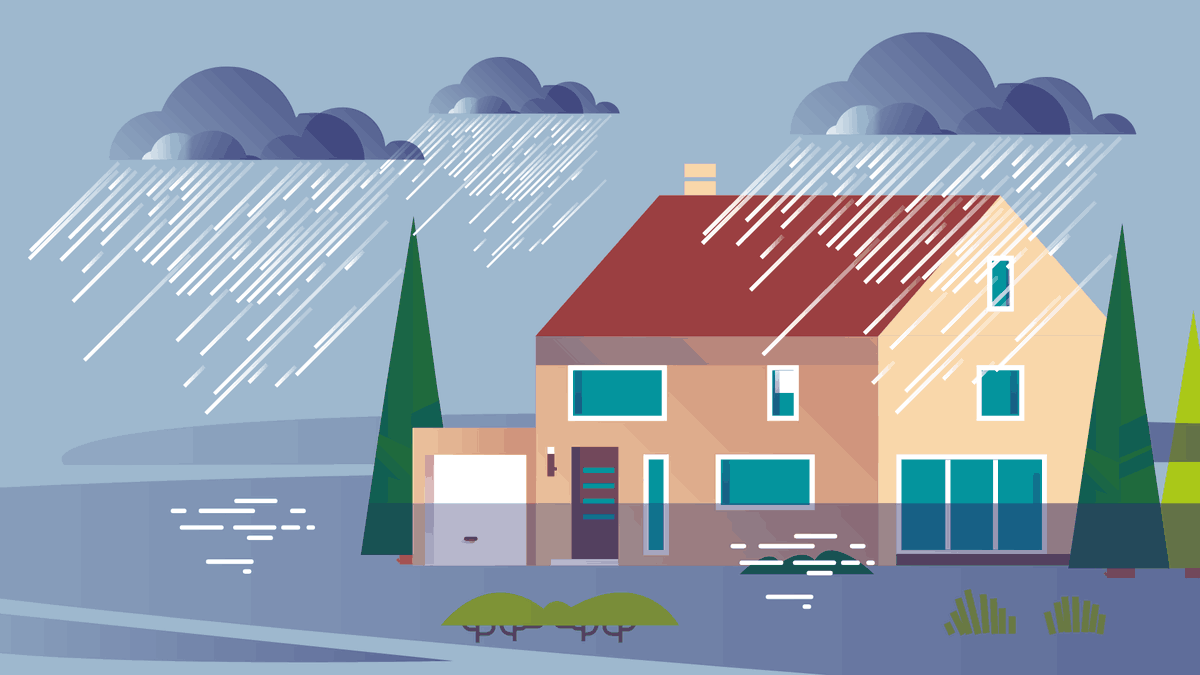
- How are French people exposed to natural hazards?Flood exposureFlood risks are significant for French people. Approximately 11 million homes are located in areas potentially exposed to river flooding. They house nearly 18 million people, or one in four French citizens. On the coast, 1.5 million people are exposed to storm surge risk.Ground movement and earthquakes• Ground movement risks, such as collapses, landslides, or rockfalls, are also a concern. They affect 41% of French municipalities. 54% of detached houses are exposed to clay shrink-swell risk: clay soils expand with rain and contract during dry periods. This weakens house structures and can cause cracks. • Approximately 3.9 million people in France are exposed to moderate earthquake risk, mainly in mountainous regions like the Alps or Pyrenees. In the Caribbean, earthquake risk is high and the entire population can face it. 9.5% of Caribbean residents are also exposed to tsunamis (Source: SDES, Natural Hazards in France – State of Knowledge in 2025).How do French people perceive natural hazards?Awareness of natural hazard exposure varies by region. Overseas and regions that have experienced disasters are more aware of their exposure to natural hazards. In mainland France, in municipalities with flood risk, 64% of the population is unaware of their exposure (Source: SDES, Natural Hazards in France – State of Knowledge in 2025).
- Prevention and compensation for natural disastersRisk prevention plans• Natural hazard prevention plans are established by local authorities to reduce exposure and vulnerability of people and property to natural hazards. They identify risk-exposed areas and define construction rules for those zones. Some areas are non-buildable, while others require specific measures to protect buildings. In 2024, 12,500 municipalities were covered by at least one natural hazard prevention plan, or one in three (Source: SDES, Natural Hazards in France – State of Knowledge in 2025). • In October 2025, the government launched the clay prevention fund to support households exposed to clay shrink-swell risk. It provides technical and financial assistance for prevention work, available under certain conditions in 11 departments (See clay prevention fund eligibility criteria).How does natural disaster compensation work?• In France, victims of material damage can receive financial compensation after a natural event such as a flood, ground movement, cyclone, earthquake, or volcanic eruption. Victims must first report the damage to their insurer. They must then notify the local council, which must request the prefect to recognize the state of natural disaster by a decree published in the Official Journal. This decree is necessary for insurers to apply the natural disaster guarantee. • Insurers are required to cover these natural hazards under multi-risk property or car insurance contracts. This is possible thanks to the natural disaster guarantee, called "Cat-Nat," created by the law of July 13, 1982. The Cat-Nat compensation scheme is financed by national solidarity: all people with property or car insurance contracts participate through a mandatory surcharge. • This surcharge funds the central reinsurance fund (CCR): its role is to support insurers, who cannot alone bear the significant costs of natural disasters. This system guarantees disaster victims will be compensated, regardless of damage scale. It also prevents residents of regions highly exposed to natural hazards from having to pay much higher insurance premiums. • The storm, hail, and snow guarantee compensates for damage from these events not covered by the natural disaster guarantee.
- Natural hazards: France compared to EuropeEuropean comparisonIn the European Union, France is the country with the most natural disasters between 1900 and 2025, followed by Italy and Spain. Storms mainly affect countries with long coastlines, such as France and Germany, while forest fires strike southern Europe. Three-quarters of earthquakes occur in Italy, Greece, and Romania because this area corresponds to the convergence of two tectonic plates. Of course, larger countries often experience more natural disasters, but in somewhat different ways depending on their location in Europe.Number of natural disasters in Europe, 1900–2025
Further reading
- Les inondationsnotre-environnement.gouv.fr
Crues, pluies intenses : la France fait face à plusieurs risques d’inondation. Pour se protéger, il faut connaitre les zones à risque et les alertes de vigilance.
- Les mouvements de terrain et les érosions cotièresnotre-environnement.gouv.fr
Il existe plusieurs risques de mouvements de terrain en France : glissement de terrain, effondrement de cavité souterraine, éboulement et retrait gonflement des argiles.
- Les feux de forêtsnotre-environnement.gouv.fr
Sécheresses, canicules : face au changement climatique, les risques de feux de forêts augmentent. Comment éviter les départs de feux et ralentir les incendies ?
- Les éruptions volcaniques et les séismesnotre-environnement.gouv.fr
Les territoires français les plus exposés aux séismes et aux éruptions volcaniques sont ceux des outre-mer : (Antilles, La Réunion, Mayotte).
- Les tempêtes et les cyclonesnotre-environnement.gouv.fr
Tempêtes, cyclones, ouragans : en France métropolitaine et dans les outre-mer, les vents violents peuvent avoir des conséquences dévastatrices. Quels sont les risques ?
- Les évènements météorologiques extrêmes sont-ils provoqués par le changement climatique ?notre-environnement.gouv.fr
Les évènements météorologiques extrêmes sont plus fréquents et intenses aujourd’hui à cause du changement climatique. Interview de Fredi Otto, cofondatrice du World Weather Attribution.
- Pour en savoir plus sur la garantie catastrophes naturelleseconomie.gouv.fr
- Les inondationsnotre-environnement.gouv.fr
Crues, pluies intenses : la France fait face à plusieurs risques d’inondation. Pour se protéger, il faut connaitre les zones à risque et les alertes de vigilance.
- L’érosion des côtes et la montée du niveau de la mernotre-environnement.gouv.fr
Les côtes françaises sont exposées au risque d’érosion et à la montée du niveau de la mer : la limite entre la terre et la mer recule vers l’intérieur des terres.
- Les mouvements de terrain en France : types de risques et préventionnotre-environnement.gouv.fr
Il existe plusieurs risques de mouvements de terrain en France : glissement de terrain, effondrement de cavité souterraine, éboulement et retrait gonflement des argiles.
- Géorisques - Mieux connaître les risques sur le territoiregeorisques.gouv.fr
Le site Géorisques, édité par le ministère du Développement durable et conçu par le Bureau de Recherches Géologiques et Minières (BRGM), rassemble les informations géographiques sur les risques naturels et technologiques dans un portail national.