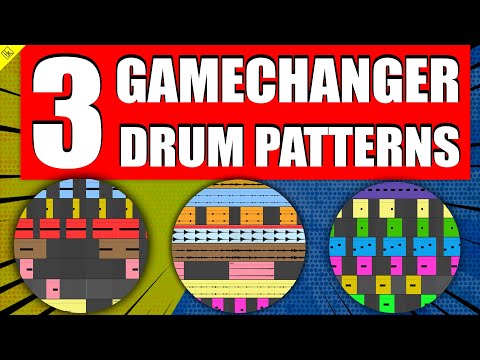
3 easy and gamechanger drum patterns
3 chapitres
- Dark Room Percussive PatternsFoundation Setup• Start with a four-to-the-floor kick from deep melodic techno sample packs • Shorten and darken the kick to create a darker feel • Add a slight hi-hat from the sample pack to create contrastReverb Technique• Create two separate rooms: a big room for percussion and a small room for hi-hats and brighter elements • Use returns with reverb set to 100% wet with reduced reflection and diffusion • Bring down the size and stereo field for a compact, intimate spaceLow-End Design• Use shaker sounds transposed down to create interesting low-end elements instead of traditional bass • Apply sidechain compression from the kick with look-ahead to control the low-end • Add a secondary deep sub base synthesized layer to complement the shaker foundationAmbient Finishing• Create dark percussion hits placed off-beat when the kick doesn't hit, with reverb to create space • Apply EQ to remove highs from dark percussion elements • Add tap delay with warming delays preset to enhance the ambience and depth
- Call and Collapse PatternClap Layering• Use two clap sounds: a tight analog-style clap and a bigger secondary clap • Create a call-and-response structure where the tight clap drops out and the bigger clap answers • Position them to create contrast and tension in the rhythmDynamic Movement• The tight clap establishes the groove on specific beats • The bigger clap enters to unfold and expand the rhythm when the first clap stops • Add reverb to the responding clap to fill the space and make the contrast more drasticCreative Effects• Apply distortion to the reverb on the collapsed clap for a driven, textured sound • Use ping pong EQ instead of delay for creative movement across the stereo field • Narrow the stereo field while applying distortion for a cohesive, intense soundAdvanced InnovationThis personal innovation combines reverb, distortion, and ping pong EQ to create a unique collapsed clap sound not commonly used in tracks, adding a distinctive texture to the pattern.
- Driving Hi-Hats PatternClosed Hat Foundation• Create a 16th note hi-hat pattern using closed hats from sample packs • Add LFO modulation to fade in and fade out to make the pattern more organic and ever-changing • Offset both LFO instances to create variation across different parts of the loopOpen Hat Enhancement• Layer open hats to add brightness and movement to the closed hat pattern • Apply overdrive with LFO automation to the open hats so the distortion amount changes constantly • This creates contrast between clean and distorted sections for dynamic interestShaker Groove• Create custom shaker loops by layering multiple single shaker hits • Pan shakers left and right with some random panning between them • Vary each hit with different transpositions and preparations to avoid repetitionSpatial Polish• Apply sidechain compression from the kick to the hi-hat group • Add reverb using a drum room preset and distort the reverb for crispy, cohesive space • Include a light delay to enhance the driving feel and tie all elements together