Les conséquences du changement climatique sur la santé
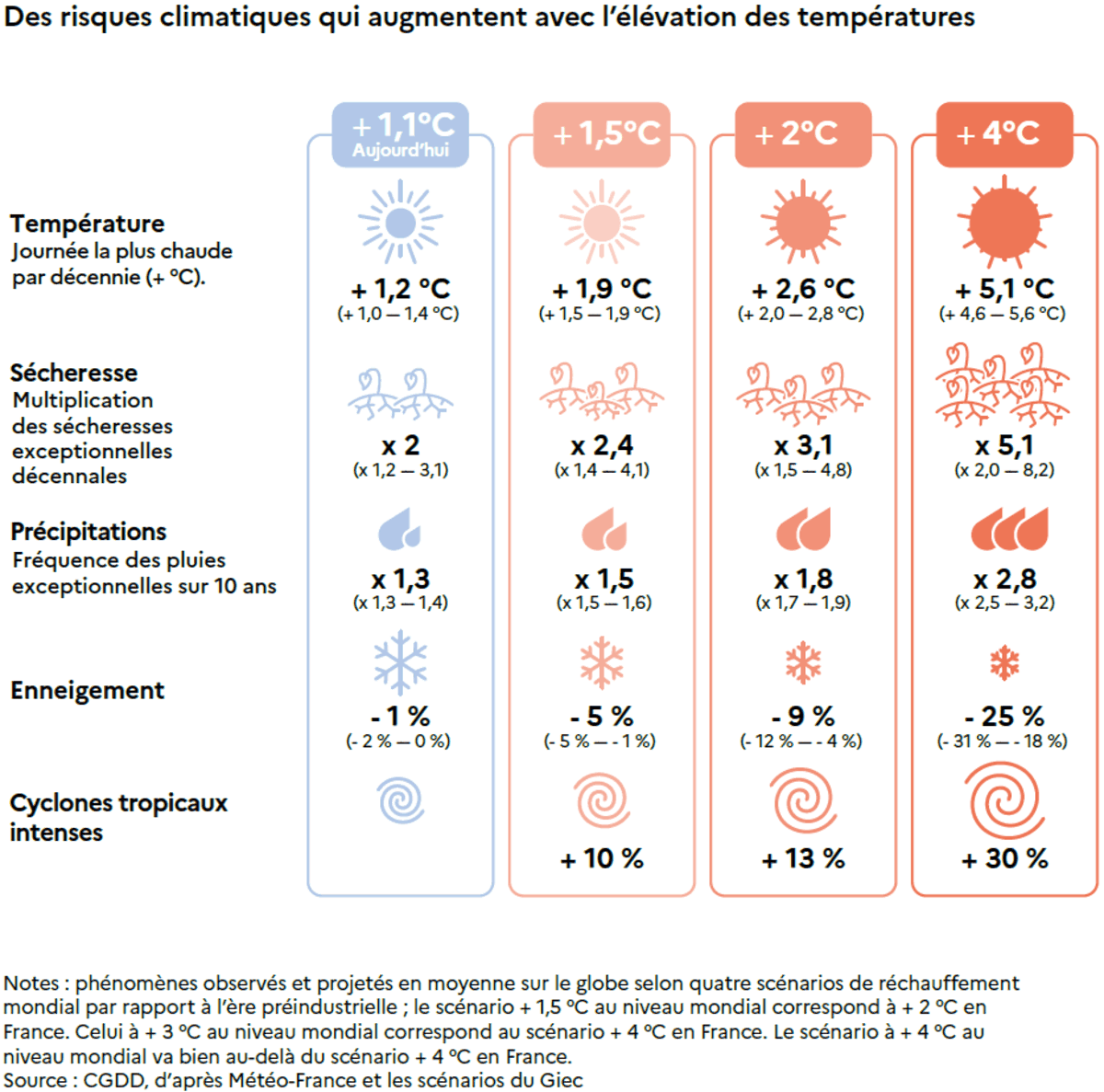
Le changement climatique perturbe les organismes vivants, qui ne peuvent pas tous s’adapter à la hausse des températures. C’est vrai aussi donc pour l’être humain, avec des défis en termes d’organisation économique et sociale, mais aussi de santé. Le changement climatique est même identifié par l’Organisation mondiale de la Santé (OMS) comme l’un des principaux risques pour la santé publique partout dans le monde. Certains, comme l’augmentation du nombre de canicules, sont déjà observables en France.
Climate change disrupts living organisms, which cannot all adapt to rising temperatures. This is also true for humans, with challenges in economic and social organization, as well as health. Climate change is even identified by the World Health Organization (WHO) as one of the main public health risks worldwide. Some impacts, like increasing heat waves, are already observable in France.
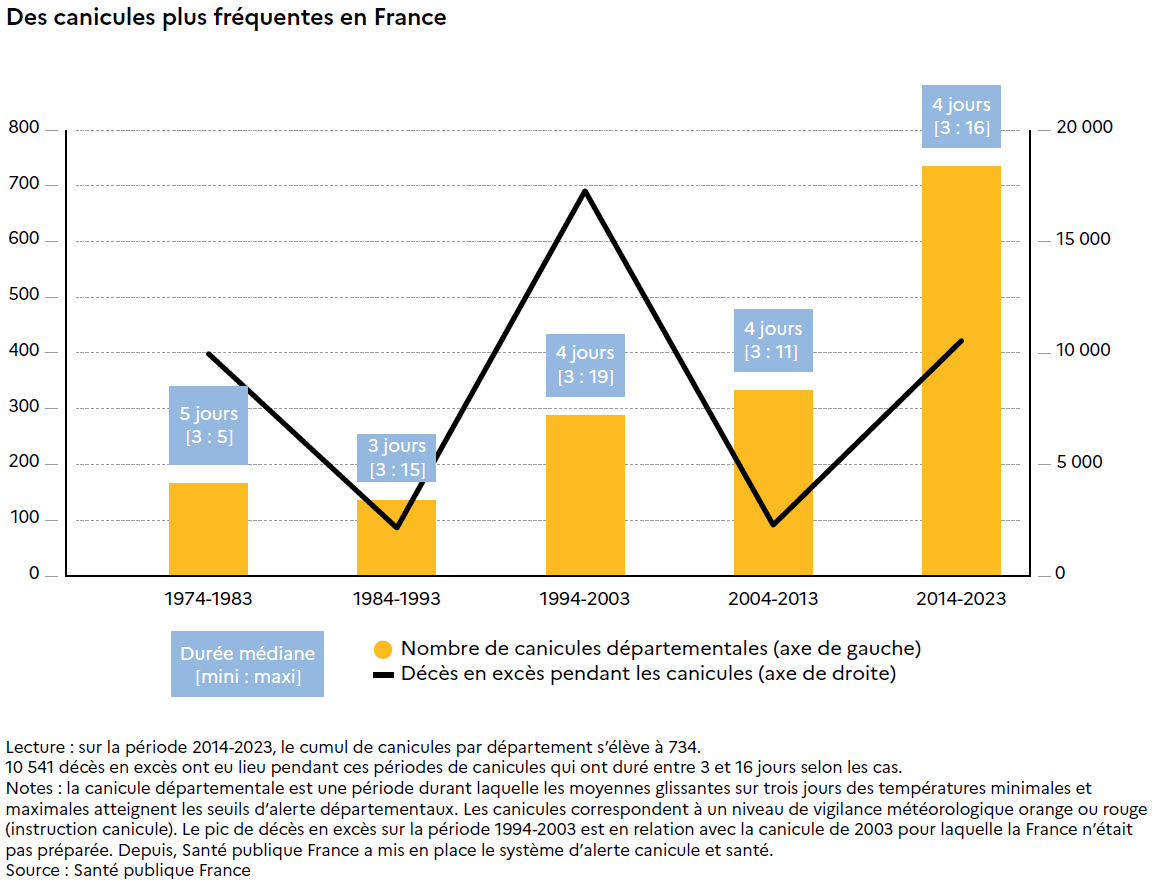
- Measurable health impactsIntroductionDeaths and health problems associated with extreme events (heat waves, storms, floods, etc.), proliferation of species that transmit diseases to humans, worsening allergies, air pollutant concentration, agricultural disruption, mental health issues, and more: climate change's impacts on health are already extensive.Heat waves and excess mortality• The primary cause is the intensification of heat waves in recent years (more frequent and more severe). 44% of heat waves occurring since 1974 happened in the last decade: 734 between 2014 and 2023, twice the number recorded between 2004 and 2013. Their median duration is 4 days, with the longest lasting 19 days. 3 of the 4 hottest summers in France since 1900 were recorded between 2018 and 2022. Heat waves generate increased healthcare visits, hospitalizations, and worsening excess mortality. • Over the last decade, Auvergne-Rhône-Alpes and Île-de-France account for over one-third of national excess mortality linked to heat waves in metropolitan France. Warm temperatures, even below heat-wave alert thresholds, also have significant impact.More pollen and allergies• Climate change can also promote and intensify pollen-related allergic reactions, notably due to the lengthening of the period during which plants produce pollen. Rising CO2 concentrations drive greater photosynthesis and thus increased pollen grain production. With rising temperatures, these grains also contain more allergens. Some allergenic plant species are also expanding geographically. • Birch is a good climate change indicator. Present throughout Europe, this highly allergenic tree pollinates in March-April, releasing large quantities of pollen into the air. Since the late 1980s, annual birch pollen quantity has increased by nearly 20%. This evolution parallels rising average temperatures across 6 cities in metropolitan France with different climates.Infectious diseases and health risks• Santé Publique France indicates that France can expect, by 2030, the emergence or reemergence of infectious risks due to environmental changes, for example geographic expansion of insects transmitting dengue, malaria, and chikungunya, particularly the tiger mosquito. • We must also anticipate environmental and lifestyle changes creating new exposures, such as sun exposure and UV-related risks, swimming and exposure to leptospirosis bacteria, or interactions between air pollution and temperatures (high heat notably promotes ozone pollution).
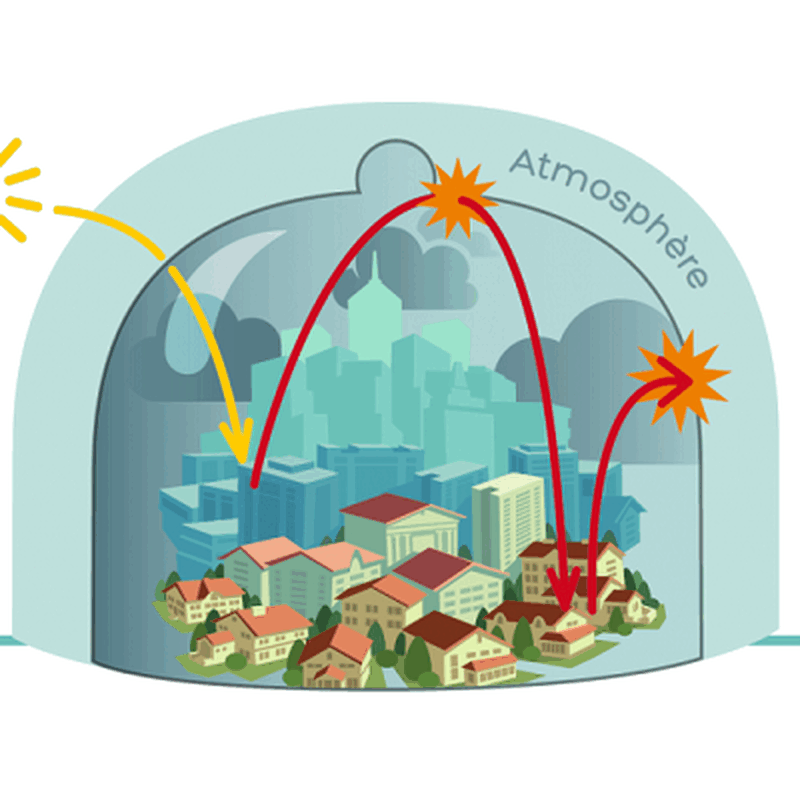
- Adapting to rising temperaturesFrench healthcare system impact• Preventing heat's health effects is a priority adaptation in France. These effects occur within hours and can result in more healthcare visits and increased mortality, as observed during the August 2003 heat wave. • While elderly people, whose numbers are rising in France, come to mind first, heat waves' health impact actually affects all ages. Heat waves increase emergency care visits for conditions directly linked to heat, including in younger people. • Early heat waves starting in June are associated with high emergency care use among children and those under 65. For example, 8,000 emergency visits (including about 1,200 for children under 15) for heat-related causes were recorded during heat alert periods in summer 2017. • The short-term adaptation challenge is achieving a society where heat waves are managed as routine summer events, not crises. Managing the impact of unprecedented heat waves in duration and intensity remains a major problem.Rare but serious cold episodes• Unlike heat, cold's effects are spread over time (up to 3 weeks after exposure) and take mainly the form of cardiovascular or respiratory conditions. Other health effects are also observed: injuries from snow and ice, carbon monoxide poisoning, etc. • In a climate change context, cold episodes could have even greater effects by becoming very unusual. There is no reason to expect significant reduction in winter mortality, mainly due to seasonal respiratory epidemics like flu.National action plans on extreme temperatures• Several health, socio-economic, and environmental causes can combine to increase people's vulnerability to heat or cold. Age, sedentary lifestyle, medications, urban living, working or housing conditions, access to information, and cognitive abilities can compound and further weaken affected people. • The National Heat Wave Management Plan includes an alert system based on weather forecasts, monitoring of health indicators, information campaigns, and management measures (municipal vulnerable person registers, emergency plans, etc.). Cities are beginning to implement long-term measures to reduce urban heat island effects (urban planning changes, vegetation, housing insulation, etc.). • The Cold Snap Plan includes information campaigns, specific accommodation and monitoring for homeless people (emergency shelter openings, outreach, etc.) and measures for vulnerable populations (winter tenant protections, heating financial assistance, etc.).
Further reading
- Santé publique France : changement climatiquesantepubliquefrance.fr
Santé publique France travaille sur les impacts sur la santé du changement climatique pour identifier les enjeux, fournir des données, surveiller les évolutions des risques sanitaires et développer des axes d’adaptation.
- La gestion sanitaire des vagues de chaleursante.gouv.fr
Cette page présente l’ensemble de la réponse publique aux vagues de chaleur d’un point de vue sanitaire, notamment le dispositif de vigilance météorologique, la surveillance sanitaire, et le dispositif de prévention et de communication.