
Les conséquences du mode de vie en France sur l’environnement
Chaque jour, la consommation et les activités en France laissent une empreinte sur l’environnement. Que ce soit notre façon de nous déplacer, de nous loger, de nous nourrir ou de consommer, l’ensemble de ces activités génère des impacts sur les ressources naturelles, la biodiversité et le climat. Si ces impacts peuvent sembler faibles pour chacun, ils deviennent importants collectivement et s’intensifient avec l’évolution de nos modes de vie : augmentation de la surface dédiée à l’habitat, mobilité accrue, multiplication des équipements électroniques...
Every day, consumption and activities in France leave a mark on the environment. Whether it's how we travel, where we live, what we eat, or what we buy, all these activities generate impacts on natural resources, biodiversity, and climate. While these impacts may seem small for each individual, they become significant collectively and intensify with the evolution of our lifestyles: increased housing space, greater mobility, multiplication of electronic equipment...
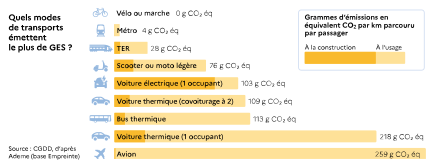
- Lifestyle impacts the environmentGetting aroundPrivate vehicles account for more than half of greenhouse gas emissions from the transport sector (source: SDES) and numerous air pollutant emissions. Despite fuel prices, the development of public transport, cycling in cities, and carpooling, the individual car remains the primary mode of transport for French people.HousingThe space occupied by our homes contributes to converting natural or agricultural land into built surfaces. The increase in housing numbers contributes to rising energy consumption and natural resource use such as stone, sand, and wood.FoodFrom agricultural production to our plates, food consumes water and energy, emits greenhouse gases, and produces waste related to packaging and food waste. Agriculture can also affect the environment through pesticides and fertilizers that can pollute soil, air, and water and disrupt biodiversity.ConsumptionEveryday objects affect the environment: extraction of raw materials, manufacturing, transport, use, and end-of-life. Reducing waste, extending product lifespan, and recycling are important priorities to limit these effects.
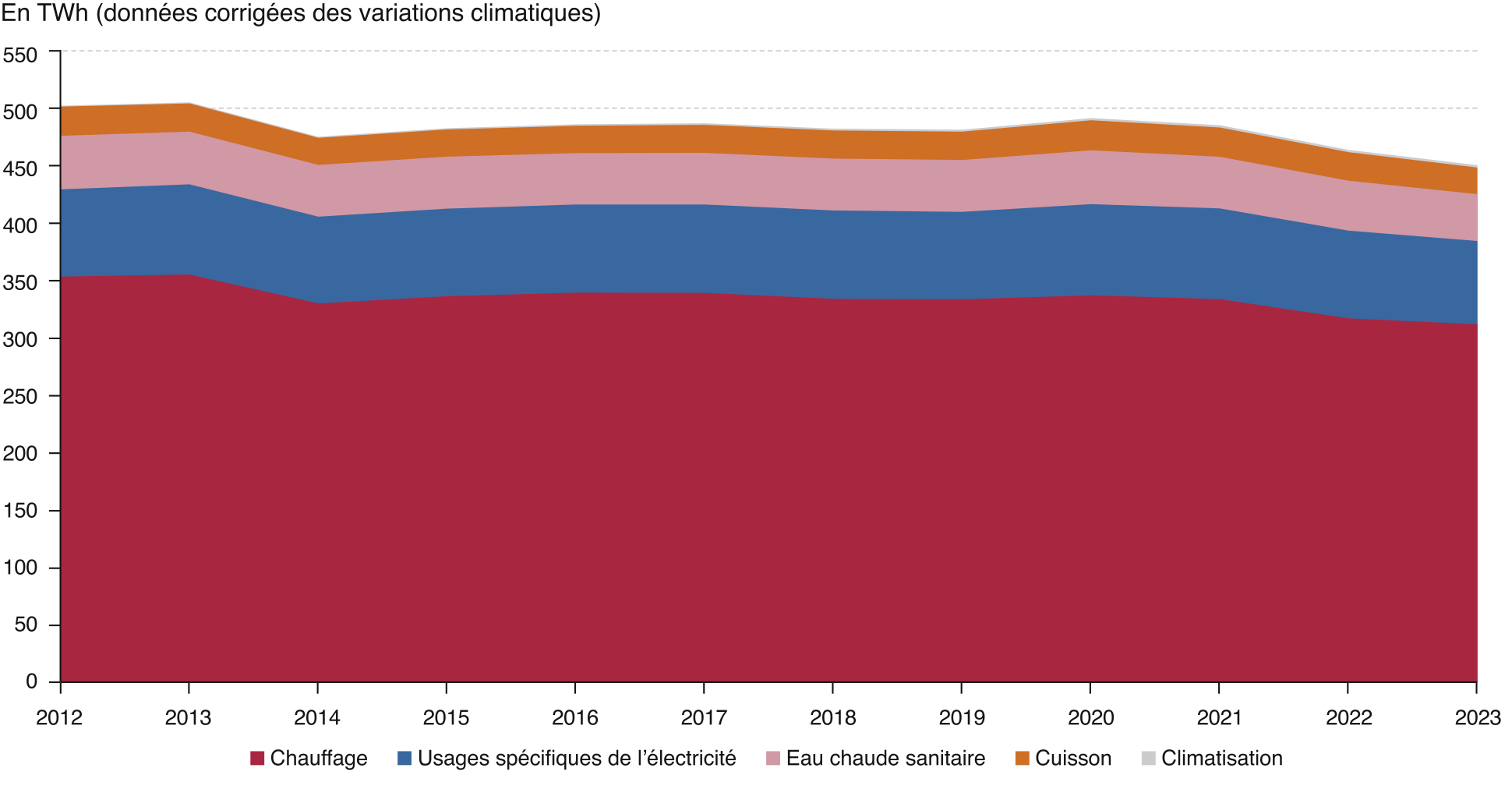
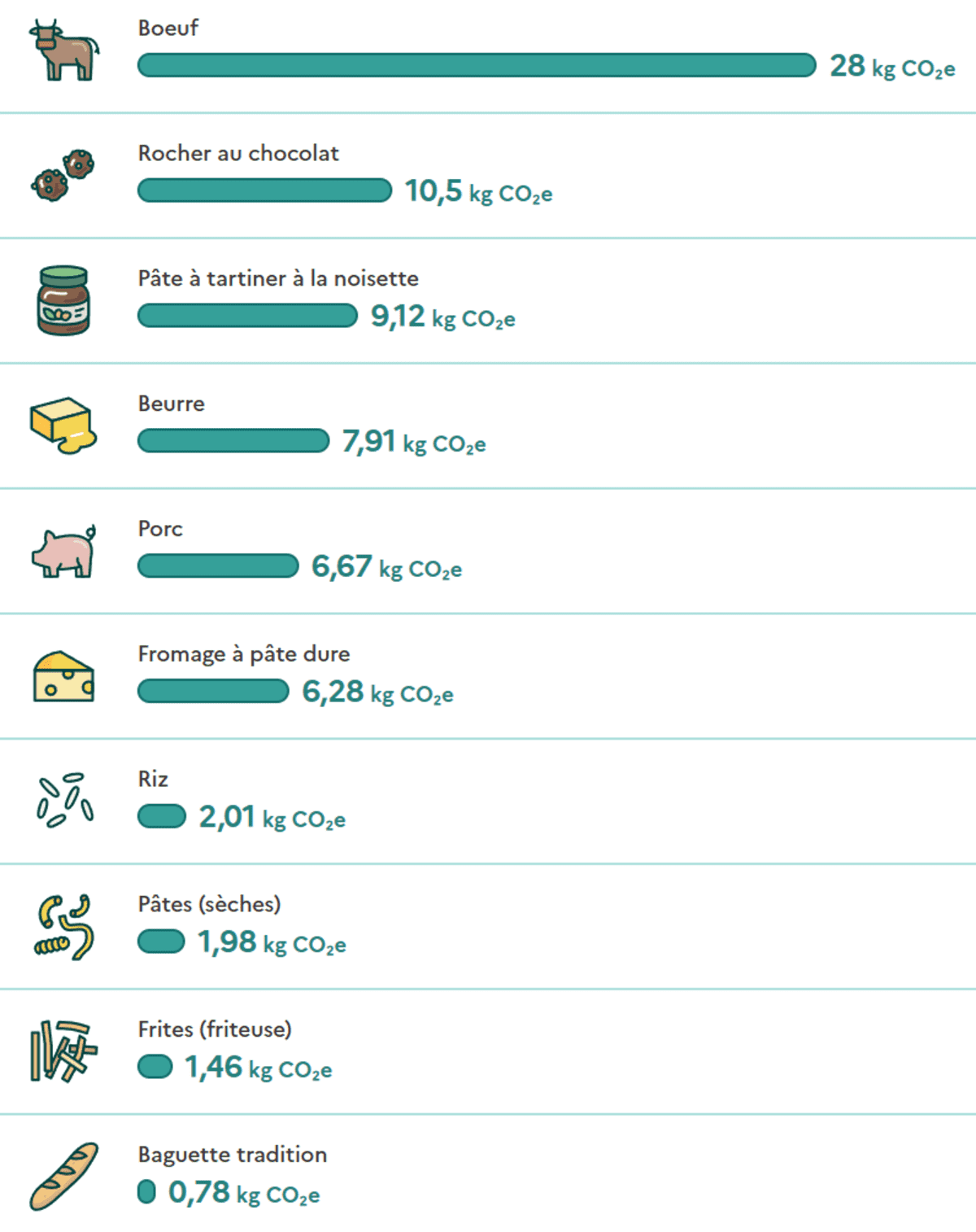
- Daily impacts on the environmentHousehold changes• The composition of French households is changing rapidly: the number of households is increasing much faster than the population itself, primarily due to separations and increased life expectancy. Result: more numerous but smaller households. • This change has significant environmental consequences: • more housing needed that takes the place of natural spaces; • multiplication of household equipment, with each home having its own appliances; • increased individual travel and consumption of goods.Transport usage• French people still use cars primarily for travel, despite a slight increase in rail transport. This automobile dependency is greater on the outskirts of cities and in rural areas. • The consequences are multiple: • greenhouse gas emissions; • air pollution from nitrogen oxides and fine particles; • consumption of imported fossil fuels; • road infrastructure needs that fragment natural habitats.Housing's environmental impact• Our homes occupy increasingly larger spaces: the area dedicated to housing has increased nearly five times faster than the French population over the last fifty years (source: Insee). • This increase has several causes: • an increase in the number of households faster than population growth; • fewer people per household; • the enlargement of homes and their grounds; • the development of individual houses, especially in rural areas. • While drinking water consumption has stabilized, household electricity consumption has increased considerably since the 1960s but has declined slightly in recent years (sources: eaufrance and Insee). This rise is mainly due to the multiplication of electrical and electronic appliances in our homes, particularly digital equipment.Food and environment• Our diet has environmental consequences from agricultural production to waste management: • pollution of soil, air, and water by pesticides and fertilizers; • greenhouse gas emissions, particularly from livestock; • risk of depleting marine resources due to overfishing; • significant consumption of water and energy. • Although consumption of organic products has increased in recent years, this trend is currently slowing. • Beyond production and eating habits, food waste remains a major problem: each French person throws away an average of 63 kg of food per year, from production to final consumption (source: SDES).Consumption and waste management• French consumption habits have changed considerably over recent decades, with a constant increase in purchases. This trend is particularly visible in furniture, appliances, and digital technology sectors. • This growing consumption leads to: • pressure on natural resources needed for manufacturing; • greenhouse gas emissions throughout the product lifecycle; • significant waste production. • But recycling is progressing. Over ten years, the percentage of recycled waste has increased, even though the total quantity of waste produced by households has only slightly decreased (source: SDES). The situation varies by region: residents in the southeastern quarter of France produce more waste than the national average.
Further reading
- Transport et déplacements du quotidien : quels effets sur l’environnement ?notre-environnement.gouv.fr
En voiture, en train, à vélo ou à pied : chaque type de déplacement influence l’empreinte écologique. Découvrez les modes de transport utilisés en France, leur impact environnemental, et les moyens d’agir.
- Quel est l’impact sur l’environnement de la circulation des voitures ?notre-environnement.gouv.fr
39 millions de voitures en circulation, 66 millions de tonnes d’émissions de CO2, 8 % des particules fines, etc. : quel est l’impact des voitures sur l’environnement en France ?
- Le logement et ses conséquences sur l’environnementnotre-environnement.gouv.fr
Matériaux, consommation d’énergie, artificialisation… le logement utilise des ressources et change l’occupation des sols. Quels sont ses impacts sur l’environnement ?
- Quelle est la consommation des ménages en eau potable ?notre-environnement.gouv.fr
En France, chaque habitant consomme en moyenne 150 litres d’eau potable par jour. Cette consommation est stable depuis 2014. Elle varie selon les régions, sous l’influence du climat, du tourisme et des habitudes domestiques.
- Les effets de l’alimentation sur l’environnementnotre-environnement.gouv.fr
- Consommation des Français : comment évoluent les dépenses ?notre-environnement.gouv.fr
Comment les Français consomment-ils ? Découvrez l’évolution des dépenses des ménages et leur impact environnemental : logement, alimentation, transport, numérique et réparation.
- Les déchets ménagers en France : chiffres et enjeux pour l’environnementnotre-environnement.gouv.fr
Découvrez les chiffres-clés des déchets ménagers en France : production, composition, traitement et solutions pour réduire notre empreinte environnementale au quotidien.
- Environnement, consommation d’énergie et mobilités en 2023statistiques.developpement-durable.gouv.fr
Article Web - Service des données et études statistiques - Octobre 2024.
- Pratiques environnementales des Français en 2023 : agir à l’échelle individuellestatistiques.developpement-durable.gouv.fr
Article Web - Service des données et études statistiques - Octobre 2024.
- Commerce en ligne : Impacts environnementaux de la logistique, des transports et des déplacementslibrairie.ademe.fr
Étude réalisée par l’Agence de la transition écologique (Ademe) et le Commissariat général au développement durable (CGDD) - Avril 2023
- Télétravailler davantage : quel effet sur les émissions de CO2 des déplacements domicile-travail ?ecologie.gouv.fr
Thema essentiel - Commissariat général au développement durable - Juillet 2024.
- Quel effet du télétravail sur les émissions de CO2 liées aux déplacements quotidiens ?ecologie.gouv.fr
Rapport d’analyse, Crédoc (Centre de recherche pour l’étude et l’observation des conditions de vie) - Juillet 2024.