Music Theory but actually COOL - 13 amazing concepts
13 capitulos
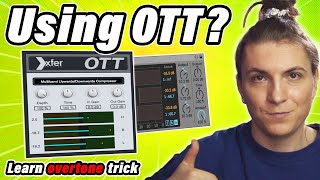
- Overtones and UndertonesWhat They AreOvertones and undertones are frequencies that define the timbre of an instrument. They are produced at each integer multiplier of the fundamental frequency.Key Pattern• Lower octaves have tighter harmonics (100, 200, 300, 400) • Higher octaves maintain the same multiplication ratio (200, 400, 600) • Lower pitches naturally sound richer due to tighter harmonic spacingPractical ImpactUsing autotune on lower pitch sounds pushes higher harmonics upward, creating a richer sound compared to higher pitch sounds.Why It MattersUnderstanding overtones explains why instruments sound different at various pitches and how to achieve richer audio in production.
- Motif as Building BlockDefinitionA motif is a small piece of melody that repeats within itself and can form the foundation of a larger melody.How It Works• Start with a very short melodic phrase • Repeat and extend it with additional notes • Build a full melody from these repetitionsCreative UseMotifs are an excellent starting point for composers struggling with melody creation, providing structure and coherence.Practical ExampleUsing a preset, a short melodic phrase was repeated and layered with additional notes to create a complete melody.
- Canons and ImitationCore ConceptA canon is a melody with one or more imitations played after a given duration.Technique• Duplicate the same melody • Delay it by a specified duration • Layer the delayed copies over the originalCreative EffectCanons create a sophisticated, layered sound by having the same melody chase itself at different time intervals.AppealDescribed as a cool party trick that impresses listeners with its mathematical yet musical elegance.
- Trills for ExpressionWhat Trills AreA trill is a musical pattern involving rapid alternation between a note and an auxiliary note directly above it.Technical Details• Upper note can be either a half step or full step above the main note • Notes alternate quite rapidly • Speed can be varied while performing the trillCreative ApplicationsTrills are handy for creating interesting breaks and adding texture to musical passages.Practical BenefitA small break was created using trills as a handy little tool for making breaks more interesting.
- Sforzando and ArticulationDefinitionSforzando means articulating a chord or note to create tension or power in the sound.Execution• Play notes with varying velocity levels • Increase velocity for impact on certain notes • Create contrast between quieter and very loud articulationsExpression ToolSforzando adds dramatic emphasis and emotional intensity to musical passages.UsageParticularly effective in creating powerful moments in breaks and transitions.
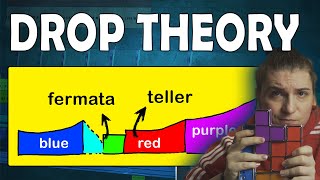
- Fermata and Tension BuildingMusical MeaningFermata indicates that a chord or note should be played with a longer duration than normally written.Practical Use• Create sustained and long held notes • Build anticipation before drops and transitions • Enhance tension in musical phrasesTension TechniqueNot resolving the held chord also helps create and sustain tension, making the eventual resolution more impactful.Emotional ImpactWhen combined with a resolving chord, fermata creates a deep emotional release that enhances the overall feel of breaks and drops.
- Triads and Chord BuildingMajor Triad• Count 4 half steps above the root note • Then count 3 half steps above that note • This creates the major triad structureMinor Triad• Count 3 half steps above the root note first • Then count 4 half steps above that note • This inverted structure creates the minor qualitySuspended Triad• Count 3 half steps above the root • Count 3 more half steps instead of 4 • Produces a dissonant sound good for creating tensionFoundational KnowledgeUnderstanding triads is essential for creating and analyzing chord progressions in music composition.
- Arpeggios and Chord InversionsArpeggios• Play individual notes of a chord sequentially rather than together • Order can be rearranged to create different patterns • Allows creative flexibility in how the chord is expressedFirst InversionTake the third of the chord and place it one octave above the root, changing the bass note.Second InversionTake the fifth of the chord and place it one octave above, further transforming the chord's character.PurposeInversions help open up the sound and make chords more interesting by changing which note sits in the bass.
- Voicing and Chord SpacingVoicing ConceptVoicing involves moving notes in a chord up or down by octaves to create different sonic textures without changing the chord itself.Pad Sound Example• A C minor chord can sound dark and close in standard voicing • Moving notes up by octaves opens the sound • This technique creates more interesting and spacious pad soundsTechnical ApplicationMoving individual notes one or multiple octaves up transforms the character and space of the chord while maintaining its identity.Production ValueEspecially important for pad sounds in electronic music production, voicing can dramatically enhance the quality and interest of your synthesis.
- Upper Chord ExtensionsWhat They AreUpper chord extensions involve adding notes above the basic triad to create more complex and sophisticated chords.Building Process• Start with a basic triad like C minor • Add notes sequentially above the root (seventh, ninth, eleventh, etc.) • Experiment with different extensions to find interesting combinationsFlexibilityThe naming convention (seventh, ninth, etc.) is less important than listening to the result and choosing what sounds good to your ear.Creative FreedomUpper chord extensions don't need to follow strict rules; experimentation and subjective preference guide the creation of unique chords.
- Power Chords and SynthesisBasic Structure• Power chords consist of the root note and the fifth in a scale • In C major, a C power chord is C and G • Simple two-note structure that is very versatileAdvantageYou can completely forget about the scale and play power chords anywhere, making them extremely flexible for any musical context.Synthesizer Trick• Tune one oscillator 7 semitones above or 5 semitones below another • This creates the power chord effect in synthesis • Results in much stronger and more powerful soundsProduction UsePower chords are excellent for creating really powerful lead and bass sounds in electronic music production.
- Dynamics and ExpressionDefinitionDynamics refers to how hard you play an instrument, affecting both the timbre and loudness of the sound produced.Acoustic Variation• Playing harder changes the timbral character of the sound • Volume increases with harder playing • Instruments like piano and guitar respond naturally to dynamic variationDigital Emulation• Map velocity to cutoff frequency for timbral changes • Map velocity to volume of oscillators • Create the same expressive quality as acoustic instruments in synthesizersEmotional ImpactDynamic expression dramatically changes how much emotion and organic feel your musical performance conveys.
- Crescendo and AutomationWhat Crescendo IsCrescendo means gradually increasing the volume of an instrument while playing.Common Implementation• Use cutoff filter automation to gradually open the sound • Cutoff filter adjustments also affect loudness perception • Creates a natural swelling effect in the musicNeglected Opportunity• Volume automation is commonly applied to pads and lead sounds • Drum crescendos are rarely done but create beautiful ambience effects • Simple volume automation on drums significantly enhances the overall track feelingMusical PurposeCrescendo and gradual automation give tracks depth and a house music feeling while building anticipation and emotion.