La finance durable
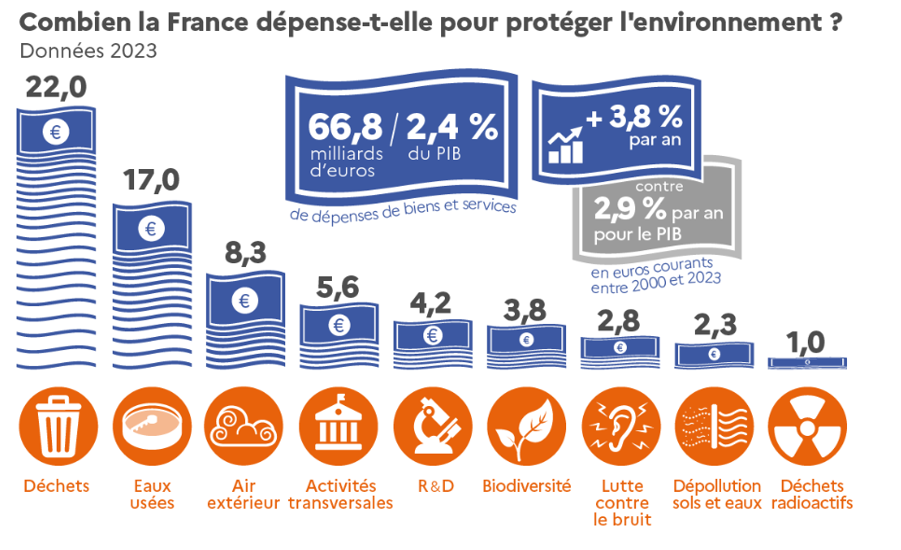
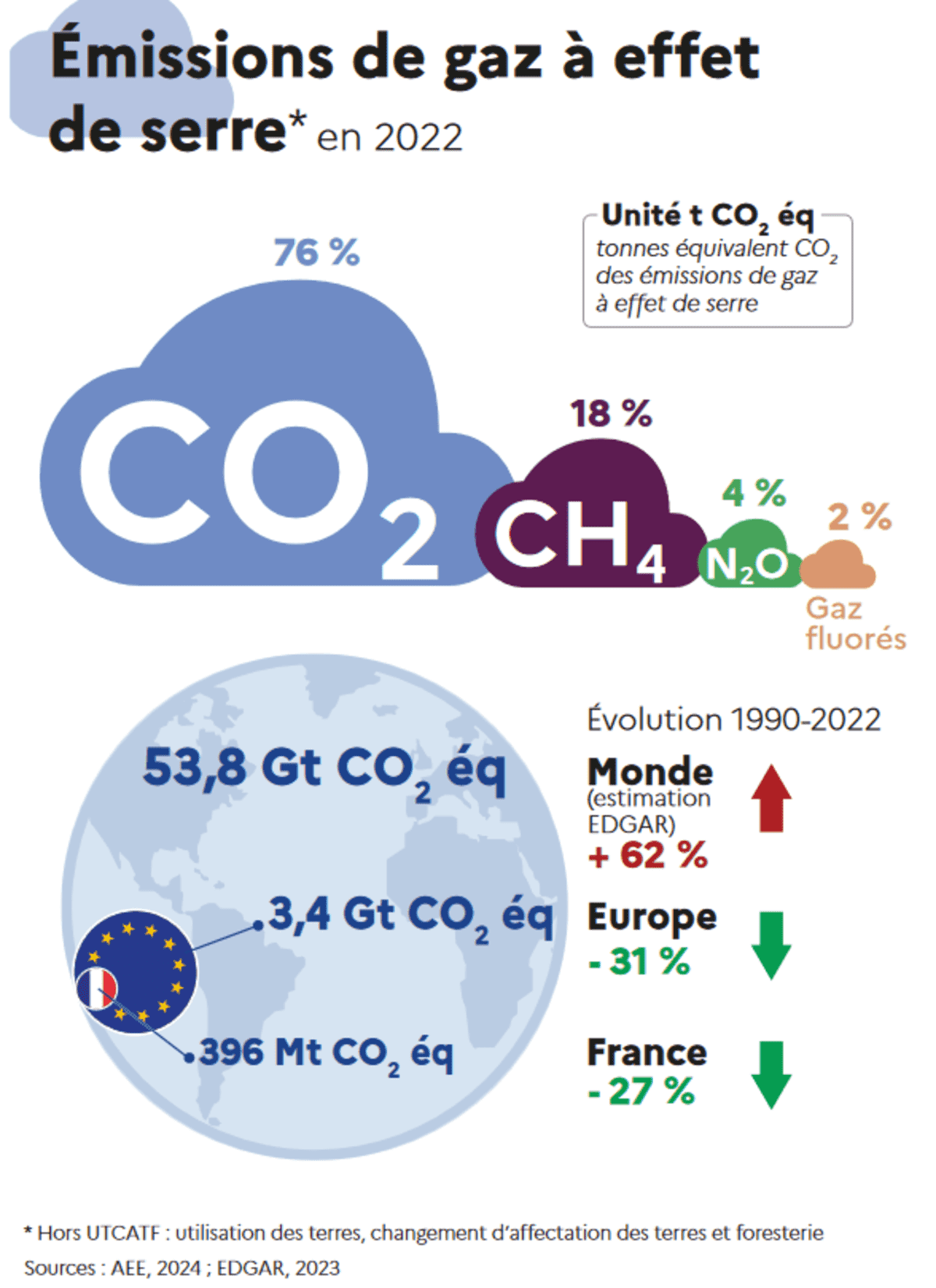
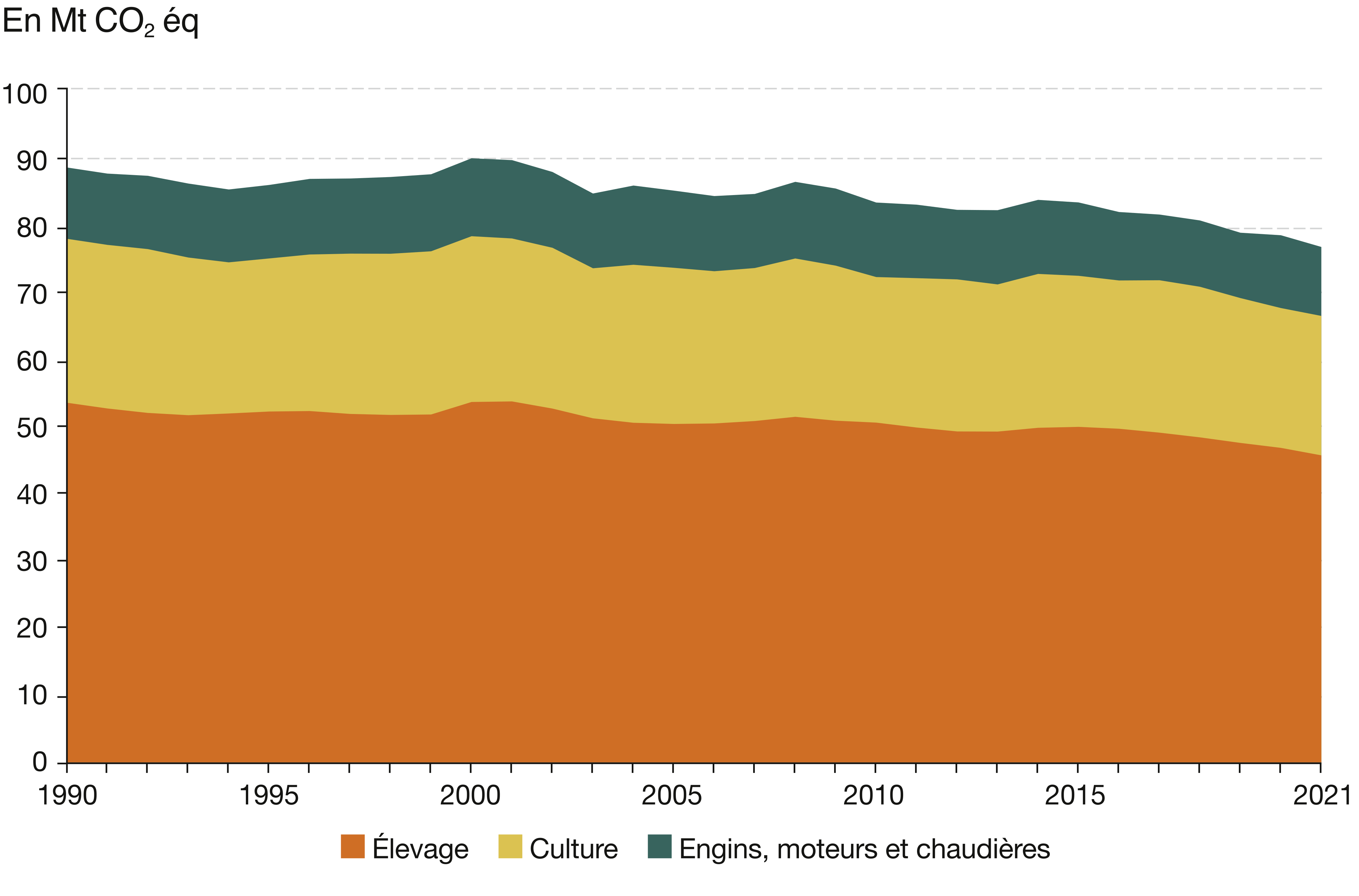
La neutralité carbone en 2050 : c’est l’objectif global auquel contribue la stratégie nationale bas-carbone de la France. Cet objectif implique de réduire nos émissions de gaz à effet de serre dans tous les secteurs : transport, bâtiment, agriculture, industrie, énergie et déchets. Tout comme la réduction des gaz à effet de serre, la préservation des ressources de notre planète et la protection du vivant sont indispensables pour assurer un monde plus écologique et solidaire. Les investissements nécessaires pour réussir cette transformation ? Entre 30 et 65 milliards d’euros supplémentaires par an d’ici à 2030 pour la seule transition climatique.
Carbon neutrality by 2050: this is the global objective that France's national low-carbon strategy aims to achieve. This objective requires reducing our greenhouse gas emissions in all sectors: transport, buildings, agriculture, industry, energy and waste. Like reducing greenhouse gas emissions, preserving our planet's resources and protecting the natural world are essential to ensure a more ecological and solidary world. The investments needed to succeed in this transformation? Between 30 and 65 billion euros annually through 2030 for climate transition alone.
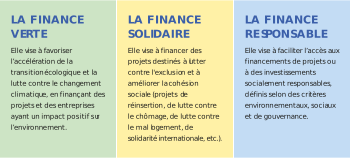
- Sustainable finance for saversIntroduction• Public investment alone will not be enough to achieve ecological and energy transition. What if we mobilized French household savings, estimated at nearly 6,000 billion euros? • Sustainable finance is a generic term that encompasses: • Green finance aims to accelerate the ecological transition and combat climate change by financing projects and businesses with a positive environmental impact. • Solidarity finance aims to fund projects designed to combat exclusion and improve social cohesion (reintegration projects, unemployment reduction, housing support, international solidarity, etc.) • Responsible finance aims to facilitate access to financing for socially responsible projects or investments, defined according to environmental, social and governance criteriaRegulated savings and new products• Many households already contribute to funding public interest programs through regulated savings accounts: Livret A, LDDS (sustainable and solidarity development account) and LEP (popular savings account). These accounts direct these funds toward social housing, the social and solidarity economy, or projects supporting energy transition or reducing carbon footprint. • The 'Green Industry' law of October 23, 2023 also introduces a new long-term investment product: PEAC (climate future savings plan) reserved for minors and designed to increase financing for ecological transition investments. • These tools are not the only options. Financing ecological and solidarity transition can also be done through financial investments. • With 2,161 billion euros in assets under management, life insurance is the leading investment choice for French households. Since January 1, 2022, life insurance unit-linked contracts, which incorporate investment funds and allow investment in stocks, bonds or real estate, must include a responsible unit, a green unit and a solidarity unit, guaranteed by a label (see below). • Crowdfunding is also a way to mobilize savings for ecological and energy transition.What savings products representGuiding savers in financial decisions• Since August 2022, regulations require financial advisors to assess the 'sustainability preferences' of savers. Savers can thus rely on their financial advisors to discuss their environmental or social preferences and identify the most suitable financial products. • Labels also allow investors to verify the transparency of environmental, sustainable or solidarity characteristics of investment funds or crowdfunding projects they choose.
Further reading
- LabeI ISR (Investissement Socialement Responsable)lelabelisr.fr
Pour prendre en compte les critères ESG (environnementaux, sociaux et de gouvernance) dans les décisions d’investissements.
- Label Greenfinecologie.gouv.fr
Pour garantir le caractère « vert » des fonds d’investissements en excluant les fonds qui investissent dans des entreprises opérant dans les secteurs défavorables à l’environnement (charbon, pétrole, etc.).
- Label Finansoleconomie.gouv.fr
Il garantit qu’entre 5 et 10 % des sommes seront investies dans des projets à impact social et environnemental.
- Label FPCV (Financement participatif pour la croissance verte)ecologie.gouv.fr
Il garantit la transparence et l’engagement environnemental des projets de financement participatif (crowdfunding)
- La finance verte, fiche pratiqueecologie.gouv.fr
Article publié sur le site du Ministère de la Transition écologique, septembre 2019
- Le plan d’actions pour le financement de la transition écologique de l’Institut de la Finance durableecologie.gouv.fr
Rapport publié par l’Institut de la Finance durable, mai 2023
- Le guide ADEME/2DII sur les allégations d’impact environnemental des produits financiers2degrees-investing.org
Guide publié par l’ADEME et 2DII, février 2023
- Le rapport Pisani-Ferry sur les impacts macro-économiques de la transition écologiquestrategie.gouv.fr
- Le rapport « Epargnons l’avenir : la finance durable en 7 questions », Agence de la Transition écologiquelibrairie.ademe.fr
Rapport publié par l’ADEME, octobre 2023
- Finance verte : le nucléaire désormais éligible au label Greenfinnotre-environnement.gouv.fr
Le label Greenfin, qui garantit la qualité verte des fonds d’investissement, intègre désormais les activités liées à l’énergie nucléaire.