Perturbateurs endocriniens : BPA et DEHP
Les perturbateurs endocriniens (PE) provoquent des troubles de santé chez l’homme ou l’animal par dérèglement de leur système hormonal (changements de morphologie, de physiologie, de croissance, de reproduction, de développement ou de durée de vie). Ces effets néfastes peuvent s’observer après exposition à un perturbateur endocrinien isolé ou en mélange, même à faible dose, tant sur l’organisme humain exposé que sur ses descendants. Aujourd’hui, le défaut de réglementation spécifique, faute de définition commune à l’ensemble des PE, rend difficile leur régulation Le bisphénol A (BPA) et le DEHP (phtalate de di-2-éthylhexyle), utilisés depuis cinquante ans pour la fabrication de certains plastiques et de résines, sont des substances considérées comme perturbateurs endocriniens par de nombreux organismes internationaux. Bien que leur usage soit aujourd’hui restreint, elles demeurent des sources de contamination environnementale et d’imprégnation de la population.
Endocrine disruptors (EDs) cause health disorders in humans or animals by disrupting their hormonal system (changes in morphology, physiology, growth, reproduction, development or lifespan). These harmful effects can be observed after exposure to an isolated endocrine disruptor or in a mixture, even at low doses, on both the exposed human organism and its descendants. Today, the lack of specific regulation, due to the absence of a common definition across all EDs, makes their regulation difficult. Bisphenol A (BPA) and DEHP (di-2-ethylhexyl phthalate), used for fifty years in the manufacture of certain plastics and resins, are substances considered endocrine disruptors by many international organizations. Although their use is now restricted, they remain sources of environmental contamination and population impregnation.
- Endocrine disruptors, concerning chemical substances still weakly regulatedDefinition and diversity• The endocrine system comprises organs that secrete hormones. The WHO defines an endocrine disruptor (ED) as "an exogenous substance or mixture that alters the function(s) of the endocrine system and, consequently, causes a deleterious effect on the health of an individual, its offspring or sub-populations". Natural or synthetic hormones, chemical products or industrial by-products, EDs are highly diverse. • Study of their effects faces several challenges: exposure doses to these substances, time to onset of deleterious effects, existence of periods of population vulnerability to toxic risk (prenatal period, before/after puberty, transgenerational effect), cocktail effect, etc.Incomplete regulatory framework• Furthermore, the lack of specific regulation applicable to EDs, due to the absence of a common definition across all EDs, makes their regulation difficult. In 2017, a European regulatory definition was adopted for EDs used as active biocidal ingredients (delegated regulation 2017/2100 of September 4, 2017). • In 2018, EDs used as pesticides were, in turn, subject to a European definition (regulation 2018/605 of the European Commission of April 19, 2018), but this is not, for the moment, integrated into the European REACH regulation (EC regulation 1907/2006 of 18/12/06 concerning the registration, evaluation and authorization of chemical substances).
- BPA and DEHP, everyday EDs under surveillanceCommon uses• Bisphenol A (BPA) and DEHP (di-2-ethylhexyl phthalate) have been used for fifty years in the manufacture of certain plastics and resins. They are found in many everyday consumer products, such as plastic food packaging, household and automotive equipment, toys and childcare articles, and medical devices. BPA can also be present in polycarbonate consumer products, packaging with a protective film (interior coatings of cans, beverage cans) and papers (receipts). • DEHP is found in certain household cleaning products, paints, films, fabrics and coated papers.Classification as substances of concern• These two substances are considered EDs, notably by UNEP and WHO since 2012. They are also identified as extremely concerning for human health and classified as EDs for human health under the Reach regulation in 2017. Furthermore, DEHP is classified as a possible carcinogenic substance (group 2B) by IARC and as a substance toxic to reproduction (group 1B) under European regulation 1272/2008, relating to classification, labeling and packaging of substances and mixtures. • The period of prenatal exposure to BPA and DEHP appears particularly critical as it is likely to impair fetal development and cause early effects that may have pathological consequences in adulthood (DOHaD effect).Restrictions and substitutesFrom 2020, BPA will be subject to restricted use in thermal paper (used notably for receipts) within the European Union following adoption of European regulation EC 2016/2235 of December 12, 2016. As a substitute, manufacturers now use bisphenol S (BPS). In a 2013 report, ANSES noted that the estrogenic activity of this compound, common to the bisphenol family, could also prove harmful to consumers and called for particular attention to its use. More broadly, the agency stresses the lack of sufficient toxicological data to assess the toxicity of other BPA substitutes.
- Contamination of aquatic environmentsA difficult risk to assessThe health or environmental risk linked to the presence of these substances in natural environments is difficult to assess in the absence of reference values for toxicity related to endocrine disruption.Monitoring French watersIn France, BPA and DEHP are included in the panel of chemical substances monitored as part of groundwater and surface water quality surveillance. While monitoring has been carried out over much of the territory for about ten years, it is not systematic. However, when monitored, these two substances are regularly detected, particularly in surface waters.Measured concentrations• Thus, for rivers and lakes, DEHP shows a concentration above 1 nanomole/liter (nmol/l) in more than half of measurements taken. The same applies to BPA, which is quantified in more than one-third of measurements taken. • In groundwater, concentrations above 1 nmol/l are found in two out of ten measurements for BPA and in 40% of those taken for DEHP. Current environmental reference values are respectively 3.3 and 7 nmol/l for DEHP and BPA, but they do not account for the endocrine-disrupting activity of these substances.
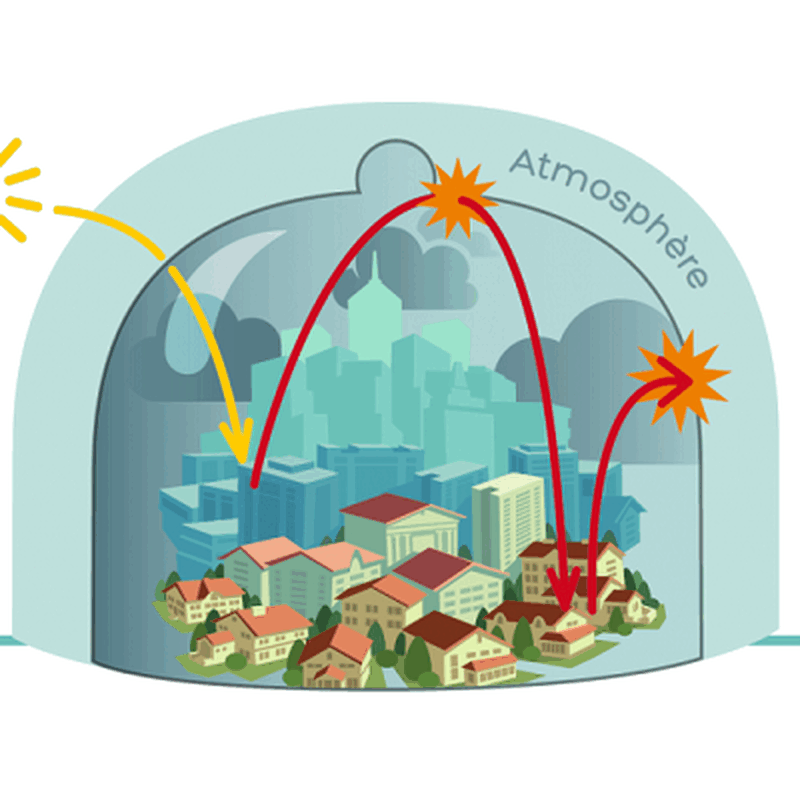
- Substances present in indoor air of homesSources of indoor air exposureIndoor air and dust present notably in homes, offices, schools and cars are also sources of exposure to BPA and DEHP. Indeed, these substances can be emitted by equipment and furnishings. BPA and DEHP are thus measured in indoor air of homes, conducted by OQAI. Their presence is confirmed in all surveyed homes.Presence in household dustSimilarly, in dust deposited on floors and collected in household vacuum cleaner bags, DEHP is detected in all homes. It is the substance with the highest concentrations among the six phthalates searched for. BPA is also present in all French homes but with concentrations one hundred times lower than those of DEHP.
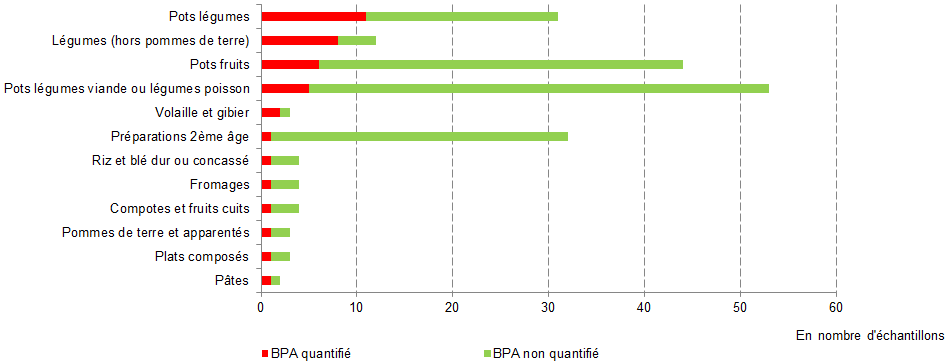
- Food, primary exposure sourceInfant total diet studyFood is the primary source of population exposure to BPA and DEHP, notably due to the ability of these substances to migrate from packaging and containers in which they are present into consumed food and beverages. The study of the infant total diet, conducted by Anses in 2016, made it possible to assess the level of presence of these substances in food. The highest BPA levels were thus measured in canned common foods. DEHP traces were also found in prepared baby food, particularly in those with plastic containers where detection rates were highest. Following toxicological risk assessment, BPA was classified by this study in the category "risk that cannot be excluded" and DEHP among risks considered tolerable or acceptable.Residues quantified in 2016• BPA residues quantified in food in 2016 • DEHP residues quantified in food in 2016
- Multiple pathways of contamination in homesPregnant women impregnation (Elfe cohort)In France, the impregnation of pregnant women by BPA and DEHP was measured in participants of the Elfe cohort, who gave birth in 2011. Impregnation levels are generally lower than those measured in previous French and foreign studies. This decrease may be linked to methodological differences between studies (evolution of dosage method, method of urine sample collection, study population, etc.), but also to the impact of usage restrictions, particularly for DEHP.Factors associated with exposureIt also emerges from this study that impregnation of pregnant women by BPA increases with consumption of foods likely to have been in contact with plastic materials or resins containing BPA (foods pre-packaged in plastic or in cans, wine, bottled or demijohn water). It also increases when linoleum is present in the home and in cases of prolonged television use, suggesting exposure to BPA by inhalation in indoor air linked to home equipment, or ingestion of contaminated dust. Delivery by cesarean section is also associated with higher levels of BPA impregnation. This could partly be linked to recent and occasional exposure to medical equipment contents (IV line, urinary catheter, etc.).
- Advance research and monitoring of EDs to reduce population exposureThe Esteban studyExposure of the French population to BPA and DEHP is currently being analyzed (Esteban health study 2014-2016 on biosurveillance, physical activity and nutrition). Results will provide the first national picture of impregnation of children aged 6 to 18 years old, living in metropolitan France.National strategies on EDs• Improving prevention requires better knowledge of EDs and monitoring population impregnation. In this regard, in 2014, the State adopted the first national strategy on endocrine disruptors aimed at linking research, monitoring and regulation to prevent and limit population exposure, particularly for the most vulnerable (pregnant women, children). The second national strategy on disruptors 2019-2022 should continue these objectives. • This article is an excerpt from the Environment and health focus.Toward strengthened regulationToward strengthened regulation on endocrine disruptors The European Forum on Endocrine Disruptors will enable representatives of countries, industry, researchers, associations and NGOs to discuss needs, gaps and solutions for better management of these substances.
Further reading
- Inserm : Perturbateurs endocriniensnotre-environnement.gouv.fr
Les perturbateurs endocriniens regroupent une vaste famille de composés, capables d'interagir avec le système hormonal. Ainsi, ces composés affectent potentiellement différentes fonctions de l’organisme : métabolisme, fonctions reproductrices, système nerveux...
- INRS : Perturbateurs endocriniensnotre-environnement.gouv.fr
Les perturbateurs endocriniens sont des substances ou des mélanges chimiques capables de modifier le fonctionnement du système hormonal. Ils sont susceptibles de provoquer des effets nocifs tant chez les individus exposés que sur leur descendance.