
Pesticides : quels usages, quelles conséquences ?
Les pesticides sont largement utilisés en agriculture pour protéger les cultures contre les maladies, les insectes ou les mauvaises herbes. Mais ces substances peuvent contaminer l’air, l’eau et les sols, et poser des risques pour la santé humaine et l’environnement. En France, leur usage fait l’objet d’un suivi et de politiques de réduction, mais de nombreuses préoccupations subsistent.
Pesticides are widely used in agriculture to protect crops against diseases, insects, and weeds. However, these substances can contaminate air, water, and soils, and pose risks to human health and the environment. In France, their use is monitored and subject to reduction policies, but many concerns remain.
- What are pesticides and how are they used?DefinitionPesticides are chemical or naturally occurring substances used to eliminate or control organisms considered harmful to certain human activities. They protect agricultural crops against diseases, insect pests, or weeds, and are also used to maintain green spaces or combat certain parasites in human or veterinary health.Product categories• The term "pesticide" encompasses several product categories: • herbicides, which target weeds; • fungicides, which prevent or treat diseases caused by fungi; • insecticides, which eliminate harmful insects; • other products, such as rodenticides (against rodents) or nematicides (against parasitic worms).Agricultural use in FranceIn agriculture, pesticides are grouped under the term "phytosanitary products" or "plant protection products". They are monitored in France. Their use mainly concerns cereals, vineyards, tree crops, and vegetable farming.History and regulation• Pesticide use expanded significantly after World War II with the arrival of synthetic molecules like DDT (dichlorodiphenyltrichloroethane). From the 1990s onward, European regulations began to control their market introduction, use, and risks. Some highly toxic products were banned, and alternatives such as biocontrol products or those approved for organic farming began to develop. • Today, pesticides remain widely used, though their use tends to decline, particularly through national reduction plans like Écophyto. However, many substances continue to raise concerns due to their impacts on human health, biodiversity, and water quality.
- What is the current situation in France?Pesticide sales slightly declining but still high• In 2023, just over 65,600 tonnes of phytosanitary products were sold in France. This represents a slight decrease compared to 2022 (−3%) and 2021 (−6%), but volumes remain globally high after fluctuating around 68,000 tonnes for over a decade (source: SDES). • These sales depend heavily on climate conditions (rainfall, temperature, pest pressure) and farmer storage practices.Heavy herbicide dependence• Sales of phytosanitary products used in France are distributed mainly among four large families: • Herbicides (against weeds): 46% of sales • Fungicides (against fungal diseases): 40% • Insecticides: 10% • Others: 4% • Herbicides remain widely dominant, particularly in cereal and sugar beet crops, and their use is scarcely replaced in organic farming where alternatives remain limited.Most toxic substances in decline• Certain substances in pesticides are classified as CMR, meaning they pose particular risks to human health. This means they are: • carcinogenic – they can cause cancer, • mutagenic – they can alter DNA, • or toxic to reproduction – they can harm fertility or fetal development. • In 2023, these hazardous substances represented 16% of quantities sold, compared to 32% in 2010. The most dangerous, called category 1 CMR, are those with proven or highly probable toxicity to humans. They are now rarely used: only 0.1% of sales in 2023. This decline is largely explained by the gradual removal of certain substances from the market, such as phosmet, banned in late 2022.Slowed development of alternativesProducts approved for organic farming or falling under biocontrol (natural-origin solutions) represented approximately 36% of sales in 2023. They consist primarily of fungicides (73%) and insecticides (23%), with herbicides being almost absent. After strong growth until 2021, their sales slightly declined between 2021 and 2023.
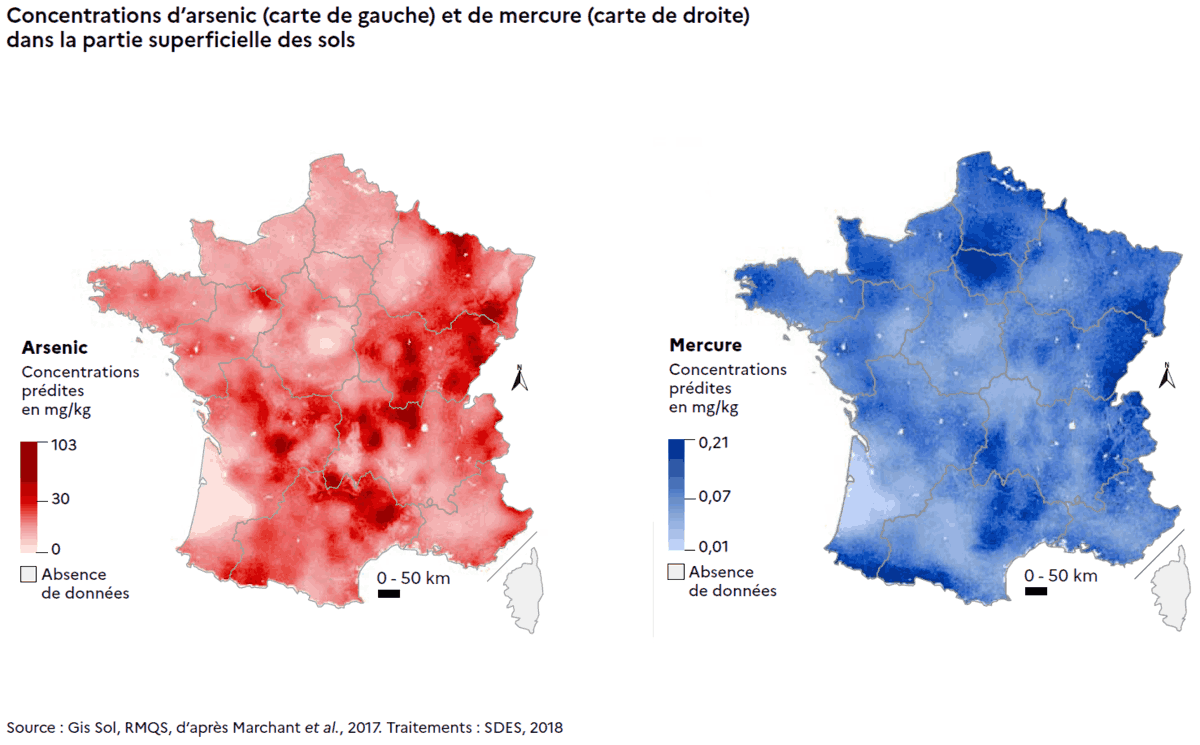
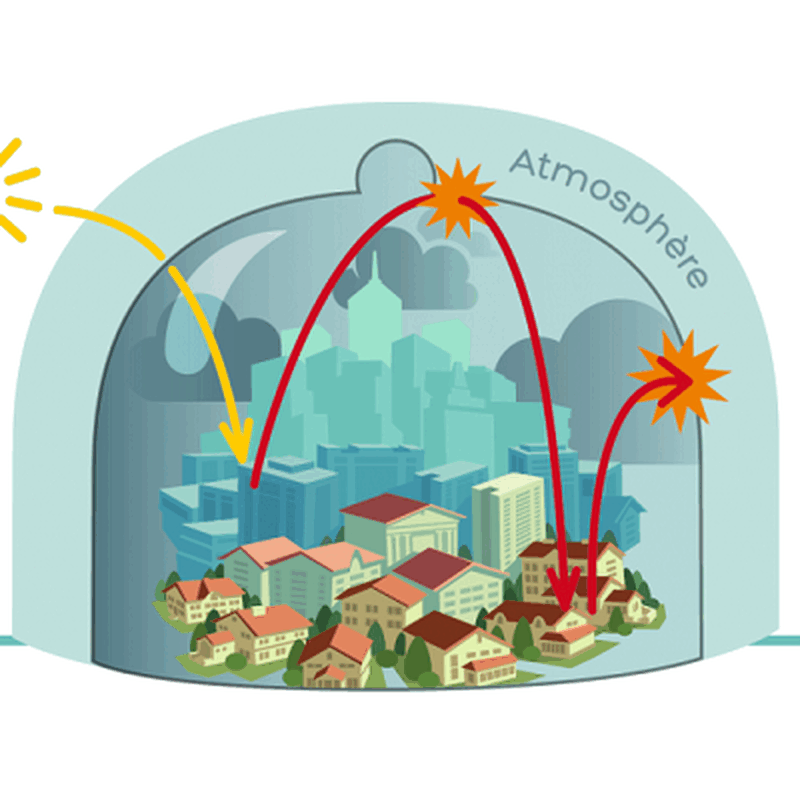
- How do pesticides contaminate the environment?IntroductionWhen a pesticide is applied to a field, part of the product can evaporate into the air, seep into the soil, or be carried by rain toward rivers and groundwater. These movements make pollution difficult to control. It affects nearly all natural environments and can persist over time.Pesticide residues in rivers, groundwater and soils• Pesticides used in agriculture are a major source of surface water and groundwater pollution. They are found in most monitored rivers, especially in intensive agricultural regions. Some pesticides, banned for several years, are still detected, partly due to their slow degradation. • Pesticides also accumulate in soils, sometimes for decades. Certain substances, such as lindane or chlordecone, remain present long after their ban. Agricultural soils are most affected, but traces are also found in untreated forests and grasslands, showing that this pollution is widespread.Pesticides also present in air• Air can also be contaminated by pesticides. During spraying, part of the product volatilizes or is carried by wind as droplets. These substances can then be breathed by residents or transported over long distances. • A harmonized national monitoring system for air quality regarding pesticides was recently established. Two major campaigns were conducted, in 2018–2019 and 2021–2022. Of the 75 substances tested, six pesticides were detected in more than 20% of samples in each campaign: • glyphosate, • lindane (an insecticide banned in France since 1998), • S-metolachlore, • pendimethalin, • prosulfocarb, • and triallate. • Sampling showed that these substances are present in air in both rural and urban areas, particularly during treatment periods. These findings confirm that pesticides can move through the atmosphere and contribute to widespread population exposure, beyond direct users alone.
- What do analyses reveal about population exposure to pesticides?The Esteban studyWithin the national Esteban study, Santé publique France measured the exposure of the French population to several families of pesticides. The results confirm that both adults and children are exposed to numerous chemical substances present in food, air, and household products.Observed exposure levelsOverall, exposure levels have decreased compared to the 2000s. However, several substances continue to be present in a large part of the population. This is the case, for example, with lindane, banned since 1998, but detected in nearly one adult in two. Glyphosate, meanwhile, is found in fewer than 20% of adults and children.
- What are the effects of pesticides on human health?Effects in occupational exposure• Exposure to pesticides can have serious health consequences, particularly for people directly exposed, such as farmers. • In occupational settings, several studies have shown a link between prolonged exposure to certain pesticides and the development of cancers, particularly: • non-Hodgkin lymphomas, • multiple myelomas, • prostate cancers. • Effects on the nervous system have also been observed. This includes Parkinson's disease, whose occupational origin linked to pesticides is now officially recognized in France. Since this recognition, approximately 50 cases are declared annually as occupational diseases. Non-Hodgkin lymphoma has also been recognized as such since 2015.Effects on pregnancy and child development• Pesticides can also affect pregnant women and child development. Studies have shown links between exposure during pregnancy and: • higher risk of birth defects or fetal death, • disorders in the child's psychomotor and intellectual development, effects on the reproductive system or metabolism.IARC classification• The International Agency for Research on Cancer (IARC) has classified certain pesticides among the most concerning substances: • Lindane, arsenic, and pentachlorophenol are considered definitely carcinogenic to humans (group 1). • Glyphosate, malathion, and DDT are classified as probably carcinogenic (group 2A). • Chlordecone, parathion, 2,4-D, and 2,4,6-trichlorophenol are considered possibly carcinogenic (group 2B).Geographic distribution of purchasesIn 2023, 17 departments accounted for more than half of purchases of substances classified as most toxic to humans, particularly Eure-et-Loir, Marne, Somme, Charente-Maritime, and Eure (source: SDES).
- What actions reduce pesticide use and monitor health impacts?ContextGiven the risks to health and the environment, several public policies have been implemented to limit pesticide use in France and better assess their effects.Écophyto plansSince 2008, Écophyto plans have aimed to gradually reduce reliance on phytosanitary products while maintaining productive agriculture. Since 2008, three reduction plans for crop treatment product use have succeeded one another, all targeting a 50% reduction, first by 2018, then 2025, and finally 2030. Despite some progress, France finds it difficult to significantly reduce its dependence on phytosanitary products.Non-treatment zonesTo protect the most exposed people, such as residents and farm workers, non-treatment zones (NTZ) have been established around homes and places accommodating vulnerable people. These zones aim to reduce direct exposure during spraying.Role of AnsesAdditionally, Anses (National Food, Environmental and Occupational Health Safety Agency) plays a central role in assessing pesticide-related risks. It issues market authorizations, withdraws substances deemed too dangerous, and monitors residues in food, drinking water, and the environment.
Further reading
- La pollution de l’eau par les pesticidesnotre-environnement.gouv.fr
Les pesticides utilisés par l’agriculture sont une source de pollution des eaux de surface et des nappes d’eau souterraines.
- La pollution des sols par les pesticidesnotre-environnement.gouv.fr
Les pesticides employés en agriculture s’accumulent dans les sols et polluent l’ensemble des milieux, avec des conséquences sur la biodiversité et la santé humaine.
- Exposition aux pesticides de la population (Santé Publique France – 2021)santepubliquefrance.fr
L’étude Esteban évalue l’exposition de la population française à cinq familles de pesticides. Il met en évidence la présence de résidus dans l’organisme des adultes et des enfants, y compris pour des substances interdites. Santé Publique France – 2021
- Carte des achats de pesticides par départementgenerations-futures.fr
Géophyto est un outil permettant de visualiser les achats de pesticides en France, département par département. La carte utilise les données de la Banque Nationale des Ventes de produits phytopharmaceutiques par les Distributeurs agréés (BNV-D).