La véritable histoire du Roi Arthur - Nota Bene
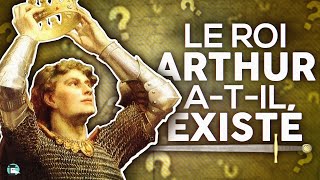
Did King Arthur really exist? Probably not!
16 chapters
- Introduction and fundamental questionCentral questionDid King Arthur really exist? According to current scholarly consensus, Arthur is almost certainly a literary creation.Mystery exploredHow did Arthur come to occupy such a prominent place in our culture if he wasn't a historical figure?Subject contextThe episode explores several fascinating leads to understand the origin and popularity of the Arthurian myth.Historical approachThe analysis is based on the oldest texts mentioning Arthur and their evolution over the centuries.
- Early texts and Historia BrittonumFirst accountThe oldest text mentioning Arthur is the 9th-century Historia Brittonum, attributed to the Welsh monk Nennius and written in Latin.Arthur in the text• Arthur appears briefly as dux bellorum (leader of battles) • He fought alongside the kings of the Britons against the Saxons • He won twelve battles, including the Battle of Mount Badon where 960 men fell in a single dayAbsent elementsThe text makes no mention of Camelot, the Round Table, Merlin, Guinevere, Lancelot, or the Grail—all invented later.Biblical influences• Nennius drew inspiration from biblical and Roman references rather than Celtic ones • The twelve battles allude to the twelve tribes of Israel and twelve apostles • The eighth battle echoes Constantine and the Battle of the Milvian Bridge
- Annales Cambriae and mythificationSecond sourceThe Annales Cambriae, written a century after Historia Brittonum, make a brief allusion to Arthur in Latin.New elements• The Battle of Badon (518) where Arthur carried the cross of Jesus for three days and three nights • The Battle of Camlann (539) in which Arthur and Mordred fellHistorical problemGildas, a 6th-century priest who writes about the Battle of Mount Badon, does not mention Arthur. Archaeological excavations in the 1960s found nothing.Preliminary conclusionThere is no evidence of a historical Arthur. At best, he may have been based on several real figures merged together.
- Celtic myth deconstructedFalse originThe idea that the Arthurian cycle has Celtic origins is a myth that must be questioned.Evidence against• Nennius wrote in Latin, not the local Celtic language • Ireland produced very few Arthurian texts • Scotland presents Arthur as a usurper opposed to King Lot of the NorthNationalist constructionThe association of Arthur with Celtic culture emerged in the 19th and 20th centuries during nationalist movements in Wales and Brittany.National romanceArthur was enlisted by political currents that invented a national narrative with prestigious ancestors to prove their people's greatness.
- Geoffrey of Monmouth and transformationTurning pointIn the 12th century, Geoffrey of Monmouth turned Arthur into a star by devoting dozens of pages to him in his History of the Kings of Britain (1135).Major inventions• Arthur's illegitimate birth • The character of Guinevere • Merlin and Morgana linked to the myth • Mordred's betrayal • Arthur's final departure to AvalonImmediate successHis text enjoyed enormous success at the English court. It was translated into Old French by Wace around 1155, who notably added the Round Table.Creative explosionThe Arthurian fashion spawned a literary industry with writers like Chrétien de Troyes inventing Lancelot, Perceval, and the Grail.
- Expansion of medieval Arthurian cycleText proliferationIn the 13th century, authors produced continuations and prequels to the myth, creating so many versions that compilations had to be published.Major syntheses• The Vulgate (thousands of pages) • Thomas Malory's Le Morte d'Arthur (c. 1470)—the first short, accessible synthesis • Malory became the standard reference in the English-speaking worldLimited reachDuring the Middle Ages, the Arthurian legend circulated mainly in northern France and England. It was far less popular than the legend of Alexander the Great across Eurasia.Aristocratic audienceArthurian literature was written by and for the aristocracy. Its reach to the general public was very limited before printing.
- Arthur as royal political instrumentJustifying conquestsIn 1188, Gerald of Wales used the legend to justify the conquest of Ireland by claiming its inhabitants were already vassals of Arthur.Arthur of the Tudors• Henry II conveniently discovered Arthur's tomb at Glastonbury (late 12th century) • Edward I had a Round Table built at Winchester (1284) • Henry VII named his son Arthur to legitimize the Tudors after the Wars of the RosesSymbol of powerHenry VIII repainted the Winchester Round Table in the early 16th century, depicting himself alone dominating the knights to assert his absolute power.Political messageThe turbulent nobility was kept in check by an omnipresent monarch justifying his precedence through genealogy tracing back to King Arthur.
- Summary of medieval myth characteristicsComposite mythThere is no single "pure" Arthurian myth. Each author felt free to add or remove elements according to their message and audience.Multiple layers• No other character appears with Arthur in the oldest texts • Camelot, the Round Table, and the Grail were invented gradually • Each generation of authors elaborated on previous textsWestern diffusionThe legend was limited to Western Europe (northern France and England). Far less popular than the legend of Alexander the Great worldwide.Elite audienceMedieval Arthurian literature was known primarily in aristocratic society before democratization in the 19th century.
- Myth eclipse and romantic revivalTwo centuries forgottenFrom the late 16th century onward, the Camelot myth underwent a long eclipse lasting 200 years. Europe became more interested in ancient Greece and Rome.Romantic renaissance• In the early 19th century, Europe became fascinated by the Middle Ages • Romantic writers imagined it as a magical, wondrous, and terrifying period • Monarchies drew on the Middle Ages to legitimize an older systemEnglish legendEngland reprinted Malory's text from 1816 onward. Victorian aristocracy imagined itself as new knights of the Round Table.Colonial exampleColonial army officers compared their exploits to Lancelot facing perils. Lawrence of Arabia even carried a copy of Le Morte d'Arthur in his bag.
- Mark Twain and American parodyKey novelMark Twain published A Connecticut Yankee in King Arthur's Court in 1889, which became the most adapted Arthurian work in film and television.European critique• Hank Morgan mocks knights as ignorant brutes • Merlin is merely a charlatan, not a magician • The critique aims at Europe remaining stuck in feudal timesCapitalist metaphorThe novel's ending shows Hank Morgan imposing modernity by force, transforming castles into factories and knights into sandwich board men. He massacres insurgents with machine guns from a bunker.Moral questionTwain questions his audience: isn't American capitalism with its Wall Street "robber barons" just a new form of feudalism?
- American adaptation by Forbush and Baden-PowellNew pedagogyAmerican pastor William Forbush founded the "Knights of King Arthur" in 1893 for boys aged 13–16, democratizing the English approach.Movement expansion• Young members gathered in a "castle" • Each took an Arthurian pseudonym and dressed as a knight • An adult supervisor was nicknamed Merlin • 130,000 members in the 1920s across the USA, Canada, Mexico, and beyondScouting influenceRobert Baden-Powell founded the Scout movement in 1907 and encouraged his young followers to emulate King Arthur and his knights.Myth transformationThe Round Table became a metaphor for American democracy. The myth gradually opened to characters of diverse origins to match modern America.
- American chivalry and military cultureNew AvalonForbush claimed the true Avalon lay "on the shores of the New World," inspiring the idea that America embodied a democratic chivalry.Wartime comparisons• General Pershing's soldiers in France (1914–1918) were compared to crusaders • Joe Simon and Jack Kirby created Captain America (1940s) directly inspired by an Arthurian knight with a medieval shield • Prince Valiant became hugely successful in comicsCold War propagandaDuring the Cold War, many Arthurian adaptations featured knights battling traitors infiltrating the court, echoing America's hunt for communists.Heroes crossing timeBatman, Superman, Iron Man, Mickey Mouse, Bugs Bunny, and MacGyver all traveled to Camelot. Adaptations almost always omitted Twain's bloody ending.
- Myth pacification: T.H. White and BroadwayBreak with violenceBy the late 1950s, the chivalric wave was exhausted because it overemphasized the myth's warlike version.Progressive T.H. White• From 1938 onward, T.H. White created a myth variant ridiculing the military • Arthur, educated by a Merlin from the future, wanted to make Camelot a progressive society • His four novels "The Once and Future King" exercised enormous influence • Disney adapted the first volume into the animated film "The Sword in the Stone" (1963)Broadway successThe theatrical adaptation Camelot (1960) with Richard Burton and Julie Andrews became a massive hit by staging Arthur and Guinevere creating an ideal kingdom.Literary legacyWhite's work inspired J.K. Rowling, creator of Harry Potter. Camelot remains the reference in the English-speaking world.
- Kennedy and Camelot's consecrationSymbolic momentA week after the assassination of President John F. Kennedy (November 22, 1963), his widow Jackie granted an interview to Life magazine.Memorable quoteJackie stated that Jack loved listening to the song Camelot: "Don't let it be forgot that once there was a spot, for one brief shining moment that was known as Camelot." She concluded: "There will be no other Camelot."Fusion of mythsThis statement permanently linked the Arthurian myth to the Kennedy myth, associating Camelot with the 1960s as an era of hope and social progress.Political legacy• In the USA, the Arthurian myth became anchored on the left • Democratic candidates were compared to a "Camelot era" • This association applied to Bill Clinton (1992) and Barack Obama (2008)
- Global diffusion and contemporary peakUSA cultural powerFrom Twain to Kennedy, the United States became by far the most Arthurian country in the world. Its popular culture has widely disseminated the legend since the 1950s.Global expansion• Japan has created its own versions since the 1970s: manga Fate/Stay Night, video games Sonic and the Black Knight (2009), film Avalon (2001) • France discovered the legend through Monty Python films and Boorman's Excalibur • Kaamelott weaves references to American pop culture and role-playing gamesUniversal accessibilityThe myth now appears across many different media and is accessible to everyone regardless of status or cultural background.Golden age nowGiven the number of Arthurian texts and films released each year, it's hard to keep up. The golden age of the Grail is definitely now—a contemporary myth far more than a medieval legend.
- Conclusion and acknowledgmentsMain synthesisArthurian narratives constitute more a contemporary myth than a medieval legend, transformed and adapted by each generation according to its political and cultural needs.ContributorsThanks to William Blanc for preparing the episode and for the book co-written with Nota Bene available in the description.Additional resources• Simplified diagram of the myth available in the description • Recommended books to deepen your knowledge of the subject • References to works mentioned in the episodeSponsor and invitationPartner NordVPN with special offer (68% off two years, code NOTA BENE for one free month). Invitation to subscribe and return to Nota Bene.