L’agriculture biologique en France
L’agriculture biologique constitue un mode de production respectueux de l’environnement. Il repose sur l’absence d’utilisation de produits chimiques de synthèse et d’organismes génétiquement modifiés, le recyclage des matières organiques, la rotation des cultures, la lutte biologique et le respect du bien-être animal.
Organic farming is a mode of production that respects the environment. It is based on the non-use of synthetic chemical products and genetically modified organisms, recycling of organic matter, crop rotation, biological control and respect for animal welfare.
5 chapters
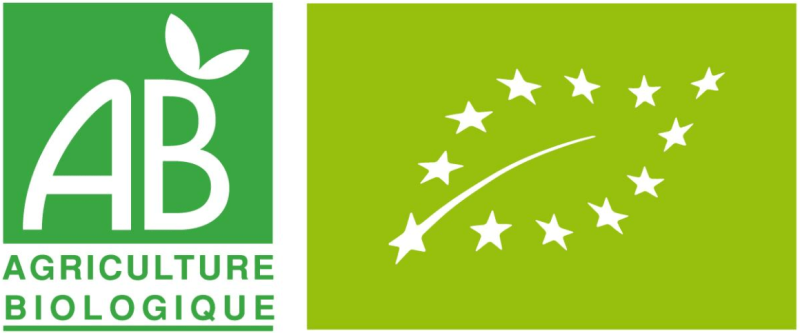
- What is organic farming?Definition and historyOrganic farming is based on several principles and practices designed to minimize the environmental impact of agricultural activity. This approach uses the most natural cultural practices possible, particularly by reducing synthetic chemical inputs. These principles were introduced in France after World War II. Its first official recognition dates back to the 1980 Agricultural Orientation Act, and the term "organic farming" appears in 1991 in a European regulation that officially recognizes this production method (EEC Regulation 2092/91 of 24 June 1991). Since 1 January 2009, European organic operators have had a new harmonized regulation through the framework regulation (EC) No 834/2007 of the Council of 28 June 2007 and the implementing regulation (EC) No 889/2008 of the Commission of 5 September 2008.Identical principles and practices across the EU• European regulation via regulation (EC) No 834/2007 specifies all the rules to follow concerning the production, processing, distribution, importation, control and labelling of organic products. It reaffirms the main principles of organic farming: sustainable agricultural management, respect for natural balances and biodiversity, and promotion of high-quality products whose production does not harm the environment, human health, or plant and animal health or welfare. • This regulation is supplemented by implementing regulations, notably regulation (EC) No 889/2008. • Organic farming practices include notably: • crop rotation, the very foundation of efficient soil resource use; • biological control, a method of pest control using living organisms called crop auxiliaries: the best known are ladybugs, lacewings, hoverflies, parasitic wasps, ground beetles, earwigs, spiders... which are carnivorous and feed on other insects and microorganisms; • non-use of plant protection products, synthetic fertilizers, antibiotics, additives, processing aids and other inputs; • prohibition of genetically modified organisms; • recycling of organic matter and use of farm resources (for example, manure as fertilizer or food produced on-farm for livestock); • choice of plant and animal species resistant to disease and adapted to local conditions; • outdoor and free-range livestock farming and feeding animals with organic feed.Logo and brandThe European "organic farming" logo and the Organic Farming brand in France are designed to help consumers identify products from organic production methods. Their presence on labels ensures compliance with the Organic Farming Regulation, meaning the food contains at least 95% ingredients from organic production.
- Evolution since 1995Organic area growth• In 1995, organic farming concerned 0.42% of France's utilized agricultural area (UAA). After a period of relative stability, the sector experienced new growth from 2008 onwards following the Environmental Grenelle. • In 2019, more than 10% of agricultural sector farms (over 47,000 farms) were engaged in organic farming, representing 8.3% of the UAA, corresponding to over 2 million hectares. In 2019, a quarter of these 2 million hectares were in conversion. Average farm size stood at 47 hectares compared to 36 in 1995.Data and methodological notesEvolution of organic farming in France Illustration 2536 Enlarge and view this illustration at full size (same window) Download (Excel, 68.5 kio) the data file for this illustration Note 1: OF = Organic farming, UAA = Utilized agricultural area. Organic production method areas include: "certified organic" areas which comprise plots whose conversion period has ended. Productions from these plots can be marketed with the "organic farming" label. conversion areas (with conversion periods varying from 2 years for annual crops to 3 years for perennial crops). Note 2: in 2019, the Organic Agency estimates that 50,000 hectares were not reported overall. Taking into account these missing areas, the share of organic farming areas rises to 8.5%.Ambition Bio 2022 targetThe Ambition Bio 2022 programme, launched in June 2018, sets a target of 15% of the UAA in organic farming by 2022, more than double that of 2018.
- What crops?Organic crop distributionIn 2019, within organic farming crops, 61% concern forage areas, 25% arable crops, 5% vineyards, and 4% fruits, fresh vegetables and plants for perfume.Share of organic area by cropDry legume crops have the highest percentage of organic area (34.5%) while vineyards have 14.1% of their area in organic farming and, with the lowest percentage, cereals and organic oilseeds represent just over 4%.Illustrations 2019 and 2018• Share of agricultural area farmed using organic methods in 2019 compared to total area • Source: Bio Agency / OC; Agreste, 2020 • Processing: SDES, 2020 • Share of agricultural area farmed using organic methods in 2018 compared to total area • Source: Bio Agency / OC; Agreste 2019 • Processing: SDES, 2019
- What types of livestock?Organic livestock growthIn 2019, the number of organic livestock farms continued to increase compared to 2018.Evolution by herd type• According to the Organic Agency, between 2018 and 2019, the number of farms with organic livestock increased for all herd types, particularly for monogastrics. Indeed, the number of pig and laying hen farms increased by 12% with 27% more sows and 18% more laying hens respectively. • Between 2018 and 2019, the number of farms in conversion decreased by 17% in dairy ewes (−25% in herd size) and 2% in goats (−2% in herd size). Organic cattle farms were 8% higher in 2019 than in 2018, notably with a 10% increase in dairy cow numbers compared to 3% more in suckler cows. • The number of organic beehives also increased by 8% between 2018 and 2019.Illustrations 2019 and 2018• Share of livestock in organic farming operations in 2019 • Source: Bio Agency / OC; Agreste, 2020 • Processing: SDES, 2020 • Share of livestock in organic farming operations in 2018 • Scope: France • Source: Bio Agency / OC, Agreste 2019 • Processing: SDES, 2019
- Where?Regional distributionIn 2019, the distribution of organic UAA varies by region. Nearly half of the organic farming areas in France are located in three regions (Occitanie 22%, Nouvelle Aquitaine and Auvergne-Rhône-Alpes 12%). The share of organic UAA varies between 28.9% in Provence–Alpes–Côte d'Azur and 2.1% in Hauts-de-France.Data by departmentAgricultural areas farmed using organic methods by department in 2019 Illustration 2543 Enlarge and view this illustration at full size (same window) Download (Excel, 27.3 kio) the data file for this illustration Illustration 2543