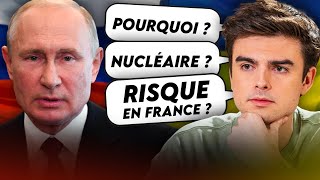
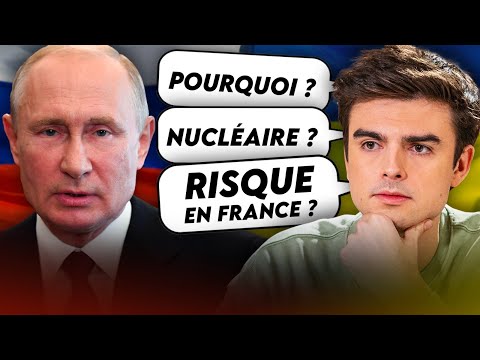
UKRAINE : je réponds à toutes vos questions
Comment en est-on arrivé là ? Pourquoi la Russie envahit l'Ukraine ? Quelles conséquences pour la France et les Français ?
14 capitulos
- Historical Background and Ukraine-Russia RelationsHistorical ContextUkraine's territory was under Russian rule until the 18th century when it was progressively integrated into the Russian Empire. After brief independence from 1917-1922, Ukraine was incorporated into the Soviet Union, remaining under Soviet control until 1991.Post-Soviet PeriodFollowing the collapse of the USSR in 1991, Ukraine regained independence but remained under pro-Russian regime control for several years. Today, approximately 20% of Ukraine's population speaks Russian, with rates approaching 70% in eastern regions.Western IntegrationSince 2005, Ukraine has been moving closer to the European Union and NATO, which Russia views as a direct threat. Though Ukraine has not officially requested NATO membership, France and Germany oppose such membership, yet a clear rapprochement has occurred.Russian ConcernsRussia considers Ukraine part of its sphere of influence and sees Western integration as Western encirclement. Russia also claims these rapprochements endanger Russian populations living in Ukraine.
- Russian Interests and Strategic Objectives in UkraineZone of InfluenceRussia views NATO expansion as a direct threat and seeks to maintain Ukraine within its sphere of influence rather than allow it to align with Western powers.Economic Resources• Iron and coal mines • Fertile agricultural lands and significant food production (historically called 'the granary of the Soviet Union') • Strategic position as a transit point for Russian gas destined for EuropeGeopolitical PositionUkraine occupies a critical strategic location that serves as a key passage for Russian gas exports to Europe and provides Russia with important territorial control.Resource SecurityControl over Ukraine's agricultural and mineral resources gives Russia significant leverage over European energy and food supplies.
- Donetsk, Luhansk, and the Donbas ConflictTerritory OverviewDonetsk and Luhansk are two territories in the Donbas region in eastern Ukraine, bordering Russia. In 2014, these territories self-proclaimed independence through referendums, claiming to be independent from Ukraine.International StatusUkraine never approved the independence of these territories, and they are not recognized as independent by either Ukraine or the international community. Recognition by Russia on February 21st violated the Minsk Agreements.Conflict PartiesThe region has been the theater of conflict between pro-Russian separatists (Ukrainians who identify as Russian and support Russia) and the Ukrainian military since 2014.International ViolationRussia's recognition of these territories' independence on February 21st represents a violation of the Minsk Accords signed in 2015, which called for a ceasefire and maintenance of Ukrainian control over these regions.
- The Minsk Accords and Their ViolationsAgreement FrameworkIn 2015, Russia, Ukraine, and pro-Russian separatives signed the Minsk Accords, with mediation from France and Germany, to resolve the Donbas conflict.Key Provisions• Ceasefire in certain zones of the Donbas in Ukraine • Withdrawal of heavy weapons held by each side • These regions were to remain under Ukrainian controlBreach of AgreementBy recognizing the independence of Donetsk and Luhansk on February 21st, Putin directly violated the Minsk Accords that he had signed.ConsequencesThis violation demonstrated Russia's rejection of the international agreement and preceded the full-scale invasion of Ukraine.
- Crimea: Annexation and International ResponseGeographic ContextCrimea is a peninsula in southern Ukraine approximately the size of Normandy, bordering the Black Sea. It belonged to Russia until 1954.2014 InvasionIn 2014, Russia militarily invaded Crimea and annexed the territory without Ukraine's consent and in violation of international law.Current StatusCrimea is currently controlled by Russia, but its annexation has not been recognized by the international community, meaning most countries do not acknowledge Russian sovereignty over the region.International ImplicationsThe annexation set a precedent for Russia's disregard of international law and territorial agreements, foreshadowing later actions in Ukraine.
- Escalation of Tensions and Military BuildupTension Build-upTensions have remained high since 2014, with periodic resumptions of fighting in the Donbas region between Ukrainian forces and pro-Russian separatists.Russian Troop DeploymentIn recent weeks, Russia began massing tens of thousands of soldiers at its border with Ukraine. The United States estimated 150,000 troops, while Ukraine claimed over 200,000.Western ConcernsWestern nations, fearing an imminent invasion, viewed this military buildup as preparation for a full-scale assault. Tensions intensified from November onwards.Russian JustificationRussia justified this military presence by citing Ukraine's rapprochement with NATO as a direct threat to Russian security.
- Putin's Justifications for InvasionGenocide ClaimPutin claimed Ukraine was engaged in a policy of extermination against Russian-speaking populations in eastern Ukraine, alleging a genocide in these regions. Experts interviewed on the subject found these claims completely unfounded.NATO Threat NarrativePutin cited aggressive NATO policies toward Russia as justification, despite Ukraine never formally joining NATO and only being in discussions with the organization.Denazification JustificationPutin stated he wanted to denazify Ukraine. While far-right groups exist in Ukraine and some fight separatists, they represent a tiny minority of the population and this claim has been used to justify broader military action.Validity AssessmentWhile some conflicts between Ukrainian forces and pro-Russian separatists did occur with potential war crimes on both sides, the claims of genocide and systematic threat from Ukraine are fundamentally challenged by international specialists and analysts.
- Scope of Combat and Civilian ImpactGeographic ExpansionInitially, combat between pro-Russian separatists and Ukrainian forces was concentrated in eastern Ukraine's Donbas region. Since Thursday morning, fighting has spread across the entire territory, including the capital Kyiv, with battles occurring everywhere.CasualtiesAt least 137 Ukrainian citizens died and 316 were wounded since the start of the Russian offensive Thursday morning. These figures continue to evolve as the conflict escalates.Civilian Protection• Many Kyiv residents sheltered in metro underground shelters from Russian bombardments • Ukrainians fled by train or car as airspace was completely closed • President Zelenskyy called for general mobilization of the populationMilitary ResponseUkraine distributed 10,000 automatic weapons to citizens willing to defend the country. Russia's stated objective is to neutralize military forces, not kill civilians, though civilian casualties continue mounting.
- Military Capabilities and Strategic DisadvantagesUkrainian ForcesUkraine possesses approximately 200,000 soldiers, with additional reservists and civilians who have joined the defense effort. The ability to repel Russian forces remains uncertain.Russian Military SuperiorityRussia is the world's second-largest military power with 900,000 soldiers, at least 190,000 engaged in Ukraine, plus over 1,200 tanks. The military imbalance significantly favors Russia.Strategic Disadvantages• Russia has bombed significant Ukrainian military equipment • Russia can encircle Ukraine from multiple sides: north via Belarus (Russian ally), south via Crimea (annexed territory), west via Transnistria (Russian enclave in Moldova) • Geographic disadvantage makes defensive operations extremely difficultEarly DevelopmentsRussian forces advanced rapidly toward Kyiv on the first day, seized the Chernobyl nuclear power plant, and as of late week, the battle for Kyiv remained uncertain, depending on Western support for Ukraine.
- Western Response and Economic SanctionsForms of Response• Economic and financial sanctions against Russia • Material support for the Ukrainian military • Mobilization of NATO troops around Ukraine, particularly in RomaniaSanctions OriginSanctions come from G7 member nations including France and the United States, as well as from the European Union, covering multiple sectors including energy and finance.Effectiveness QuestionsA Russian ambassador stated Russia cares nothing for Western sanctions. In 2014, sanctions following Crimea's annexation did not deter Russia and Russia claimed some sanctions had positive economic effects through production relocation.Russian PreparednessRussia has spent years preparing for Western economic sanctions and does not fear them publicly. Russia's limited economic exchanges with the West and strong relations with China provide alternative economic support.
- Impact on France and French CitizensDirect Military InvolvementFrance has no plan to send French citizens to fight in Ukraine. France's engagement consists of sanctions, material support for Ukraine, and NATO troop mobilization around Ukraine.Economic ConsequencesThe primary impact on French citizens is economic, particularly regarding gas prices. Europe depends heavily on Russian gas, creating clear risk of price increases following sanctions.Counter-Sanctions RiskFrance and Europe must monitor potential counter-sanctions that Russia may impose following European sanctions, which could further impact French consumers.Strategic PositionFrance participates in EU sanctions and NATO mobilization but maintains a cautious approach regarding direct military confrontation with Russia.
- International Support AlignmentWestern SupportWestern nations including EU countries provide Ukraine with sanctions against Russia, material military support, and NATO military presence in surrounding countries.Russian Support• China: Recent statements respecting Russian viewpoint and accusing US of escalation, though also calling for restraint • Belarus: Ally allowing Russian troop passage • Other supporters: Cuba, Venezuela, Brazil, Syria, Kazakhstan at various levelsInternational BalanceRussia has significantly less international support than Ukraine in this conflict. China's position remains delicate due to its own territorial claims regarding Taiwan.Strategic ImplicationsChina's cautious stance reflects its recognition that supporting or condemning Russia's invasion sets precedent for how international powers might treat China's own territorial ambitions.
- Risks of Global EscalationWorld War ConcernsWhether this constitutes a world war depends on how one defines the term. Currently, no direct military confrontation exists between NATO troops and Russia.NATO Red LinesUS President Biden stated he would not send American soldiers to Ukraine but would deploy US troops if Russia touched even one inch of NATO territory.Current Military StatusOnly Russia and Ukraine are actively engaged in armed conflict. Other countries participate through sanctions, support, or military presence in surrounding nations rather than direct combat.Nuclear EscalationRussia possesses nuclear weapons like France, the UK, and the US. French Defence Minister Florence Parly estimated nuclear weapons were not intended for use, though nuclear risk remains a legitimate concern for future discussion.
- Future Scenarios and Potential ExpansionCurrent FocusRussia currently concentrates on Ukraine and has not announced plans to send troops to other countries. The situation remains fluid and dependent on multiple factors.Determining Factors• Resistance capability of the Ukrainian military • Attitudes and support from Western countries • Strategic decisions by Russian leadershipPotential ExpansionFrench Foreign Minister Jean-Noël Barrot warned that Russian invasion could eventually extend to Georgia or Moldova, countries close to Ukraine with vulnerable positions.ConclusionCurrently, Russia's stated operations remain focused on Ukraine. Future expansion is possible but not assured, depending on international response and Ukrainian resistance.