
Les émissions des gaz à effet de serre du secteur du traitement centralisé des déchets
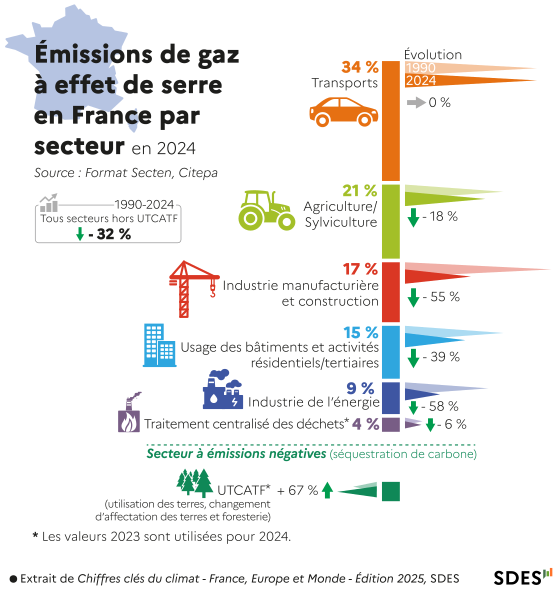
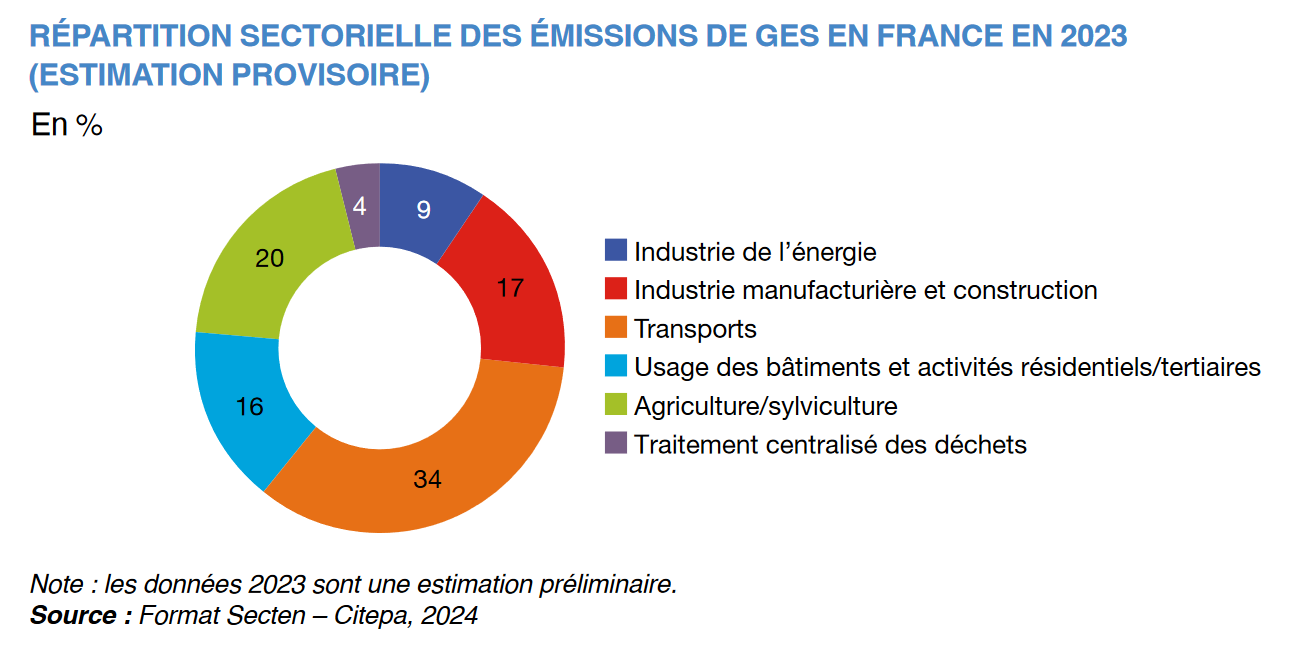
Le traitement centralisé des déchets contribue aux émissions GES. En 2017, le traitement des déchets, par stockage ou incinération, ainsi que le traitement des eaux usées représentent 3 % du total des émissions de GES de la France. Ces activités se caractérisent par une proportion élevée d’émissions de CH4. Le traitement des déchets contribue au quart des émissions nationales de CH4.
Centralized waste treatment contributes to GHG emissions. In 2017, waste treatment through storage or incineration, as well as wastewater treatment, represent 3% of France's total GHG emissions. These activities are characterized by a high proportion of CH4 emissions. Waste treatment accounts for a quarter of national CH4 emissions.
3 chapters
- GHG emissions from waste managementEmissions scope• Recorded emissions concern those generated by centralized waste treatment, which includes solid waste storage or incineration, as well as wastewater treatment. Emissions associated with the production of goods and materials treated as waste are not included. In accordance with GHG inventory establishment rules, CO2 from Biomass is not counted.Waste share of national emissions• Waste management activities represent 3% of France's total GHG emissions. These wastes, produced by households, businesses, or municipalities, are collected in non-hazardous waste storage facilities (ISDND) or incinerated or eliminated through biological processes (composting, anaerobic digestion) or sorted for recovery. Regarding wastewater treatment, collective processes (treatment plants) or individual processes (septic tanks) also generate GHG emissions. 72% of waste management GHG emissions are due to storage.Energy recoveryGHG emissions from ISDND can be captured for flaring or recovery. Waste incineration can be associated with energy recovery (electricity production from heat generated by incineration). Biogas from anaerobic digesters is renewable energy, used as gas or burned in cogeneration to produce electricity.
- Different GHGs from waste managementEmissions sources• The waste treatment sector, sometimes integrated with industry, is the subject of a specific category within GHG inventories, as its emissions are linked neither to energy consumption nor to industrial production processes. Except for incineration, waste management GHG emissions result from biological processes triggered by treatment and decomposition of organic waste. These processes generate methane emissions (CH4) linked to storage operations, composting, anaerobic digestion, or wastewater treatment processes.Methane dominance87% of waste management sector GHG emissions are CH4. This economic sector represents a quarter of national methane emissions. Incineration causes N2O and CO2 emissions.
- GHG emissions trends in waste managementOverall decline since 1990Waste management GHG emissions fell 9% between 1990 and 2017.Rise then decline• The trend is marked by increasing emissions between 1990 and 2003, correlated with rising waste volumes treated and waste kinetics (time lag between storage and emissions). Since the early 2000s, the share of stored waste has declined while composting has increased. Emissions have dropped 71% since 2003.
Further reading
- Rapport Secten sur les émissions de GES en Francecitepa.org
Ce rapport est la référence concernant les émissions annuelles de gaz à effet de serre (et de polluants atmosphériques) en France depuis 1990. Citepa, juin 2024