
Les facteurs d’émission de gaz à effet de serre
Les énergies émettent des gaz à effet de serre (GES) en quantités variables. L’Ademe fournit des facteurs pour convertir l'énergie consommée en émissions de (…)
Energies emit greenhouse gases (GHG) in varying quantities. Ademe provides factors to convert energy consumed into emissions of (…)
2 chapters
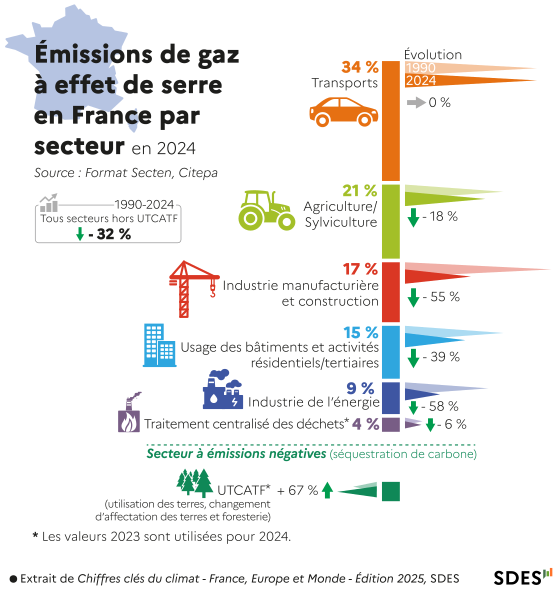
- TransportVehicle emission factors• Not all transport modes emit the same amount of GHG for an equivalent journey. Ademe publishes GHG emission factors that convert kilometers into quantities of GHG. These factors account for emissions from vehicle circulation as well as those associated with fuel and vehicle manufacturing. Emissions from cars are approximately 250 grams of CO2e per kilometer. This average value depends on the vehicle's engine size. Electric vehicles produce approximately 100 grams of CO2e per kilometer traveled. Hybrid vehicles have highly variable emission factors depending on the technology.Transport mode comparison• Values are given per kilometer traveled for private cars. The higher the vehicle occupancy, the lower the emissions per passenger-kilometer. The current statistical average is 1.6 persons per vehicle. Emission factors for rail transport (train, metro, RER, trams) are very low, less than 10 grams of CO2 per kilometer per passenger, while buses emit quantities of GHG equivalent to cars (if they are occupied on average by 1.6 persons). Regarding aviation, emissions per kilometer traveled vary considerably depending on aircraft capacity and flight distance. GHG emissions are proportionally higher during takeoff and landing phases than during cruise phases.Active mobilityActive mobility modes (walking and cycling) emit no GHG.
- FoodEmissions by food typeFrom production to consumption, food products generate greenhouse gas emissions. The magnitude of these emissions varies depending on the type of food consumed: generally, meat and dairy products generate more greenhouse gas than fruits and vegetables.Production and transport factorsOther factors, such as manufacturing process, transport mode, and distance traveled to the consumer, influence greenhouse gas quantities emitted. Choosing foods grown in season and produced locally using sustainable farming practices, such as organic agriculture, can sometimes significantly reduce environmental pressures.Numerical examplesFor example, a tomato produced out of season emits seven times more greenhouse gas than when grown in season. For green beans, greenhouse gas emissions increase thirty-two-fold in the case of air import, compared to local production.