Ronde de nuit, Rembrandt
4 chapters
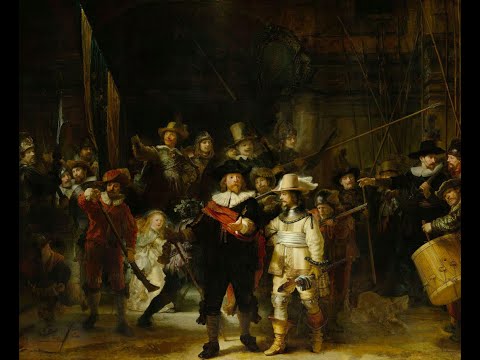
- Introduction and Context of the Night WatchCommission and DimensionsThe painting was commissioned in 1640 and completed two years later by Rembrandt. It is a gigantic composition measuring approximately 5 meters by 3 meters.Commissioners• Commissioned by Captain Frans Banning Cocq, captain of the civic guard (bourgeois militia of musketeers) • His lieutenant Wilhelm van Doninburgh appears at his side • During this period, it was fashionable for various guilds to commission these magnificent group portraitsRembrandt's StatusBy the 1640-1642 period, Rembrandt was already a highly recognized painter in Amsterdam, worthy of receiving such a prestigious commission.Nature of the Work• Depicts a night watch charged with protecting the city of Amsterdam • A group portrait quite different from Rembrandt's other compositions such as The Anatomy Lesson of Doctor Tulp • A blend of intimate self-portraits and grand group portrait compositions
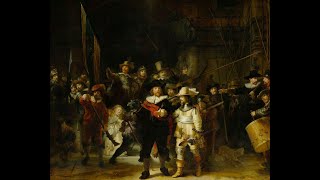
- Analysis of Characters and CompositionMain Protagonists• The captain and his lieutenant display great elegance and seem imbued with their prestige • The captain extends his hand in a decisive and proud gesture, a movement that sets the assembly in motion • This seemingly determined gesture is characteristic of what led Rembrandt to be chosen for this compositionRemarkable Elements• Reflections on morion helmets and 17th-century armor • Profusion of details: the drum with its drumstick, the quality of rendering the fabrics • Golden hats, red and purple paintings, the brilliance of shieldsLight TreatmentRembrandt places the figures in sumptuous architecture with a play of light that creates spectacular reflections on the helmets and armor.Commissioners' Disappointment• Some figures are not honored: some are partially obscured or in shadow • A small girl unnaturally captures all the light at the heart of the composition • This arrangement disappointed the bourgeois citizens who paid to be in the foreground • Rembrandt received no more public commissions for 14 years after this work
- Enigmatic Details and SymbolismThe Mysterious Young Girl• Some have speculated that Rembrandt gave this figure the features of his own mother, or perhaps one of his daughters, Cornelia • She captures the light in a most unnatural way at the heart of the composition • She wears a chicken at her waist, symbolizing the company of musketeersSymbols of the Company• The chicken at the waist represents the symbol of the musketeers' company • A purse hangs below, recalling the price of the painting commission • A ceremonial horn completes the symbols linked to the famous musketeer ceremoniesMilitary Inconsistencies• Variety of uniforms: some wear morion helmets, others wear helmets of classical taste • A bourgeois with a top hat does not seem well-equipped to be part of these armed forces • Unprofessional attitudes: some reloading a musket while walking, others blowing on their weapons to cool themSocial RealityThese figures gather more for social ritual with banquets than for genuine military functions. The greatest dangers were at sea during this period.
- Interpretation and Artistic MasteryNarrative Irony• Despite Rembrandt's Calvinist austerity, irony shines through in this composition • The gazes do not converge: none seems to look in the same direction as their neighbor • Some exchange remarks in small huddles, suggesting a certain confusionQuestioning• The captain's initial gesture, appearing so decisive, could instead be a gesture of uncertainty • Questions about supposed relations between the captain and his lieutenant remain unanswered • These reservations meant the painting was not appreciated at its true value in its timeCaravaggio InfluencesRembrandt was born three years before Caravaggio's death and owes much to the technique of chiaroscuro. This technique not only adds unreality to the scene but also gives it its dramatic unity.Lasting AdmirationDespite the reservations of its era, the Night Watch remains an admirable composition that deserves recognition and careful study.