“Les Ménines” de Velasquez vu par Philippe Gabriel
4 chapters
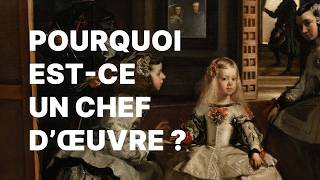
- Presentation of the Painting and Its CharactersKey FeaturesLas Meninas by Diego Velasquez is an oil on canvas measuring 3 meters 18 cm tall by 2 meters 76 cm wide, painted between 1656 and 1657. The painting was formerly called the Family Painting until 1843 and is housed in the Prado.The Painter and His StatusVelasquez was the official painter to the king, the king's chamberlain, and a Grand Cross of Santiago, the highest honor of the era.Characters Depicted• The Infanta Marguerite, second daughter of King Philip IV, aged 5 years old • The meninas (attendants): Snow, Marie Barbe Aulas, The Dwarf, Nicolas • José Nieto, Velasquez's chamberlain to the queen • In the mirror: Queen Maria Anna and Philip IV of SpainCentral EnigmaThe diffuse reflection of the royal couple in a mirror in the background raises questions, as this representation does not conform to the conventions of the period.
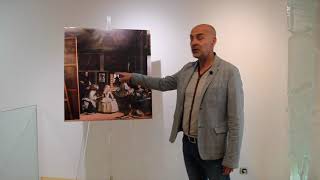
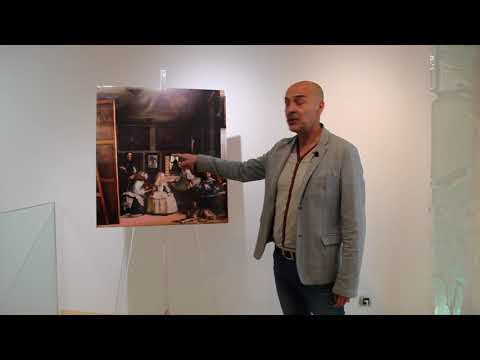
- Perspective Analysis and the Role of the ViewerVanishing Point and SymbolismThe vanishing point, where all lines converge, leads to Nieto's arm. In classical painting, the vanishing point symbolizes infinity and thus God, creating an image with the two bodies of the king: the physical and the divine.Velasquez's InnovationThe painter does not merely represent the royal couple, but the conditions of representation itself. It is a revolutionary device where the very object of representation becomes uncertain.Reversal of RolesThe viewer finds themselves in the position of the painting's subject. The observer becomes the imaginary model, inverting the traditional roles between observer and observed.Emotional ImpactAn eighteenth-century courtier before this three-meter-tall wall would experience the intoxicating feeling of being King of Spain, a rush of power that could drive him mad.
- Legacy and Modern InterpretationsInfluence on PicassoIn 1901, Picasso painted a canvas inspired by this device of subject disappearance. Velasquez's message dazzled him: the superiority of the creative act of painting surpasses even the divinely ordained royalty. A connection to Las Meninas is evident in the free brushwork and the martial pose of the master.Foucault's Interpretation• Michel Foucault, structuralist philosopher, meditated on Las Meninas in 1966 in the introduction to his book The Order of Things • He analyzes the dilution of the subject as the superiority of creators over state structures • For him, Velasquez questions divinely ordained royaltyAutonomy of PaintingLas Meninas becomes a revolutionary anthem. Painting frees itself from representation: Velasquez paints to create meaning, not to represent. The subject remains undefined, hence the strong cry of the painter visible on the back of the canvas.Artistic ContextBy the late 1980s and early 1990s, any significant painting had to be abstract, reflecting the lingering influence of this conceptual revolution initiated by Velasquez.
- Radiographic Discovery and ReinterpretationTechnical RevelationThrough radiography in the late 1980s and early 1990s, the Prado's conservator discovered that Velasquez and his horse did not exist in the first version from 1656-1657. In their place was a boy bending before the Infanta, presenting her with a baton of command.Original Official MeaningIt was an official painting announcing that Philip IV's younger daughter would succeed to the throne. The painting produced meaning visually independent of the painter's ideas and his patrons' intentions.Inverted CausalityNarrative stories contribute to explaining the painting, but they flow from the viewers' interpretation. The observer and subject reverse their roles, leading to a different conception of cause and effect.Construction of MeaningWe create the story as observers, rather than the story making demands on us. The story is not narrative; it is the mirror of a sensibility.