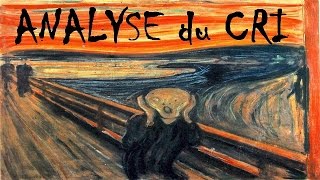
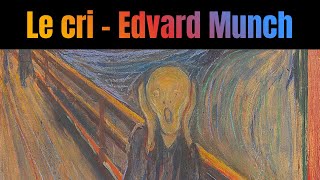
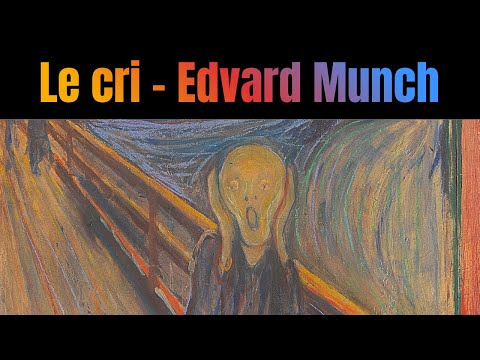
LE CRI d’EDVARD MUNCH
5 chapters
- Introduction to Edvard Munch and His MasterpieceAbout the ArtistEdvard Munch (1863-1944) is a Norwegian painter and engraver recognized as one of the most renowned artists of the Scandinavian countries and a precursor of expressionist painting.The MasterpieceThe Scream is renowned worldwide and has been reproduced and reinterpreted countless times. It is one version from a series of five works created between 1893 and 1917.Technique UsedThe presented version is painted in tempera on cardboard and the complete series also includes three paintings, a pastel, and a lithograph.Artistic InfluenceMunch is recognized alongside Van Gogh and Gauguin as a precursor of modern art.
- Munch's Personal Context and Artistic InfluencesEarly ExperiencesFrom an early age, Munch is confronted with illness and death. His mother and one of his sisters die from illness while he is still a child.Personal Struggles• Illness persists throughout Munch's life • He has a weak constitution • He experiences constant fear of death • He suffers from numerous bouts of depressionArtistic PhilosophyHis expressionism is marked by the desire to symbolize human emotions, particularly anguish and pain.Thematic SeriesThe Scream is part of the Frieze of Life, a series of paintings that form an allegory of life's progression.
- The Autobiographical Inspiration Behind The ScreamPersonal AccountEdvard Munch writes in his 1892 journal that he was walking on a path with two friends as the sun was setting and the sky turned blood red.Key MomentMunch stops, exhausted and leaning against a railing. He describes seeing blood and tongues of fire above the blue-black fjord of the city while his friends continue on.Sensation FeltHe remains trembling with anxiety and senses an infinite scream passing through the universe and tearing through nature.Interpreting the ScreamThe infinite scream is phantasmagorical and linked to a feeling of anguish in the face of an imposing and disturbing nature, representing the artist's own existential anxiety.
- Scientific Hypothesis: The Krakatoa EruptionScientific DiscoveryFifteen years ago, American astrophysicists proposed a scientific explanation of The Scream connected to a major volcanic eruption.Volcanic EventOn August 27, 1883, the Krakatoa volcano in Indonesia experienced one of the largest eruptions ever recorded, causing major tsunamis.Atmospheric Phenomenon• The eruption noise reached at least 172 decibels and was heard nearly 4,800 km away • Volcanic ash poured into the atmosphere and spread worldwide • It produced glowing sunsets visible especially in northern EuropeConnection to the WorkThe apocalyptic sky likely triggered strong emotions in Munch, which he remembers ten years later when painting the work. These fiery red hues suit the allegory of pain used here.
- Origins of the Central Figure: Peruvian MummiesArt Historian's TheoryArt historian Robert Rosenblum proposed in 1978 an interesting hypothesis about Munch's inspirations for creating the distinctive character of The Scream.Parisian ContextIn 1889, Edvard Munch is in Paris the same year as the Paris Universal Exposition.Museum DiscoveryMunch may have seen mummies from the Peruvian Chachapoya people on display, showing striking similarities to the character in The Scream.Artistic Parallels• The position and skin color of the mummies resemble the character in The Scream • The appearance of these same mummies is also found in a figure in Paul Gauguin's Where Do We Come From? What Are We? Where Are We Going?