
La Joconde (2/10) | Histoires de peintures, par Daniel Arasse
7 chapters
- Personal Journey with the Mona LisaEmotional ConnectionIt took nearly 20 years for the speaker to truly love and appreciate the Mona Lisa beyond mere admiration. Initially, the painting had been overshadowed by Marcel Duchamp's famous modification, making it difficult to take the work seriously.Critical ChallengeThe speaker had to overcome the handicap created by Duchamp's intervention with the painting. Despite this cultural barrier, many serious art historians and museum curators continued to express enthusiastic reactions to the work.Research MotivationWhen tasked with writing a book about Leonardo da Vinci's art, the speaker could not avoid examining the Mona Lisa. The goal was to understand how a painting created nearly 500 years ago could still produce such a powerful effect on viewers.Key Questions• What makes this particular painting so enduring in its impact? • How does a work from the early 16th century maintain such emotional resonance across centuries?
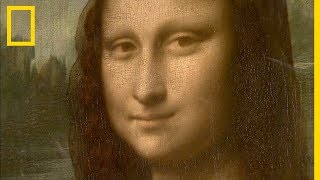
- Physical Composition and StructureArchitectural SettingThe Mona Lisa sits within a loggia elevated above a distant landscape. The loggia is defined by two columns with bases on either side of the figure and a low wall connecting them, framing the composition with architectural elements.Seating ArrangementThe figure sits in a chair, evidenced only by her left arm resting parallel to the picture plane on an armrest. Strangely, the chair has no visible back, creating an unusual and incomplete representation of the furniture.Background LandscapeThe background presents a barren, prehistoric landscape composed only of rocks, earth, and water with no human constructions or trees. Notably, there is only one human-made element: a bridge spanning across the terrain in this otherwise untouched world.Compositional ParadoxA fundamental tension exists between the inhabited figure in the foreground and the completely unpopulated, primordial landscape behind her. This juxtaposition raises questions about the relationship and meaning between these two distinct worlds within the same painting.
- The Figure and Her GazeBody Position• The figure is positioned close to the viewer with her left arm on the armrest creating intimacy and presence • A three-quarter view of the bust shows the figure turning slightly toward the viewer • There is internal torsion in the pose that creates dynamism and psychological engagementDirect GazeThe eyes are perpendicular to the picture plane and look directly at the viewer regardless of where one stands in the room. This creates the characteristic effect of being watched, similar to Venus of Urbino by Titian, making the viewer the object of the figure's attention.Revolutionary SmileThis is the first portrait with a smiling expression in Western painting history. Leonardo invented the concept of a smiling portrait; previous works either showed laughter as a grimace or no smile at all. The famous smile is subtle and enigmatic rather than broadly expressive.Psychological PowerThe combination of direct gaze, internal torsion, and mysterious smile creates a compelling psychological connection. The viewer is held under the figure's gaze, making the portrait a meditation on the relationship between observer and observed.
- Leonardo's Portrait InnovationsTechnical ContextLeonardo painted two Florentine portraits where the figure gazes directly at the viewer: Jean de Brédelles (Washington) and the Mona Lisa. In all other Leonardo portraits, the gaze is averted or oblique, never meeting the viewer's eyes directly.Comparative AnalysisLeonardo's earlier portrait of Jean de Brédelles shows a sad, mourning woman with downturned mouth because her lover is absent. By contrast, the Mona Lisa smiles because her husband Francesco del Giocondo commissioned the portrait and had just moved to a larger house, symbols of his love and devotion.Historical ContextFrancesco del Giocondo commissioned the portrait from the greatest painters of the time because his wife had given him two male heirs. However, when Leonardo presented this work, it was shocking for its unconventional content and not what a Renaissance merchant would have expected or wanted.Revolutionary DepartureUnlike contemporary portraits by Raphael with pleasant backgrounds of meadows and birds, Leonardo placed his subject before a chaotic, prehistoric landscape. This revolutionary approach was so unorthodox that Francesco del Giocondo likely would have refused the finished painting.
- Thematic Depth and SymbolismEphemeral BeautyLeonardo was deeply influenced by Ovid's Metamorphoses, particularly the theme that beauty is fleeting and temporary. The smile of the Mona Lisa represents grace that lasts only an instant, embodying this classical meditation on the transience of beauty and human life.Chaos and GraceThe smile creates a mysterious union between the chaotic prehistoric landscape and the graceful figure. Through the smile, the painting shows a movement from chaos toward grace and back again, representing cyclical natural processes and temporal flow.Meditation on TimeThe portrait is fundamentally a meditation on the passage of time and human temporality. The figure's internal torsion rotates around the moment of time, embodying Montaigne's reflection on how we are constantly changing: each moment we are different from our former selves.The Bridge SymbolThe bridge in the landscape serves as a symbol of time passing, as rivers traditionally symbolize the flow of time. This single human element in the prehistoric landscape helps Francesco del Giocondo understand that Leonardo was not creating arbitrarily but engaging in profound meditation on time's meaning.
- Geological and Cartographic DimensionsTuscany ReferenceThe landscape in the Mona Lisa reflects Leonardo's geographical studies of Tuscany. The background represents not an imaginary landscape but a specific place transformed through Leonardo's artistic vision and geographical knowledge.Map Correlation• The landscape with its elevated lake on the right and marshy valley on the left matches Leonardo's own cartographic drawings of Tuscany • Leonardo depicted a waterway connecting Lake Trasimeno to the Val d'Arno, a geographical feature that does not actually exist in reality • This impossible water connection is a deliberate artistic choice integrated into the painting's compositionImmemorial HistoryThe landscape represents Tuscany in its primordial state, before human civilization. It depicts the region as it existed in an unmeasurable past, showing the geological and hydrological forces that shaped the land.Integrated ComplexityLeonardo's construction of the Mona Lisa is fully coordinated with his cartographic and geological reflections. The painting demonstrates how the artist's scientific observations and artistic vision were inseparable, creating a work of extraordinary intellectual and artistic density.
- Legacy and InterpretationPersonal WorkThe Mona Lisa is one of Leonardo's most personal paintings. He called it the portrait of the fertile woman, referring to her role as mother. Leonardo kept the painting throughout his life instead of delivering it to the commissioner, making this a work he retained for himself.Portrait as MeditationThe painting transcends the traditional portrait genre by functioning as a fundamental meditation on time, transformation, and human existence. It remains centrally about time's passage and its effects on beauty, grace, and human consciousness.Viewer EngagementThe painting's density and sobriety ensure that viewer reflection and gaze continually engage with the work. The subtle elements force active interpretation rather than passive observation, maintaining fascination across centuries.Incomprehension and InnovationLeonardo's radical innovations in portraiture—the smile, the direct gaze, the chaotic landscape—represented such a departure from contemporary practice that the work could not have been immediately understood. This revolutionary approach explains why Francesco del Giocondo likely never accepted the completed painting.