La Cène de Léonard de Vinci, expliquée. (Analyse)
19 chapters
- Introduction to the Last SupperGlobal RecognitionThe Last Supper is one of the most renowned images in the world after the Mona Lisa, copied and reinterpreted everywhere since its creation.Lack of Knowledge• People often don't know what the Last Supper depicts • Few realize it represents a major event in Catholic religion • Many forget it's a work by Leonardo da VinciUndisputed MasterpieceThe Last Supper is Leonardo da Vinci's masterpiece, his crowning work, more important than the Mona Lisa according to the narrator.Fundamental QuestionsWhy is this fresco so special and what makes it a masterpiece?
- Leonardo in Milan: Historical ContextFlorence's PositionFlorence was Europe's cultural capital at that time, while Milan held a less prestigious position, comparable to fourth or fifth place.Training and Competition• Leonardo was trained in Florence in the prestigious workshop of Verrocchio • Competition was fierce with artists like Botticelli, Ghirlandaio, and Filippino Lippi • Leonardo had few major works before his departure for MilanSistine ExclusionIn 1481, Pope Sixtus IV called Florentine artists to decorate the Sistine Chapel, but Florence did not send Leonardo because he had not yet gained the reputation of the greatest of his generation.Arrival in MilanLudovico Sforza, Duke of Milan, sought an artist for his court. Leonardo wrote him a letter presenting himself as an engineer, architect, and urban planner, mentioning painting last.
- Fresco Technique: A Risky ChoiceState of DeteriorationThe Last Supper deteriorated extremely quickly. By 1517, barely 20 years after its creation, it was already heavily damaged by moisture.Traditional TechniqueFresco requires spreading a layer of fresh plaster on which the artist paints immediately. It's work halfway between that of a mason and a painter.Experimental InnovationLeonardo rejected the traditional method and used an experimental mixture based on oil and varnish, causing moisture absorption and deterioration.Reason for the ChoiceLeonardo painted too slowly to use traditional fresco technique. He invented another method that unfortunately proved less durable.
- Context of the CommissionDuke's Link to the Convent• Ludovico Sforza maintained a close connection with the convent of Santa Maria delle Grazie • He dined there twice weekly, on Tuesdays and Thursdays • He had the monastery enlarged and commissioned Bramante to rebuild part of the churchImportance of the CommissionThe Last Supper commission was particularly significant for a place very important to the duke, a commission he could not take lightly.Years in MilanLeonardo remained in Milan for almost 20 years in good relations with Ludovico Sforza. There he created festivals, ceremonies, spectacles, and machines.Time of CreationThe Last Supper was painted at the end of Leonardo's stay in Milan, when he was 43 years old, for the refectory of the convent of Santa Maria delle Grazie.
- Religious Significance of the Last SupperBiblical DefinitionThe Last Supper designates the final meal Jesus shared with his disciples before his arrest and crucifixion. The word comes from Latin 'cena' meaning evening meal.First SignificanceIt is the moment when Jesus reveals to his disciples that one of them will betray him, the announcement of Judas's betrayal.Second SignificanceIt is the moment when Jesus institutes the Eucharist, taking bread and wine to share them saying 'Take, eat, this is my body' and 'Drink from it all of you, this is my blood'.Religious FoundationThe Eucharist is one of the founding gestures of Christian religion and a capital event in the Bible.
- Deconstruction of MysteriesJohn MythJohn is depicted with a feminine face because during the Renaissance, long hair was associated with beauty, youth, and elegance for young men. This is not Mary Magdalene.Musical MythThe theory that the hands and breads on the table form a sacred melody on an imaginary staff is pure fantasy.True SecretThe reason for the Last Supper's fame is not a hidden mystery, but rather the boldness and innovative originality with which Leonardo depicted this subject.Context of RepresentationsBefore Leonardo, other Last Suppers already existed, but Leonardo's is radically different from all the others.
- Iconographic TraditionRecognition Criteria• Isolation: Judas is separated from the other disciples • Halos: all apostles have them except Judas • Hand Position: Judas reaches his hand toward Jesus's hand • Physical Appearance: yellow tunic or red hair symbolizing betrayalExplicit SymbolsA purse of silver in exchange for betrayal or a small devil on the shoulders can identify Judas.Other IdentificationArtists often inscribe the apostles' names above or below frescoes to facilitate identification.Other Notable Apostles• John is always depicted reclining, appearing to have drunk too much • Peter is identifiable by his knife which foreshadows future events
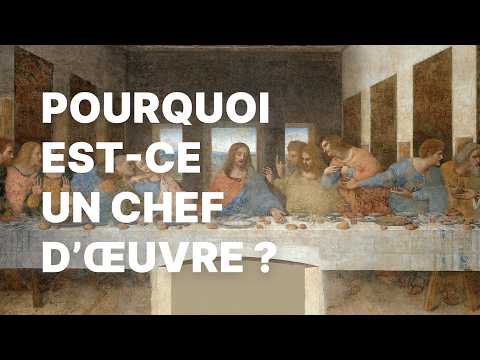
- Leonardo's Innovation: Judas Among the ApostlesMajor BreakLeonardo seats Judas among the other apostles instead of isolating him as other painters did.Recognizing Judas• He reaches his hand in the same direction as Christ, in accordance with the Gospel of Matthew • He possesses the 30 pieces of silver from his betrayalChrist's GestureJesus's gesture condenses both the institution of the Eucharist with his left hand and the announcement of betrayal with his right hand extended toward the same plate as Judas.Calculated RiskBreaking with tradition in such a codified theme is risky because it could confuse the image's interpretation, but Leonardo does it intentionally.
- Plausibility and Clarity of the NarrativeHistoria GenreThe Last Supper is a 'historia', a noble genre of painting that tells a sacred or mythological story while respecting conventions.Double ChallengeThe artist must make the narrative both fully legible and plausible, combining clarity and credibility.Leonardo's ReasoningLeonardo realizes that if the one who will betray is explicitly set apart, he is not hidden as he was in the actual history.Innovative SolutionBy placing Judas among the apostles, Leonardo makes him both completely hidden and completely visible, which radically changes the composition.
- Comparison with ContemporariesArtists Compared• Andrea del Castagno with a slightly earlier Last Supper • Perugino and Ghirlandaio with Last Suppers contemporary to Leonardo's • Perugino and Ghirlandaio are major masters of the Italian RenaissanceCommon Elements• Space is rigorously geometric • The table is arranged lengthwise • Jesus is at the center surrounded by his disciples • In Castagno, the checkerboard recalls the coffered ceiling of Leonardo's frescoRadical Differences• The composition is no longer the same • The light is radically different • Symbols and halos have disappeared • Judas is no longer isolated • The figures appear alive, the table more real, less rigidTemporal EffectLeonardo's painting seems to come from another era, although it was painted around the same time as the others.
- From Communion to DramaChange of RegisterLeonardo shifts from the traditional tone of communion to that of drama, a major break with earlier painters.Old AtmosphereWith painters like Castagno and Perugino, the atmosphere is peaceful, almost silent, each apostle absorbed in meditation.Leonardo's ChoiceLeonardo chooses tumult and drama, seizing the dramatic moment when Jesus declares 'One of you will betray me'.Possibility CreatedBy placing Judas among the apostles, Leonardo makes this tonal shift possible, allowing the expression of emotions like astonishment, surprise, indignation, and fear.
- Movement as a Vector of EmotionOld RigidityBefore the Last Supper, the scene belonged to a purely decorative register where figures and objects were arranged according to logical and fixed order, like figurines.New DynamicsDrama in Greek means 'action'. Figures must do and act, which necessarily calls for movement.Emotional CommunicationOne cannot represent an emotion as such. The only way is to represent its effects on the body: reddening face, furrowed brows, tense limbs.Study of NatureLeonardo understood this by studying nature, not codified painting. He applies observation of natural phenomena to the representation of emotions.
- The Announcement as a ShockwavePhysical AnalogyThe announcement of betrayal is like the impact of a stone in water, creating a shockwave that spreads from Christ's central figure.Emotional PropagationThe wave travels through bodies: shoulders tensing, hands agitating, faces brightening or closing.Anatomical KnowledgeTo paint the movements of the soul with accuracy, Leonardo must know exactly the movements of the body and human anatomy.Grammar of the BodyNerves, muscles, and ligaments become for the painter what grammar is for the writer, allowing the expression of the invisible.
- Anatomical Studies and Artistic RevolutionDifference Between WorksThe difference between Leonardo's early and late works lies in his anatomical knowledge acquired from 1487.Examples of Progression• Ginevra and the Mona Lisa show greater anatomical mastery • Saint Jerome also testifies to this increased knowledgeDual ApproachIt is the combination of both a scientific and artistic approach that allows Leonardo to revolutionize painting.Living ResultThis anatomical knowledge allows Leonardo to make his paintings truly alive and expressive.
- Harmony and Musical OrchestrationBalance of MovementMovement in the Last Supper is perfectly orchestrated with musicality, rhythm, emotions, and organization, balance, clarity.Distribution of ApostlesThe 12 apostles are divided into four groups of three, balanced on either side of Christ placed at the exact center of the composition.Rhythmic StructureEach small group forms an independent ensemble connected to others by gestures, curves, or hands forming visual rhymes.Visual MusicalityThe fresco functions like music with its rhythm, verses, and chorus. Leonardo guides our gaze bouncing from one apostle to another toward Christ.
- Architecture and PerspectiveGeometric StructureThe beauty and geometric structure of the Last Supper constantly redirect the eye toward the center.Intentional SimplicityThe architecture is austere and stripped of artifice. Some copies tried to decorate it with patterns, which is a mistake.Function of ContrastThis simple architecture creates a contrast that intensifies the action by centralizing attention on the drama.Effective SobrietyThe austere and rigorous environment allows the action to reveal itself with all its power, without distraction.
- Subtle and Divine LightAbsence in CopiesWhen comparing Leonardo's Last Supper to its copies, the divine atmosphere and sense of transcendence are always missing.Luminous QualityIn Leonardo, light is subtle and magical, like a breath that sculpts volumes and connects figures to one another.Architectural IntegrationLeonardo constructed his fresco according to the incidence of natural light from the refectory, real windows appearing to naturally illuminate the protagonists.Temporal EffectWhen the sun set, its rays illuminated the painted surface, sublimating the fictional space of the Last Supper.
- Christ's Humanity and DivinityDifficulty of Christian ArtThe major difficulty of Christian art is representing a being who is both fully human and fully divine.Removal of HalosSeeking realism to bring Jesus closer to us, Leonardo removed the halos contrary to tradition.Preservation of EssenceAlthough Leonardo removes the halos, he preserves their essence through atmosphere and light.Successful ConjunctionThe Last Supper achieves the conjunction between human and divine, between real and unreal, between transcendence and immanence through this angelic atmosphere and radiating light.
- Conclusion: Masterpiece of Christian ArtReason for ExcellenceLeonardo da Vinci's Last Supper is a masterpiece because it is the masterpiece of Christian art.Fusion of Opposites• Jesus is both fully human and fully divine • The composition is both dramatic and harmonious • The atmosphere is both real and transcendentLasting InnovationLeonardo revolutionized the way this subject is depicted by placing Judas among the apostles, making the scene more plausible and dramatic.Artistic LegacyThis fresco established a new standard for depicting the Last Supper and influenced the conception of sacred art for generations to come.