
La Joconde de Léonard de Vinci, expliquée. (Analyse)
7 chapters
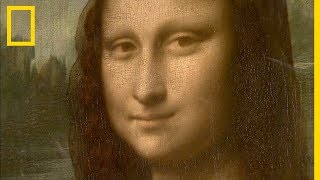
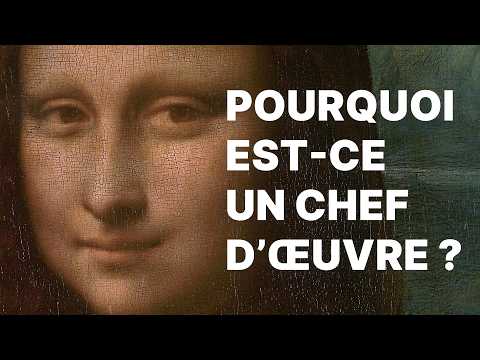
- The Disappointing Experience and Paradoxical Fame of the Mona LisaOverviewThe Mona Lisa is the most famous portrait and the most celebrated painting in the world, yet many visitors consider it the most disappointing painting ever.Subject Description• Lisa Gerardini, wife of wealthy merchant Francesco del Jocondo • Seated in a loggia with columns visible in the background • Dressed in a dark gown and fine veil • Hands deliberately placed one atop the other • Hint of a subtle smileVisiting ExperienceThe Louvre experience is underwhelming: 15 minutes of queuing for 15 seconds before the painting, compared to impressive masterpieces like Veronese's Wedding at Cana, which offer spectacular dimensions and movement.The GapThe Mona Lisa's current fame is likely due to two factors: the 1911 theft and the mystery surrounding it, rather than understanding its true artistic value.
- The 1911 Theft and Media RiseThe EventAn Italian laborer working at the Louvre stole it in 1911 and kept it for 2 years, attempting to sell it to an Italian dealer out of nationalism.Initial Reactions• Picasso was initially suspected of the theft • The international press covered the event weekly in headlines • People came to see it at the museum even though it was goneLasting ConsequencesThe Louvre benefited from unexpected media attention, and the Mona Lisa made two diplomatic trips in the 1950s: to the United States and Japan, also passing through Moscow.Multiplier EffectThe monster feeds the monster: artists, press, and researchers all seized upon the Mona Lisa, amplifying its fame and creating endless theories about Mona's identity and the reasons for its prestige.
- Masterpiece Status Since Its CreationImmediate RecognitionThe Mona Lisa was a masterpiece from its creation, immediately recognized by the Renaissance artistic and intellectual elite, unlike other works rediscovered later such as paintings by Vermeer or Van Gogh.Historical Evidence• Vasari, the first art historian, devotes part of his art history to the Mona Lisa in 1550, only 30 years after Leonardo's death • Raphael, one of the greatest Renaissance painters, abandons his commissions in 1504 to go to Florence to copy Leonardo's works, including the then-unfinished Mona LisaCreation ContextIn 1503, Francesco del Jocondo commissioned the portrait from Leonardo to celebrate the birth of his second son and decorate his new house, at a time when Leonardo was returning to Florence after about 20 years with the Sforza in Milan.Artistic RivalryIn Florence, Leonardo and Michelangelo, two giants of art, are present at the same time. Michelangelo has just completed the Pietà and the David. The Florence government entrusts each to decorate a wall in the Council Chamber of the Palazzo Vecchio.
- The Innovation of Three-Quarter PoseBreaking TraditionThe portrait is not bust-length but waist-length, showing the hands and even the legs. The pose is three-quarter with a subtle rotational movement from the waist to the bust, the face turned toward the viewer.Historical Context• In the Renaissance, artists imitated antiquity with profile portraits based on coins and medallions • Princes and important figures of the 15th century in Italy were all painted in profile • Raphael and other great artists began following Leonardo by adopting this innovationLeonardo's PrecedentsGinevra de' Benci (1475) already shows a similar pose, and the Lady with an Ermine presents subtle movement and an emerging smile that foreshadow the Mona Lisa.Distinctive QualityUnlike the rigid and imperfect portraits of his contemporaries, the Mona Lisa possesses flexibility, ease, and natural spontaneity, giving the impression she is alive and not frozen.
- Hands as Moral Element and Painting's IntimacySolving FlawsLeonardo worked long on the hand placement, finally finding the perfect solution in this portrait after failing with the Lady with an Ermine, where the hands were disproportionate.Proximity to SubjectThanks to this pose, only the hands and the chair's edge separate the viewer from the Mona Lisa, creating a rare form of intimacy in period portraits where hands are usually hidden or resting on a table.Moral SignificanceThe hand position, delicately placed one upon the other before her, represents the behavior that period etiquette books recommended for girls, signifying her moral qualities and respectability.Absence of AccessoriesUnlike other artists who use jewelry, books, or animals to signify personality traits, Leonardo dispenses with all accessories, creating an impression of naturalness and intimacy while maintaining respectability.
- Sfumato and the Enigmatic SmileRevolutionary TechniqueSfumato is a technique that softens contours to make them less sharp. Compared to Botticelli's sharp and crisp works, the Mona Lisa seems to emerge from the background, creating a living and natural appearance.Nature of the SmileThe smile must be temporary because any natural smile is ephemeral, a passage from seriousness to laughter then back to normal. A constant smile appears artificial and unnatural.Technical RealizationLeonardo softens the mouth's contours with sfumato, knowing that in peripheral vision the smile appears natural, but when examined closely it seems to have vanished, creating this fleeting effect.Artistic ResultThis approach combines flexibility, ease, softness, and moral respectability. The Mona Lisa's enigmatic smile works perfectly by creating a sense of immediacy and life.
- Religious Inspiration and Mona Lisa's LegacyIconographic SourceLeonardo drew inspiration not from individual portraits but from religious scenes, particularly the Virgin Mary. The pose, calm, serenity, and smile of the Mona Lisa recall Madonna representations.Symbolic NamingMona Lisa is a contraction of Madonna Lisa, literally meaning Madam Lisa, but also translatable as Madonna, creating a fusion between the secular portrait and the religious image.Cultural ResonanceThe Mona Lisa appears mundane and conventional precisely because Leonardo perfectly captured the serenity and nobility of the Madonna. People come in pilgrimage, parading before this secular icon as before a relic.Later Influence• Raphael becomes the prince of art and forever establishes the way to create portraits • He was the first to parade before the Mona Lisa and copy it • His approach will influence Western art for centuries to come