Game Theory: Is A Shield Your BEST Weapon? (Assassin's Creed Valhalla)
This episode is sponsored by Ubisoft and their newest installment in the Assassin's Creed franchise Valhalla
6 capitulos
- Introduction to Dual Wielding in GamingEpisode SetupThe Game Theorists analyzes the trope of dual wielding in games, focusing on Assassin's Creed Valhalla and whether it makes practical senseGame Features• Viking-themed gameplay with longships and raids • Upgradeable settlement as home base • Massive fortress assaults with crew • Hidden blade action returns to the seriesMain CharacterEivor is the protagonist, described as unquestionably the strongest assassin in the entire series with the ability to dual wield various weaponsEpisode Questions• Did dual wielding ever exist historically? • Is dual wielding two shields ever practical? • Can arrows actually decapitate people?
- Historical Context of Dual WieldingCore ProblemYou can only be offensive with one arm at a time, making dual wielding inefficient because half the time one weapon is uselessBattle StrategyBattles require balance between offense and defense, which is why historically a weapon for offense like an axe or sword is paired with a shieldEuropean Precedent• Used primarily for one-on-one duels • Longer sword for attacking, short sword or dagger for defense • Parrying dagger specifically designed with advanced knuckle guards for defenseEastern Traditions• Japanese samurai carried two swords (katana and wakazashi) • Miyamoto Musashi developed Nito Ichi, a two-sword fighting system • Emphasized smaller wakazashi for defense and longer katana for offense
- Dual Wielding Two Weapons of Same TypeHistorical Examples• Roman Dimikairi gladiators used two curved scimitars (sikai) for spectacle, not tactical advantage • Thailand's Krabi Krabong has a form using two swords • Ancient China's twin hook swords used curved ends to trap weapons or hook shieldsHook Sword Design• Curved ends trap weapons or hook shield back to expose opponent • Sharpened knuckle guards for slashing and punching • Sharpened tail dagger for additional attacksDual Axes in ValhallaEivor's axes would work similarly to hook swords: one axe catches opponent's weapon or shield to expose them, while second axe delivers the blowPractical LimitationsAxes are glorified sticks with heavy heads, meaning they have limited defensive abilities and reach compared to swords
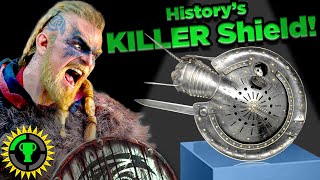
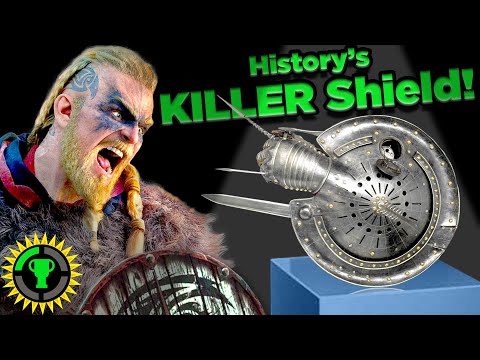
- The Shield Question and Dual Shield WieldingHistorical RecordNo historical examples of anyone dual wielding shields were found, and it lacks any practical tactical advantageShield Limitations• Great for defense but poor as a weapon • Spreads force over large surface area, reducing impact force • Using shield edge is most effective but still far weaker than proper weaponsOffensive Shields• Spiked shields from dark and middle ages used by William the Conqueror's armies • Lantern shields from Italian Renaissance featured shield breaker spikes and hidden blades • Spiked shields proved inefficient in tight battlefield formationsStrategic RealityIn Valhalla's trailer, Eivor should be picking up a shield rather than dual wielding axes, as a shield paired with an offensive weapon is the optimal strategy
- Arrow Decapitation MechanicsModern EvidenceMechanical broadhead arrows with expanding winglets can reach 6.35 centimeters (2.5 inches) wide, over half the size of an average 12.1 centimeter (4.77 inch) neck diameterHistorical Arrow Types• Early Viking broadhead arrows: flat, metal, 5-7 centimeters long, designed to cut skin and stick • Later bodkin arrows: longer and narrower, designed to pierce chainmail • Barbed arrows enhanced cutting and retention in bodiesPractical FeasibilityWith a large broadhead arrow and strong bow, a well-placed neck shot could plausibly decapitate an opponent, especially those without heavy armor like Valhalla's enemiesGame RealismWhile modern expanding arrowheads didn't exist in 9th century England, historical broadhead arrows were similarly capable of causing severe damage to exposed necks
- Eivor's Strength and Historical ConclusionUnprecedented AbilitiesEivor surpasses all previous Assassin's Creed protagonists in raw physical strength, capable of feats impossible even for trained acrobats and parkour expertsViking vs Church• Viking raids on England eventually ended due to monastery fortification and relocation inland • Christian church teachings conflicted with Viking raiding practices • Church authority became the dominant power in the regionSeries AntagonistThe Templars, as the wealthy and powerful main antagonist throughout the Assassin's Creed series, represent the Christian military order that historically opposed Viking expansionThematic ProphecyThe only force capable of defeating someone as strong as Eivor appears to be the power of the Church itself, mirroring historical outcomes of Viking conflicts in England