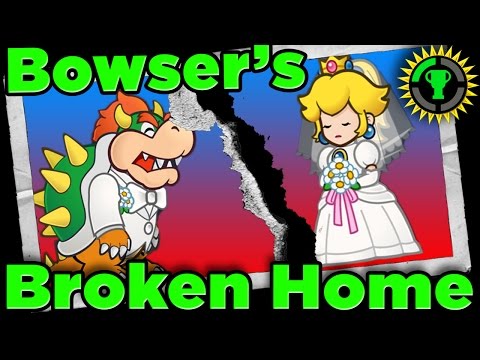
Game Theory: Bowser's BROKEN HOME in Super Mario
7 capitulos
- Channel Announcement and IntroductionNew Channel LaunchAnnouncement of GT Live channel featuring daily stream highlights and full-length versions of videos from weekday live streams on the Game Theorists channel.Content Variety• FNAF mystery solving and playthroughs • Chubby Bunny Pokemon sing-off • Various gaming content and experimentsChannel PurposeGT Live provides curated stream highlights without overwhelming subscribers with notifications, keeping Game Theory channel for main theory videos.Call to ActionViewers encouraged to check out GT Live channel, subscribe, and enjoy daily gaming fun.
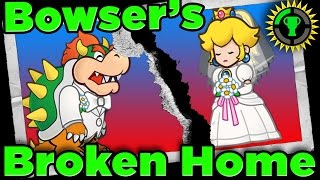
- Bowser's True Character and ReputationPublic PerceptionBowser is commonly portrayed as cruel, ruthless, and an evil tyrant bent on conquering the Mushroom Kingdom, described by the Mario Wikia as 'a villain of pure evil.'Hidden Complexity• Shows sensitive, emotional side in Super Mario RPG and Super Mario Sunshine where he cries • Demonstrates romantic love in Super Paper Mario, excited about marrying Princess Peach • Uses a 'Clown Car' as primary attack vehicleCharacter DepthBowser is a complex character with more depth than his evil reputation suggests, similar to a transformer with hidden layers beneath his spiky exterior.Explanation PromiseThere are hidden facts throughout the Mario series that explain Bowser's behavior, his constant anger, and his pattern of invading the Mushroom Kingdom and kidnapping Princess Peach.
- The Koopalings Mystery and Adoption TheoryLong-Standing Assumption• Seven Koopalings (Larry, Morton, Windy, Iggy, Roy, Lemme, Ludwig Von Koopa) were believed to be Bowser's biological children • Bowser trusts them as military lieutenants and grants them entire worlds to rule during invasions • They look similar to BowserOfficial ContradictionShigeru Miyamoto officially stated that the Koopalings are not Bowser's biological children; only Bowser Jr. is his child, with unknown mother.Manual Evidence• Super Mario Bros. 3 manual explicitly calls them Bowser's children and kids • Manual includes dialogue where Koopalings refer to Bowser as 'father' • Super Mario Advance 4 also referred to them as Bowser's children • Japanese kanji confirms 'children' and 'father' terminologyAdoption ResolutionBowser adopted the Koopalings as his children, allowing him to be their parent without biological relation while providing admirable parental support, mentorship, and care.
- Bowser's Orphaned ChildhoodEvidence of Orphan Status• In Yoshi's Island games, Baby Bowser has no parents and is raised by Kamek, the Magic Koopa • Baby Bowser is always alone in his room, never mentions his father or mother • Adult Bowser travels through space and time to fight enemies, not an elder Koopa parentPsychological ImpactResearch shows being raised as an orphan or in foster care leads to high feelings of alienation, hostility toward society, and increased correlation with future criminal activity.Behavioral Connection• Orphanage-reared children show high alienation and hostility toward society • More years in orphanage correlates with increased hostility feelings • 60% of males aging out of foster care had been convicted of a crimeBowser's MotivationBowser's tyrannical behavior, anger, desire for revenge, alienation from society, and criminal activity are statistically linked to his parentless upbringing.
- Bowser's Desire for Family and Princess PeachAdoption as CompassionBowser took the Koopalings under his wing because he didn't want them to grow up like he did, showing his desire to break the cycle of orphanhood.Complete Family VisionPeach would provide the maternal figure needed for Bowser Jr. and the Koopalings to have a full nuclear family with father, children, and mother—something Bowser never experienced growing up.Invasion Strategy• Bowser takes Peach home to his castle rather than killing her during invasions • Early invasions don't involve killing; Bowser spares lives by turning toads into bricks • The real prize is Peach herself, not just the conquered land and peopleEmotional EvidenceIn Super Mario Sunshine, Bowser confesses the lie about Peach being Bowser Jr.'s mother with tears in his eyes, indicating guilt about being unable to provide his son with a complete family.
- Nintendo Power Comics and Final TheoryComic EvidenceNintendo Power's Super Mario Adventures comic (1992) shows Bowser explicitly stating his motivation to kidnap Peach: 'You need a mother.'Koopalings' PerspectiveIn the same comic, the Koopalings refer to Peach as 'mother dearest' when she escapes, reinforcing that they view her as their intended mother figure.Nintendo AuthorityThough not game canon, the Super Mario Adventures comic was published and written by Nintendo's own copywriters, suggesting internal discussions about character motivations influenced supporting content.Complete PictureBowser is an orphan raised by Kamek, emotionally driven by his isolated childhood, who became a powerful ruler, adopted the Koopalings as mentored children, and repeatedly kidnaps Peach to create the complete family he never had.
- Conclusion and GT Live PromotionBowser's HumanityBowser is a deeply flawed, tyrannical character who commits terrible acts, but fundamentally he is a lonely child trying to piece together the family he never had.Channel Highlights• GT Live features Mario content, FNAF content, and gameplay highlights • Scott Cawthon approved FNAF content • Gaming compilations including Smash, Mario Maker, and other gamesAdditional ContentRecommendation for Wisecrack's video on the philosophy of Grand Theft Auto 5, exploring how GTA V characters represent the Freudian subconscious.Final MessageDespite Bowser's villainy, understanding his tragic backstory invites empathy for his character and motivations throughout the Mario series.