
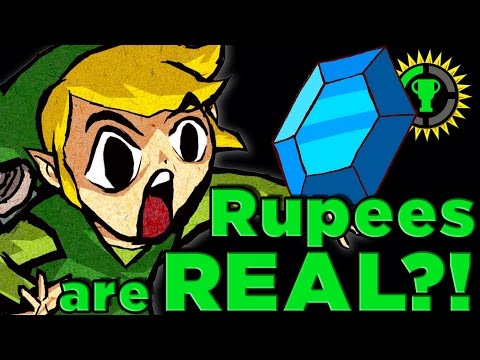
Game Theory: Zelda Rupees are REAL?!? (ft. PBG)
6 capitulos
- Opening and Guest ArrivalTopic IntroductionMatPat discusses a long-overdue subject with a pun about being 'drowning' in requests, initially misleading viewers about Ben Drowned Creepypasta.Guest SurprisePeanutButterGamer appears in the video by hacking into Zelda-related videos using Skyward Sword code modifications.Comedic Exchange• MatPat blames lack of Diet Coke for his fuzzy thinking • PBG critiques the Ben Drowned topic as old news, having covered it 3 years prior • Playful banter about topic selection between the two hostsReal Topic RevealedPBG proposes analyzing the real-world value of Zelda rupees instead of the Ben Drowned story.
- Rupee Material Composition AnalysisNaming Evidence• First Legend of Zelda game refers to rupees as 'rubies' in the manual • Localization error initially suggested, but naming pattern matches corundum gemstonesColor Variety ExplainedRupees come in multiple colors (green, purple, blue, black) which matches corundum—pure corundum is colorless but becomes colored when elements like chromium are present during formation.Ruby vs Sapphire• Red corundum is called ruby • Non-red corundum is called sapphire, available in blue, yellow, orange, purple, green, black • Both are chemically identical, just different names based on colorCrystal Structure MatchZelda rupees form as hexagonal bipyramids or hexagonal bifrustums, which places them in the hexagonal crystal family—the same family as corundum.
- Gemstone Identification ConfirmationAlternative CandidatesEmeralds, aquamarines, and morganite (all forms of beryl mineral) are considered but eliminated as alternatives to corundum.Pleochroism Evidence• Pleochroism is an optical illusion where viewing angle changes the gemstone color • In high-resolution Ocarina of Time rupees, colors darken and lighten during rotation—textbook pleochroismCorundum Properties• Corundum exhibits moderate to strong pleochroism in all colors • Beryl shows pleochroism but not at corundum's level • Diamonds and garnets do not exhibit this propertyConclusionAll evidence points to rupees being corundum-based gemstones: name, color variety, crystal structure, and refraction properties.
- Calculating Rupee DimensionsReference MeasurementsUsing Link's height of 4 feet 2 inches (calculated in the Majora's Mask episode), rupees are measured at just over 2 feet or 61.51 centimeters tall and 12.7 centimeters wide at the apex.Base Area CalculationThe hexagonal base is divided into two isosceles trapezoids with a combined area of 99.3 square inches or 640.64 square centimeters.Volume ComputationUsing the bipyramid volume formula (two-thirds × base area × height), the total volume is 165.5 cubic inches or 2,712.05 cubic centimeters.Weight CalculationWith sapphire density at 3.98 grams per cubic centimeter, a single green rupee weighs approximately 10,793.9 grams or 24 pounds.
- Real-World Value DeterminationPricing Factors• Green sapphire prices range from 250 to 760 dollars per carat • Opaque green rupees skew toward the lower end of the price rangeFinal ValuationA single green Ocarina of Time rupee is worth an astonishing $13,492,448.75.Real-World Implications• Explains why Link smashes pots everywhere to collect rupees • Puts bomb refills and magic armor purchases in perspective as extremely expensive transactionsClosing RemarksPBG thanks MatPat for the collaboration and acknowledges how the rupee value analysis makes certain in-game items seem even more absurd.