
Game Exchange: Pokemon Names in Japan
4 capitulos
- Introduction and MotivationBackground ContextPokemon has been in the US since 1998, maintaining a huge following for 14 years. The franchise continues to dominate popular culture with widespread fan engagement.Personal DiscoveryThe presenter hadn't played Pokemon since Yellow and spent 2.5 years living in Japan unable to discuss Pokemon with friends because the Japanese names are completely different from American counterparts.Why Names MatterPokemon and their names are deeply dependent on one another to give each monster its own identity, making this a worthwhile topic to analyze.Presentation NotePikachu is one of the few exceptions that maintains the same name in both Japan and America.
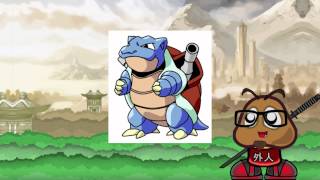
- Starter Pokemon and Evolutionary LinesCharmander Line• Charmander (Hitokage) means salamander • Charmeleon (Charmaleon) means lizard • Charizard (Diaodo) combines lizard and dragonSquirtle Line• Squirtle (Zenigame) means turtle with pun element • Wartortle (Kameil) combines turtle (kame) with an unclear suffix • Blastoise (Kamex) likely combines kame and MaxBulbasaur Line• Bulbasaur (Fushigidane) means strange thing, using informal Japanese • Ivysaur (Fushigisou) means strange grass or strange looking • Venusaur (Fushigibana) derives from the sentence meaning strange flowerCreativity AssessmentThe Japanese naming shows limited originality, relying heavily on descriptive terminology rather than creative wordplay compared to English versions.
- Additional Pokemon Name AnalysisOddish and FamilyOddish (Nazogusa) means mysterious grass, continuing the pattern of literal descriptive naming rather than creative combinations.Team Rocket Pokemon• Meowth (Nyarth) is a straightforward translation of the meow sound • Ekans (Arbo) is snake spelled backwards • Weezing (Dogasu) means bad gas, a pun on its natureLegendary Evolution• Magikarp (Koikingu) is simply koi king, showing minimal creativity • Gyarados (Gyarados) combines gak satu (massive killing) and dosu (sound of piercing flesh)Naming ContrastsWhile most Pokemon have literal or simple names, Gyarados stands out with dark imagery involving death and destruction, contrasting sharply with mysterious grass names.
- Conclusion and ReflectionOverall AssessmentThe analysis reveals inconsistent creativity in Japanese Pokemon naming, with most relying on straightforward descriptors rather than sophisticated wordplay.Naming Philosophy GapJapanese names prioritize literal meaning and simple combinations, while English versions employ more creative portmanteaus and stylized terminology.Notable ExceptionGyarados demonstrates that more creative and thematically appropriate names do exist within the Pokemon universe, showing potential for deeper naming strategies.Future DirectionThe presenter indicates plans to continue exploring more interesting Pokemon names and their cultural significance in future episodes.