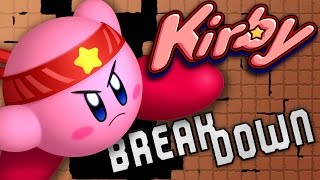
Kirby's Dreamland Break Down: The Fun of Simplicity (ft. Sunder)
6 capitulos
- Nintendo's Quest for Game Boy SuccessMarket ContextNintendo needed solid games to fill out the Game Boy library in the early 1990s following the handheld's release.Initial Success• Tetris • Super Mario Land • Metroid 2: The Return of SamusNew OpportunityNintendo turned to HAL Laboratory, a second party partner, to create new and interesting games for the handheld.Design PhilosophySattoru Iada, HAL's president, wanted to create an entry-level video game so uncomplicated that anyone regardless of gaming experience could play through it.
- Masahiro Sakurai's Winning PitchThe DesignerMasahiro Sakurai, only 19 years old at the time, was a designer and newcomer who submitted the winning pitch for the new Game Boy title.Original ConceptThe game was initially called Twinkle Popo, featuring a hero named Popo Po who would save his world from his rival DDD.Character DesignThe team struggled to settle on a final design, so Sakurai created a blob-like placeholder character that Sakurai grew fond of, which eventually became the final form.Design Philosophy FitThe character's modest design stood out against other mascot-war characters and perfectly aligned with Iada's directive of simplicity.
- Naming Kirby and Creative DecisionsName ChangePopo's name was changed to Kirby and the game's title changed to Kirby's Dreamland, though the exact reasons aren't entirely clear even to Sakurai.Selection ReasonThe name Kirby was chosen from alternatives because of the word's relative harshness in comparison to the character's soft design.Popular Theories• Named after the Kirby Company, an Ohio-based vacuum manufacturer • Named after lawyer John Kirby, who defended Nintendo against Universal Studios in a Donkey Kong lawsuitOfficial ConfirmationShigero Miyamoto confirmed that while not the only reason, the John Kirby lawyer theory was at least partially the cause for the name change.
- Kirby's Color and Design FinalizationColor DebateSakurai wanted Kirby to be pink while Shigero Miyamoto suggested yellow; Sakurai's pink preference ultimately won out.Compromise SolutionLater games in the series featured a second player controlling an identical but yellow Kirby named Ki, incorporating Miyamoto's suggestion.Marketing ConsequenceWhile Japanese copies had the accurate pink Kirby on the cover, Game Boy's inability to display color meant Kirby appeared monochrome on most international boxes.Plot FoundationKing DDD stole all the food from Dreamland's inhabitants, and Kirby must stop him; this straightforward story provided context for gameplay.
- Balancing Simplicity and DepthDesign ChallengeThe team wanted Kirby's Dreamland to be simple enough for beginners to play through while not being so simple that it would alienate advanced players.Solution ImplementedA rudimentary passcode system was integrated into the game, offering more difficult or customizable versions of the campaign.Development FocusUnder Iada's directive of simplicity, gameplay was the main priority for the development team, with the plot serving only to provide context.Release Timeline• Released April 27, 1992 in Japan • Released August 2, 1992 in North America • Sparked a new Nintendo and HAL franchise
- Reception and Legacy ImpactSales Success• 1.3 million copies sold by end of 1995 including re-releases and ports • Over 5 million copies sold to dateCritical PraiseCritics praised its relaxing design and jovial atmosphere, with Jun Ishiawa's light-hearted music being well-received and the piece Greens becoming particularly iconic.Contentious ElementsSome argued the game's simplicity crossed the line into boringness, making it a point of contention among players.Defining ImpactThe honesty of the title and Kirby stood out in an era dominated by cynically designed characters and games, defining what would become the series' identity without needing to be huge or complex.